Senator Alexander Porter
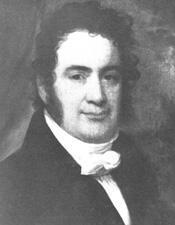
Here you will find contact information for Senator Alexander Porter, including email address, phone number, and mailing address.
| Name | Alexander Porter |
| Position | Senator |
| State | Louisiana |
| Party | Anti-Jacksonian |
| Status | Former Representative |
| Term Start | December 2, 1833 |
| Term End | March 3, 1837 |
| Terms Served | 1 |
| Born | June 24, 1785 |
| Gender | Male |
| Bioguide ID | P000436 |
About Senator Alexander Porter
Alexander Porter (June 24, 1785 – January 13, 1844) was an attorney, politician, planter, and United States Senator from Louisiana who served in the Senate from 1833 to 1837. A member of the Anti-Jacksonian Party and later associated with the emerging Whig Party, he contributed to the legislative process during one term in office, representing Louisiana in the upper chamber during a significant period in American political history. His career encompassed service in the Louisiana state legislature, on the Louisiana Supreme Court, and in the United States Senate, as well as extensive legal practice and plantation management.
Porter was born on June 24, 1785, in County Donegal, Ireland. His father, James Porter, was a Presbyterian minister and satirist who was executed in July 1798 during the United Irishmen Rebellion of 1798. According to what the Dictionary of National Biography describes as a “questionable local tradition,” the younger Porter was said to have participated in the Battle of Ballynahinch during that uprising. In 1801, at the age of sixteen, Alexander Porter emigrated to the United States with an uncle who settled in Nashville, Tennessee. He received only limited formal schooling but attended the now-defunct Clemenceau College, and he pursued legal training by “reading the law” as an apprentice. He was admitted to the bar in 1807, beginning a professional path that would lead him to prominence in Louisiana.
In 1807, Porter moved to the Territory of Orleans and commenced the practice of law in Attakapas Parish, an area that in 1811 became part of St. Mary Parish around what is now Franklin, Louisiana. He quickly became involved in the political and constitutional development of the new territory and state. In 1812, he served as a delegate to the convention that framed the first Constitution of Louisiana, helping to shape the legal and governmental foundations of the state as it entered the Union. Porter was elected to the lower branch of the Louisiana Legislature, serving from 1816 to 1818 in the statehouse, where he gained experience in legislative affairs and built a reputation as a capable lawyer and public servant.
Porter’s judicial career began with his appointment as a justice of the Louisiana Supreme Court, on which he served from 1821 to 1833. During these twelve years on the state’s highest court, he participated in the development of Louisiana’s distinctive legal system, rooted in both civil law and common law traditions. His work on the bench further enhanced his standing in the state and prepared him for national office. By the early 1830s, he was recognized as one of Louisiana’s leading legal minds, as well as a substantial planter in St. Mary Parish.
In 1833, the Louisiana legislature selected Porter to serve in the United States Senate to fill the vacancy caused by the death of Senator Josiah S. Johnston. Chosen as an Anti-Jacksonian—a designation that aligned him with the opposition to President Andrew Jackson and the emerging Whig movement—Porter took his seat on December 19, 1833. He served in the Senate until January 5, 1837, when he resigned due to ill health. During his tenure, he represented the interests of his Louisiana constituents and participated in the national debates of the era, including issues of federal power, economic policy, and the balance between the executive and legislative branches, which were central concerns of Anti-Jacksonian and Whig legislators.
After resigning from the Senate, Porter returned to St. Mary Parish, where he resumed the practice of law and devoted himself to managing his plantation, Oaklawn. By the 1840s, Oaklawn had become a large slaveholding estate, with approximately 320 enslaved people working the property. Porter’s role as a planter was typical of many leading political figures in the antebellum South, whose economic and social status were closely tied to the institution of slavery and the plantation economy along the Gulf Coast.
Despite his earlier resignation on account of poor health, Porter’s political stature in Louisiana remained considerable. He was again chosen by the state legislature for the United States Senate for the term beginning March 4, 1843. However, his continuing ill health prevented him from taking his seat, and the legislature subsequently elected former Governor Henry Johnson to replace him. Porter spent his final years largely removed from active public life, constrained by the same health problems that had curtailed his earlier Senate service.
Alexander Porter died on January 13, 1844. Although his public career had been centered in Louisiana, his remains were interred in the Nashville City Cemetery in Nashville, Tennessee, where his young wife, Evilina (Baker) Porter (1797–1819), had previously been buried. As an Irish-born immigrant who rose to prominence as a lawyer, jurist, planter, and United States Senator, Porter occupies a place among the foreign-born members of the Senate who helped shape the political and legal institutions of the early United States.