Representative Alexander Hamilton Stephens
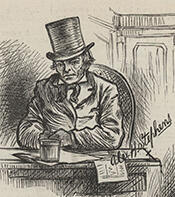
Here you will find contact information for Representative Alexander Hamilton Stephens, including email address, phone number, and mailing address.
| Name | Alexander Hamilton Stephens |
| Position | Representative |
| State | Georgia |
| District | 8 |
| Party | Democratic |
| Status | Former Representative |
| Term Start | December 4, 1843 |
| Term End | March 3, 1883 |
| Terms Served | 13 |
| Born | February 11, 1812 |
| Gender | Male |
| Bioguide ID | S000854 |
About Representative Alexander Hamilton Stephens
Alexander Hamilton Stephens served as a Representative from Georgia in the United States Congress from 1843 to 1883. A member of the Democratic Party, Alexander Hamilton Stephens contributed to the legislative process during 13 terms in office.
Alexander Hamilton Stephens’s service in Congress occurred during a significant period in American history. As a member of the House of Representatives, Alexander Hamilton Stephens participated in the democratic process and represented the interests of constituents.
Alexander Hamilton Stephens (February 11, 1812 – March 4, 1883) was an American politician who served as the only vice president of the Confederate States from 1861 to 1865, and later as the 50th governor of Georgia from 1882 until his death in 1883. A member of the Democratic Party, he represented the state of Georgia in the United States House of Representatives before and after the Civil War. Stephens attended Franklin College and established a legal practice in his hometown of Crawfordville, Georgia. After serving in both houses of the Georgia General Assembly, he was elected to the Congress, taking his seat in 1843. He became a leading Southern Whig and strongly opposed the Mexican–American War. After the war, Stephens was a prominent supporter of the Compromise of 1850 and helped draft the Georgia Platform, which opposed secession. A proponent of the expansion of slavery into the territories, Stephens also helped pass the Kansas–Nebraska Act. As the Whig Party collapsed in the 1850s, Stephens eventually joined the Democratic Party and worked with President James Buchanan to admit Kansas as a state under the pro-slavery Lecompton Constitution (which was overwhelmingly rejected by Kansas voters in a referendum). Stephens declined to seek re-election in 1858 but continued to publicly advocate against secession. After Georgia and other Southern states seceded and formed the Confederate States of America, Stephens was elected as the Confederate Vice President. Stephens’s Cornerstone Speech of March 1861 defended slavery; enumerated contrasts between the American and Confederate foundings, ideologies, and constitutions; and laid out the Confederacy’s rationale for seceding. In the course of the war, he became increasingly critical of President Jefferson Davis’s policies, especially Confederate conscription and the suspension of habeas corpus. In February 1865, he was one of the commissioners who met with Abraham Lincoln at the abortive Hampton Roads Conference to discuss peace terms. After the war, Stephens was imprisoned until October 1865. The following year, the Georgia legislature elected Stephens to the U.S. Senate, but the Senate declined to seat him due to his role in the Civil War. He won election to the U.S. House of Representatives in 1873 and served until 1882, when he resigned from Congress to become governor of Georgia. Stephens served as governor until his death in March 1883.