Representative Alexander Stewart
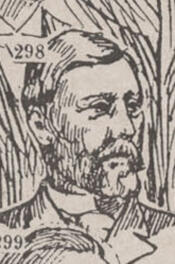
Here you will find contact information for Representative Alexander Stewart, including email address, phone number, and mailing address.
| Name | Alexander Stewart |
| Position | Representative |
| State | Wisconsin |
| District | 9 |
| Party | Republican |
| Status | Former Representative |
| Term Start | December 2, 1895 |
| Term End | March 3, 1901 |
| Terms Served | 3 |
| Born | September 12, 1829 |
| Gender | Male |
| Bioguide ID | S000898 |
About Representative Alexander Stewart
Alexander Stewart (October 30, 1829 – May 24, 1912) was an American politician and businessman who represented Wisconsin in the United States House of Representatives from 1895 to 1901. A member of the Republican Party, he served three consecutive terms in Congress during a period of significant economic and political change in the United States. His congressional career was grounded in a long record of commercial activity and civic engagement in the Upper Midwest.
Stewart was born on October 30, 1829, in Fredericton, New Brunswick, then a British colony. He spent his early years in what is now Canada before moving to the United States as a young man. Drawn by the economic opportunities of the growing American frontier, he eventually settled in Wisconsin, a state whose expanding lumber and commercial sectors would shape the course of his professional life and later his political career.
Details of Stewart’s formal education are not extensively documented, but his subsequent success in business indicates a practical education acquired through experience in trade and industry. Like many nineteenth‑century North American entrepreneurs who rose from modest beginnings, he developed his skills in accounting, management, and commerce on the job rather than through extended academic study. This background equipped him with a working understanding of finance, transportation, and resource development that would later inform his legislative interests.
Before entering national politics, Stewart established himself as a prominent businessman in Wausau, Wisconsin. He became heavily involved in the lumber industry, which was then central to the economy of northern Wisconsin. Through his business activities he gained both local influence and familiarity with issues such as land use, transportation infrastructure, and regional economic development. His reputation as a successful and practical businessman helped propel him into public life and made him a credible representative of his community’s commercial and industrial interests.
Stewart was elected as a Republican to the Fifty‑fourth Congress and took office as a United States Representative from Wisconsin on March 4, 1895. He was subsequently reelected to the Fifty‑fifth and Fifty‑sixth Congresses, serving continuously until March 3, 1901. During these three terms in the House of Representatives, he participated in the legislative process at a time marked by the aftermath of the Panic of 1893, debates over monetary policy, and the nation’s growing industrialization and overseas interests. As a member of the House, he represented the interests of his Wisconsin constituents, contributing to deliberations on economic, infrastructural, and regional issues that affected both his district and the broader country.
Stewart’s service in Congress coincided with a significant period in American history, encompassing the late Gilded Age and the beginning of the Progressive Era. While specific committee assignments and sponsored measures are less prominently recorded than those of some contemporaries, his role as a Republican representative from a resource‑rich, developing region placed him at the intersection of national discussions on tariffs, internal improvements, and the regulation of commerce. In this capacity, he took part in the democratic process by voting on legislation and engaging in the institutional work of the House, ensuring that the perspectives of his Wisconsin constituents were represented in federal policymaking.
After choosing not to seek further reelection following the conclusion of the Fifty‑sixth Congress, Stewart returned to private life in Wisconsin. He resumed his business and community interests in Wausau, remaining a respected figure in local affairs. Alexander Stewart died on May 24, 1912, in Washington, D.C. His remains were returned to Wisconsin, where he was interred in Pine Grove Cemetery in Wausau. Remembered as both a successful lumberman and a three‑term Republican member of Congress, his career reflected the trajectory of many nineteenth‑century American politicians whose public service was rooted in regional economic development and practical business experience.