Senator Alexander Wiley
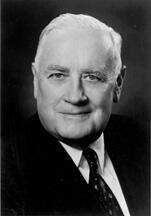
Here you will find contact information for Senator Alexander Wiley, including email address, phone number, and mailing address.
| Name | Alexander Wiley |
| Position | Senator |
| State | Wisconsin |
| Party | Republican |
| Status | Former Representative |
| Term Start | January 3, 1939 |
| Term End | January 3, 1963 |
| Terms Served | 4 |
| Born | May 26, 1884 |
| Gender | Male |
| Bioguide ID | W000465 |
About Senator Alexander Wiley
Alexander Wiley (May 26, 1884 – October 26, 1967) was an American politician and lawyer who served four terms in the United States Senate for the state of Wisconsin from 1939 to 1963. A member of the Republican Party, he represented Wisconsin in the Senate during a significant period in American history, spanning the Great Depression, World War II, the early Cold War, and the beginnings of the civil rights era. When he left the Senate in 1963, he was its most senior Republican member.
Wiley was born in Chippewa Falls, Chippewa County, Wisconsin, on May 26, 1884. He was raised in the region and maintained close ties to his hometown throughout his life. He pursued higher education at Augsburg College in Minneapolis, Minnesota, and later attended the University of Michigan in Ann Arbor, Michigan, for further undergraduate study. He subsequently enrolled in the law department of the University of Wisconsin–Madison, where he completed his legal education. In 1907 he received his law degree from the University of Wisconsin–Madison and, in the same year, was admitted to the bar, beginning a legal career that would underpin his later work in public office.
Following his admission to the bar, Wiley established himself as a practicing attorney in Wisconsin. His early career in public service began at the local level when he was elected district attorney of Chippewa County. He served as Chippewa County district attorney from 1909 to 1915, gaining experience in criminal law and public administration and building a reputation as a capable and energetic prosecutor. After leaving the district attorney’s office, he continued to practice law and remained active in Republican politics, becoming a prominent figure in state political circles.
Wiley’s first major bid for statewide office came in 1936, when he was the Republican candidate for governor of Wisconsin. His campaign took place at a time when the state’s Republican Party was weakened by the rise of the Wisconsin Progressive Party, led by Philip La Follette. In the 1936 election, Wiley’s gubernatorial bid was unsuccessful, as La Follette and the Progressive Party prevailed. Undeterred, Wiley remained engaged in politics, and in 1938 he sought election to the United States Senate. That year he first secured the Republican nomination by defeating Tax Court judge Stephen J. McMahon in the primary, and then went on to defeat the Democratic incumbent, Senator F. Ryan Duffy, in the general election, winning a seat in the U.S. Senate from Wisconsin.
Alexander Wiley took office as a United States Senator in January 1939 and would serve four consecutive terms, remaining in the Senate until January 3, 1963. As a member of the Senate, he participated in the democratic process and represented the interests of his Wisconsin constituents during a period marked by global conflict and domestic transformation. In 1944, during his first re-election campaign, he faced a notable challenge in the Republican primary from United States Marine Corps Captain Joseph R. McCarthy. Wiley defeated McCarthy in the primary and subsequently won the general election, securing a second term. At that time, Wiley was generally regarded as an isolationist in foreign policy, and in the 1944 presidential election he joined Governor Walter S. Goodland in supporting Republican nominee Thomas E. Dewey against incumbent President Franklin D. Roosevelt. Dewey carried Wisconsin’s electoral votes, although he was defeated nationally.
Wiley was re-elected to the Senate two more times, in 1950 and 1956, demonstrating sustained political strength in his home state. In the 1956 Republican primary, he was challenged by U.S. Representative Glenn Robert Davis, but again prevailed and went on to win the general election. Over the course of his Senate career, Wiley developed a reputation as an influential legislator and committee leader. He held the chairmanship of both the Senate Foreign Relations Committee and the Senate Judiciary Committee at different points in his tenure, placing him at the center of debates over foreign policy, international alliances, judicial nominations, and major legislative initiatives. His long service and committee leadership made him one of the key Republican figures in the Senate during the mid-twentieth century.
In domestic policy, Wiley’s record included support for significant civil rights measures. He voted in favor of the Civil Rights Act of 1957 and the Civil Rights Act of 1960, early federal efforts to protect voting rights and address racial discrimination. He also voted in favor of the 24th Amendment to the United States Constitution, which prohibited the use of poll taxes in federal elections. These votes placed him among those Republicans who backed incremental but important steps toward expanding civil and voting rights in the years before the landmark Civil Rights Act of 1964. In the 1962 election, however, Wiley’s long Senate career came to an end when he lost his bid for a fifth term to Governor Gaylord Nelson, a liberal Democrat. Following his defeat, he left office in January 1963. Wiley was the last Republican to serve as a U.S. Senator from Wisconsin until former 9th district Congressman Bob Kasten took office in 1981.
After his departure from the Senate, Wiley largely withdrew from public office but remained a respected elder statesman within Republican and Wisconsin political circles. He continued to be associated with various civic, fraternal, and service organizations. During his lifetime he was a member of the Freemasons, the Knights Templar, the Elks Club, the Kiwanis, the Knights of Pythias, the Moose International, the Sons of Norway, and the Sigma Phi Epsilon fraternity, reflecting a broad engagement with community and fraternal life beyond his formal political duties.
Alexander Wiley died in Germantown, Pennsylvania, on October 26, 1967, at the age of 83. He was interred at Forest Hill Cemetery in his hometown of Chippewa Falls, Wisconsin, closing a life that spanned from the late nineteenth century into the modern era and that included more than two decades of service in the United States Senate as one of Wisconsin’s most prominent Republican officeholders.