Representative Alfred Florian Beiter
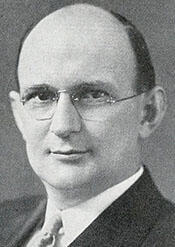
Here you will find contact information for Representative Alfred Florian Beiter, including email address, phone number, and mailing address.
| Name | Alfred Florian Beiter |
| Position | Representative |
| State | New York |
| District | 41 |
| Party | Democratic |
| Status | Former Representative |
| Term Start | March 9, 1933 |
| Term End | January 3, 1943 |
| Terms Served | 4 |
| Born | July 7, 1894 |
| Gender | Male |
| Bioguide ID | B000320 |
About Representative Alfred Florian Beiter
Alfred Florian Beiter (July 7, 1894 – March 11, 1974) was an American businessman and Democratic politician who served four terms as a United States Representative from New York from 1933 to 1939 and from 1941 to 1943. His service in Congress occurred during a significant period in American history, encompassing the New Deal era and the early years of the Second World War, during which he contributed to the legislative process and represented the interests of his constituents in western New York.
Beiter was born on July 7, 1894, in Clarence, Erie County, New York, the son of Nicholas I. Beiter and Elizabeth E. Wyman Beiter. He was raised in the Buffalo area and attended Williamsville High School in Williamsville, New York. He later pursued higher education at Niagara University, reflecting an early commitment to both academic and professional advancement. On November 19, 1919, he married Caroline A. Kibler, establishing a family life in the same region where he would build his business and political career.
Before entering public office, Beiter established himself as a businessman. After moving to Williamsville, New York, he engaged in the general merchandising business from 1915 to 1929. Over these fourteen years he developed experience in commerce and local economic affairs that would later inform his public service. His involvement in community and business life led naturally into local government, where he began to assume broader responsibilities.
Beiter’s formal political career started at the local level when he served as supervisor of the town of Amherst, New York, from 1930 to 1934. In this role he participated directly in municipal governance during the early years of the Great Depression, gaining practical experience in administration and public finance. His performance in Amherst helped establish his reputation within the Democratic Party and positioned him for higher office.
Elected as a Democrat to the Seventy-third and the two succeeding Congresses, Beiter served as U.S. Representative for New York’s forty-first congressional district from March 4, 1933, to January 3, 1939. During these three consecutive terms he participated in the democratic process at the national level as part of the congressional majorities that supported President Franklin D. Roosevelt’s New Deal programs. In the Seventy-fifth Congress he served as chairman of the Committee on War Claims, overseeing matters related to compensation for losses arising from earlier conflicts. Although he contributed actively to the legislative work of the House of Representatives, he was an unsuccessful candidate for reelection in 1938 to the Seventy-sixth Congress.
Following his initial congressional service, Beiter remained involved in federal affairs. In 1939 and 1940 he served as an assistant to the United States Secretary of the Interior, working within the executive branch during a period of continued domestic recovery efforts and growing international tension on the eve of World War II. He returned to elective office when he was again chosen as a Democrat to the Seventy-seventh Congress, serving from January 3, 1941, to January 3, 1943. This fourth term brought him back to the House during the early years of American involvement in World War II. He sought reelection in 1942 to the Seventy-eighth Congress but was again unsuccessful, concluding his tenure in the House after four terms between 1933 and 1943.
After leaving Congress, Beiter resumed private enterprise and later entered federal service in a different capacity. From 1944 to 1948 he owned and operated a hatchery and feed business in Buffalo, New York, returning to the commercial sector in his home region. He then moved into the field of customs administration, serving as president of the National Customs Service Association from 1949 to 1961, a role that placed him at the center of professional and policy issues affecting the nation’s customs operations. Building on this experience, he was appointed Deputy Commissioner of Customs for the United States Treasury Department, serving in Washington, D.C., from 1961 to 1964 and helping to oversee the federal customs service during a period of expanding international trade.
In his later years, Beiter resided in Chevy Chase, Maryland, while working in Washington, and after his retirement he moved to Boca Raton, Florida. He lived there until his death on March 11, 1974. Across a career that spanned local government, multiple terms in Congress, executive branch service, and senior customs administration, Alfred Florian Beiter combined business experience with public service during some of the most consequential decades of the twentieth century.