Representative Alfred Eliab Buck
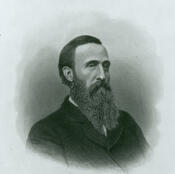
Here you will find contact information for Representative Alfred Eliab Buck, including email address, phone number, and mailing address.
| Name | Alfred Eliab Buck |
| Position | Representative |
| State | Alabama |
| District | 1 |
| Party | Republican |
| Status | Former Representative |
| Term Start | March 4, 1869 |
| Term End | March 3, 1871 |
| Terms Served | 1 |
| Born | February 7, 1832 |
| Gender | Male |
| Bioguide ID | B001011 |
About Representative Alfred Eliab Buck
Alfred Eliab Buck (February 7, 1832 – December 4, 1902) was a Republican politician, Union Army officer, and diplomat who served as a U.S. Representative from Alabama from 1869 to 1871. His single term in Congress occurred during the Reconstruction era, when he represented Alabama’s 1st congressional district and participated actively in the legislative process at a pivotal moment in American history.
Buck was born in Foxcroft, Maine, on February 7, 1832. He pursued higher education in his home state and graduated from Waterville College (now Colby College) in 1859. As a young man, he was an outspoken advocate of abolition. On his twentieth birthday, he recorded his support for “immediate emancipation” of enslaved African Americans, arguing that the “slavery interest” in the South was too deeply entrenched for gradual emancipation and that any gradual process would have needed to begin decades earlier. He praised the efforts of “radical abolitionists,” including the Boston Vigilance Committee and the Massachusetts Anti-Slavery Society, and condemned the “heinous abduction” of Anthony Burns from Boston, reflecting a strong moral and political opposition to slavery well before the Civil War.
During the Civil War, Buck entered the Union Army as captain of Company C, Thirteenth Regiment, Maine Volunteer Infantry. In August 1863 he was appointed lieutenant colonel of the Ninety-first United States Colored Troops, and in October 1864 he was transferred to the Fifty-first United States Colored Troops. For gallant conduct in service, he was brevetted colonel of Volunteers. He was mustered out of the Army at Baton Rouge, Louisiana, in June 1866. His wartime service, particularly his leadership of United States Colored Troops, aligned with his long-standing abolitionist convictions and positioned him for a prominent role in Reconstruction politics.
After leaving the military, Buck settled in the South and became an officer of the Freedmen’s Bureau in southern Alabama, working to assist formerly enslaved people in the transition to freedom. He moved his family to Mobile and engaged in business, including the manufacture of turpentine on Montgomery Island in Mobile until a fire destroyed that enterprise in 1867. He also entered the iron-smelting business with his brother-in-law, William B. Woods, who later served as an associate justice of the U.S. Supreme Court from 1881 to 1887. In public life, Buck served as a delegate to the Alabama constitutional convention of 1867 and as clerk of the circuit court of Mobile County in 1867 and 1868, roles that placed him at the center of the state’s Reconstruction government.
Buck ran for Congress in 1868 to represent Alabama’s 1st District, which then included both Selma and Mobile. Under Reconstruction laws, many former Confederates were ineligible to vote, and a large majority of the electorate in that election consisted of newly freed African Americans. Local white opposition to Black political participation was intense, and the Ku Klux Klan organized in the district in an effort to intimidate voters and prevent the election from proceeding. The presence of United States Army forces in the area, however, was sufficient to prevent the Klan from disrupting the balloting, and Buck won the election. He was elected as a Republican to the Forty-first Congress and served from March 4, 1869, to March 3, 1871. Identified as a “Radical Republican,” a label he stated he “wore with pride,” Buck supported robust federal enforcement of civil and political rights during Reconstruction. After one term, he chose not to seek reelection, concluding that private business would be more lucrative and personally satisfying. Instead, he endorsed and campaigned for Benjamin S. Turner, an African American Republican, who successfully succeeded him as representative of Alabama’s 1st congressional district.
Following his congressional service, Buck remained active in public affairs in the South. In 1873 he was appointed president of the city council of Mobile, Alabama. The following year he moved to Georgia, where he served as clerk of the United States circuit and district courts in Atlanta from 1874 to 1889. In recognition of his service and standing within the Republican Party, President Benjamin Harrison appointed him United States marshal for the northern district of Georgia, a position he held from 1889 to 1893. By the mid-1890s, Buck had become a leading figure in the Georgia Republican Party. In 1896 he served as president of the Republican State Convention, presiding over the contentious selection of delegates to the 1896 Republican National Convention. Seeking to avoid factional conflict, he advanced a “harmony” slate of delegates outside standard procedure, a move that excluded Richard R. Wright, a close associate of party leader Emanuel K. Love. The maneuver provoked a protest; when a representative of Buck’s faction attempted to adjourn the meeting, Buck’s supporters left the hall. The Love and Wright faction remained, with Love taking the chair and overseeing the election of a new slate that included both Love and Buck, though still not Wright. Ultimately, Buck attended the national convention as a delegate, and Wright participated as an alternate.
Buck’s national prominence within the Republican Party led to a diplomatic appointment. In April 1897 President William McKinley named him Minister to Japan. He arrived in Tokyo at a time when the United States was deeply engaged in Pacific and East Asian affairs. During his tenure, Buck explained and defended American policy to Japanese officials regarding the Spanish-American War, the annexation of Hawaii, the Boxer Rebellion in China, and Secretary of State John Hay’s “Open Door Notes,” which sought to limit foreign control and preserve equal commercial opportunity in China. He continued in this post through the turn of the century, serving until his death in Tokyo on December 4, 1902. Alfred Eliab Buck was interred with military honors in Arlington National Cemetery, closing a career that spanned abolitionist activism, Civil War service, Reconstruction politics, federal judicial administration, party leadership, and diplomacy.