Representative Alfred Conkling
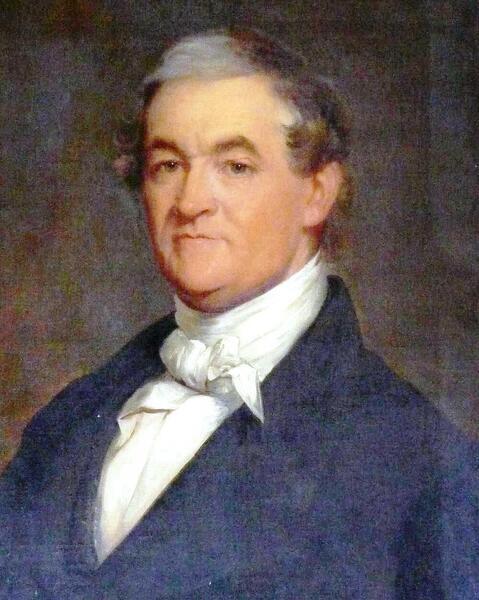
Here you will find contact information for Representative Alfred Conkling, including email address, phone number, and mailing address.
| Name | Alfred Conkling |
| Position | Representative |
| State | New York |
| District | 14 |
| Party | Republican |
| Status | Former Representative |
| Term Start | December 3, 1821 |
| Term End | March 3, 1823 |
| Terms Served | 1 |
| Born | October 12, 1789 |
| Gender | Male |
| Bioguide ID | C000679 |
About Representative Alfred Conkling
Alfred Conkling (October 12, 1789 – February 5, 1874) was a United States representative from New York, a United States district judge of the United States District Court for the Northern District of New York, and United States Minister to Mexico. He was born on October 12, 1789, in Amagansett, New York, the son of Benjamin Conkling and Esther Hand, members of a long-established family on eastern Long Island. Raised in the post-Revolutionary era, he came of age as the new federal republic was consolidating its institutions, a context that would shape his later legal and political career.
Conkling pursued higher education at Union College in Schenectady, New York, from which he graduated in 1810. He then studied law by reading law, completing his legal preparation in 1812, the same year the United States entered the War of 1812. On May 5, 1812, he married Elizabeth “Eliza” Cockburn (1791–1851). The couple had five children who would themselves become prominent in public and intellectual life. Their daughter Margaret Cockburn Conkling (1814–1890) became an accomplished author, publishing works such as The American Gentleman’s Guide to Politeness and Fashion, Memoirs of the Mother and Wife of Washington, Isabel; or, Trials of the Heart, and a translation of Florian’s History of the Moors of Spain. Their son Frederick Augustus Conkling (1816–1891) later served as a United States representative from New York. Another son, Aurelian Conkling (1819–1861), studied law and served as Clerk of Court for the United States District Court for the Northern District of New York in Buffalo until his death in May 1860; he married Harriet Adriana Schermerhorn (1815–1886), daughter of Commissioner John F. Schermerhorn. Their daughter Eliza Conkling (1820–1868) married Reverend Samuel Hanson Coxe, son of the noted abolitionist minister, author, and educator Samuel Hanson Cox. Their youngest son, Roscoe Conkling (1829–1888), became one of the most influential Republican politicians of his era, serving as both a United States Representative and United States Senator from New York.
After reading law, Conkling was admitted to the bar and entered private practice in Johnstown, New York, from 1812 to 1813. He then moved to Canajoharie, New York, where he practiced law from 1813 to 1819, building a regional reputation as an able attorney in a rapidly developing part of the state. His growing prominence led to his appointment as district attorney for Montgomery County, New York, a position he held from 1819 to 1821. In this role he prosecuted criminal cases on behalf of the state, gaining further experience in public law and courtroom practice at a time when New York’s legal system was expanding in scope and complexity.
Conkling entered national politics when he was elected as a Democratic-Republican from New York’s 14th congressional district to the United States House of Representatives in the 17th Congress. He served one term from March 4, 1821, to March 3, 1823. As a member of the Republican Party representing New York—reflecting the era’s evolving party labels and the legacy of the Jeffersonian Republican tradition—Alfred Conkling contributed to the legislative process during his single term in office. His service in Congress occurred during a significant period in American history, in the aftermath of the War of 1812 and during the so‑called “Era of Good Feelings,” when debates over internal improvements, finance, and the balance of federal and state authority were prominent. He participated in the democratic process and represented the interests of his constituents from upstate New York in this transitional political environment. After leaving Congress, he resumed private practice in Albany, New York, where he practiced law from 1823 to 1825.
Conkling’s judicial career began when President John Quincy Adams gave him a recess appointment on August 27, 1825, to the United States District Court for the Northern District of New York, filling the vacancy created by the death of Judge Roger Skinner. Adams formally nominated him to the same position on December 13, 1825; the United States Senate confirmed the nomination on December 14, 1825, and Conkling received his commission that same day. As a United States district judge, he presided over federal trial matters in a large and growing jurisdiction that included commercial disputes, admiralty cases, and issues arising under federal statutes. While serving on the bench, he relocated from Albany to Auburn, New York, in 1839, reflecting the westward shift of population and commerce within the state. During his long tenure there were several attempts to impeach him, though none succeeded, and he remained in office until his resignation on August 25, 1852, after nearly twenty-seven years of service.
Immediately following his resignation from the federal bench, Conkling entered the diplomatic service. He was appointed United States Envoy Extraordinary and Minister Plenipotentiary to Mexico for the United States Department of State, serving from August 6, 1852, to August 17, 1853. His tenure came at a sensitive time in United States–Mexican relations, only a few years after the conclusion of the Mexican–American War and the Treaty of Guadalupe Hidalgo, and during continuing negotiations over boundary issues and political stability in Mexico. After completing his diplomatic mission, Conkling moved west and resumed private legal practice in Omaha, Nebraska, from 1853 to 1861, participating in the legal development of a frontier community in the years leading up to the Civil War.
In the later phase of his life, Conkling turned increasingly to writing and scholarship. From 1861 to 1872 he lived in Rochester and Geneseo, New York, where he worked as a writer, producing legal and historical works and contributing to the intellectual life of the state. From 1872 until his death in 1874, he resided in Utica, New York, continuing his literary pursuits. He died in Utica on February 5, 1874, and was interred in Forest Hill Cemetery in that city. His legacy extended through a distinguished judicial lineage: his grandson Alfred Conkling Coxe Sr. served as a United States District Judge in the Northern District of New York and later as a judge on the United States Court of Appeals for the Second Circuit, while Coxe’s son, Conkling’s great-grandson Alfred Conkling Coxe Jr., became a judge of the United States District Court for the Southern District of New York. A photograph of Judge Alfred Conkling hangs in the courtroom of the United States District Court in Utica, New York, commemorating his long service in the federal judiciary and his family’s enduring role in American public life.