Representative Alfred James Elliott
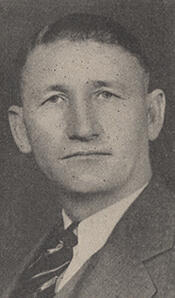
Here you will find contact information for Representative Alfred James Elliott, including email address, phone number, and mailing address.
| Name | Alfred James Elliott |
| Position | Representative |
| State | California |
| District | 10 |
| Party | Democratic |
| Status | Former Representative |
| Term Start | January 5, 1937 |
| Term End | January 3, 1949 |
| Terms Served | 6 |
| Born | June 1, 1895 |
| Gender | Male |
| Bioguide ID | E000119 |
About Representative Alfred James Elliott
Alfred James Elliott (June 1, 1895 – January 17, 1973) was an American farmer, newspaperman, and Democratic politician who served six terms as a Representative from California in the United States Congress from 1937 to 1949. He was born in Guinda, Yolo County, California, on June 1, 1895. In 1901 he moved with his parents to Winters, California, and in 1910 the family relocated to Tulare, California. Tulare became his long-term home and the center of his professional, political, and civic life, and he resided there until his death in 1973.
Elliott’s early career was rooted in agriculture and local enterprise. In Tulare he worked as a farmer and livestock breeder, occupations that tied him closely to the economic and social concerns of California’s Central Valley. He also entered the newspaper business, becoming the owner and publisher of the Tulare Daily News. Through this role he gained prominence in the community and developed a public voice on local and regional issues, experience that helped prepare him for elective office.
Elliott’s formal political career began at the county level. From 1933 to 1937 he served as chairman of the Tulare County Board of Supervisors, where he was involved in local governance during the challenging years of the Great Depression. His responsibilities included oversight of county administration, public works, and social services. During this period he also participated in statewide public service bodies. From 1935 to 1936 he was a member of the California Supervisor Association of the State welfare board, contributing to the administration and oversight of welfare programs in California. In 1936 he served on the California State Safety Council, reflecting his involvement in broader questions of public safety and state policy.
Elliott entered national politics in 1937. He was first elected to the United States House of Representatives as a Democrat by special election to fill the vacancy caused by the death of Representative Henry E. Stubbs. Representing California’s 10th congressional district, he took his seat in the Seventy-fifth Congress and was subsequently re-elected five times, serving continuously from 1937 to 1949. His six terms in office spanned a significant period in American history, including the later New Deal years, World War II, and the immediate postwar era. As a member of the House of Representatives, Alfred James Elliott participated in the legislative process, contributed to national debates, and represented the interests of his Central Valley constituents in matters such as agriculture, infrastructure, and wartime mobilization.
During World War II, Elliott became known for his outspoken and extreme hostility toward Japanese Americans. He was among the most vocal members of Congress in expressing bigotry toward them. In 1943 he protested the release of some Japanese Americans from the wartime relocation camps, repeating his earlier statement that “the only good Jap is a dead Jap,” and declaring that “When the war is over, as far as I am concerned, we should ship every Jap in the United States back to Japan . . .” These statements placed him among those legislators who strongly supported exclusionary and discriminatory policies during the war, and they have remained a notable and controversial aspect of his congressional record.
Elliott’s service in Congress concluded in 1949, after which he returned to private life in Tulare. He remained associated with the community where he had long lived and worked, and he retired in 1965. His post-congressional years were spent away from national office, but his earlier roles as farmer, livestock breeder, newspaperman, and local official continued to define his public identity in the region.
Alfred James Elliott died in Tulare, California, on January 17, 1973, at the age of 77. He was interred in Tulare Cemetery. His career encompassed local and national public service over several decades, including six terms in the U.S. House of Representatives during a transformative period in twentieth-century American history.