Representative Alfred Ely
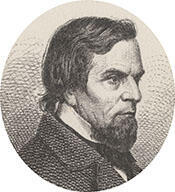
Here you will find contact information for Representative Alfred Ely, including email address, phone number, and mailing address.
| Name | Alfred Ely |
| Position | Representative |
| State | New York |
| District | 29 |
| Party | Republican |
| Status | Former Representative |
| Term Start | December 5, 1859 |
| Term End | March 3, 1863 |
| Terms Served | 2 |
| Born | February 15, 1815 |
| Gender | Male |
| Bioguide ID | E000164 |
About Representative Alfred Ely
Alfred Ely (February 15, 1815 – May 18, 1892) was a U.S. Representative from New York who served two terms in Congress as a member of the Republican Party during a critical period in American history. He was elected to the Thirty-sixth and Thirty-seventh Congresses, serving from March 4, 1859, to March 3, 1863, as the representative of New York’s 29th congressional district. His tenure in the House of Representatives coincided with the secession crisis and the opening years of the Civil War, during which he participated in the legislative process and represented the interests of his constituents.
Ely was born in Lyme, Connecticut, on February 15, 1815. He attended the common schools of the area and pursued further studies at Bacon Academy in Colchester, Connecticut, an institution known in the early nineteenth century for preparing young men for professional and civic life. In 1835 he moved to Rochester, New York, which was then a growing commercial and industrial center in western New York. There he studied law, and after several years of preparation he was admitted to the bar in 1841. Ely commenced the practice of law in Rochester, establishing himself in the legal profession and building the standing in the community that would later support his entry into public office.
By the late 1850s Ely had become active in the emerging Republican Party, which had been formed in opposition to the expansion of slavery into the western territories. He was elected as a Republican to the Thirty-sixth Congress and reelected to the Thirty-seventh Congress, serving from March 4, 1859, to March 3, 1863. During his time in the House of Representatives, Ely contributed to the legislative process at a moment when the nation was moving from sectional tension into open civil war. In the Thirty-seventh Congress he served as chairman of the Committee on Invalid Pensions, a position that placed him at the center of legislative efforts to address the needs of disabled veterans and their families, an issue that grew rapidly in importance with the onset of the Civil War. He was not a candidate for renomination in 1862, thereby concluding his congressional career after two terms.
Ely’s congressional service is particularly remembered for his capture by Confederate forces during the First Battle of Bull Run, also known as the First Battle of Manassas, on July 21, 1861. While witnessing the battle as a civilian spectator and sitting member of Congress, he was taken prisoner by Confederate troops. He was subsequently confined in Libby Prison in Richmond, Virginia, one of the Confederacy’s principal prisons for Union officers and political prisoners. Ely remained there for nearly six months, imprisoned along with many others, including William H. Upham, then a private in the Belle City Rifles of the 2nd Wisconsin Volunteer Infantry Regiment and later the 18th Governor of Wisconsin. His captivity drew public attention in the North and underscored the perilous circumstances of the war, even for federal legislators.
In December 1861 Ely was exchanged for Charles J. Faulkner, a former U.S. minister to France who had been detained by Union authorities, the exchange being arranged in part through Faulkner’s own negotiations. At 5:00 a.m. on Christmas Day 1861, Ely was released from Libby Prison and returned to the North. The following year, in 1862, D. Appleton & Company of New York published a journal of his experiences in Libby Prison, providing the public with a detailed account of conditions of confinement and the treatment of Union prisoners in Richmond. This publication added to contemporary understanding of wartime imprisonment and contributed to his public profile beyond his formal legislative work.
After leaving Congress in March 1863, Ely resumed the practice of law in Rochester, New York. He continued his legal career there, remaining a figure of local prominence and a representative of the generation of northern politicians whose public lives were shaped by the crisis of the Union and the Civil War. He lived in Rochester for the remainder of his life. Alfred Ely died in Rochester on May 18, 1892. He was interred in the Ely vault in Mount Hope Cemetery, a historic burial ground in the city that contains the graves of many notable New Yorkers.