Representative Alfred Briggs Irion
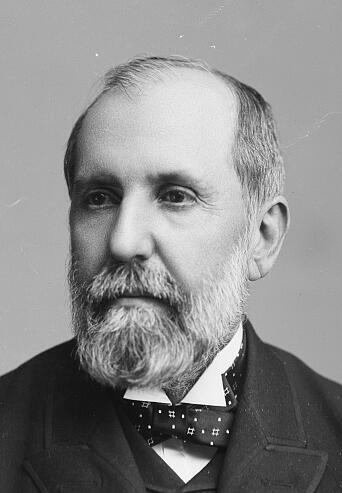
Here you will find contact information for Representative Alfred Briggs Irion, including email address, phone number, and mailing address.
| Name | Alfred Briggs Irion |
| Position | Representative |
| State | Louisiana |
| District | 6 |
| Party | Democratic |
| Status | Former Representative |
| Term Start | December 7, 1885 |
| Term End | March 3, 1887 |
| Terms Served | 1 |
| Born | February 18, 1833 |
| Gender | Male |
| Bioguide ID | I000031 |
About Representative Alfred Briggs Irion
Alfred Briggs Irion (February 18, 1833 – May 21, 1903) was a Democratic U.S. Representative from Louisiana who served one term in the Forty-ninth Congress from 1885 to 1887, representing Louisiana’s 6th congressional district. His congressional service took place during a significant period in American history, as the nation continued to grapple with the political and social consequences of the Civil War and Reconstruction, and he participated in the legislative process on behalf of his constituents.
Irion was born near rural Evergreen in Avoyelles Parish, Louisiana. He attended local common schools before pursuing further education at Franklin College in Opelousas. Seeking advanced study, he enrolled at the University of North Carolina at Chapel Hill, from which he graduated in 1855. After completing his formal education, he studied law privately and was admitted to the bar in 1857. He then established a legal practice in Marksville, the parish seat of Avoyelles Parish, laying the foundation for a career that would combine law, politics, and public service.
On the eve of the Civil War, Irion emerged as a political figure in Louisiana. He served as a delegate to the Louisiana secession convention in 1860, where he opposed the secession of the Southern states from the Union. Despite his opposition to secession, once the Civil War began he entered the Confederate States Army. During the conflict he served in the 28th Texas Cavalry Regiment under Colonel Horace Randal, a unit that formed part of General John George Walker’s “Greyhound Division,” which was active in the Trans-Mississippi Theater.
During the latter part of the war, Irion served as a member of the Louisiana House of Representatives in 1864 and 1865. After his legislative service, he returned to his law practice in Marksville. He also became involved in journalism, serving as editor of a local newspaper in Marksville from 1866 to 1874. In 1870 he moved back to his native Evergreen, where he engaged in planting while continuing the practice of law. In addition to his legal and agricultural pursuits, he devoted time to literary activities, reflecting a broad range of professional and intellectual interests.
Irion remained active in state politics during the postwar and Reconstruction eras. He served as a member of the Louisiana Constitutional Convention of 1879, which addressed the state’s legal and political framework in the aftermath of Reconstruction. His judicial career followed soon thereafter: from 1880 to 1884 he served as judge of the Louisiana Court of Appeal for the Third Circuit, gaining further prominence in the state’s legal community and enhancing his reputation as a jurist.
Building on his experience in law and state government, Irion was elected as a Democrat to the Forty-ninth Congress, serving from March 4, 1885, to March 3, 1887. As a member of the U.S. House of Representatives, he contributed to the legislative process during one term in office and represented the interests of the residents of Louisiana’s 6th congressional district. Although he sought to continue his service, he was an unsuccessful candidate for renomination at the end of his term, and his tenure in Congress concluded after a single term.
Following his departure from Congress, Irion returned to private life in Louisiana, resuming his legal practice and maintaining his involvement in local affairs. He continued to reside in his home region until his death. Alfred Briggs Irion died in New Orleans on May 21, 1903. He was interred in the Baptist Cemetery in Evergreen, Louisiana, near the community where he had been born and to which he had repeatedly returned over the course of his life.