Senator Alfred Beard Kittredge
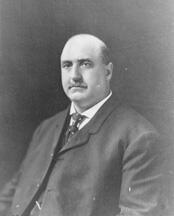
Here you will find contact information for Senator Alfred Beard Kittredge, including email address, phone number, and mailing address.
| Name | Alfred Beard Kittredge |
| Position | Senator |
| State | South Dakota |
| Party | Republican |
| Status | Former Representative |
| Term Start | December 2, 1901 |
| Term End | March 3, 1909 |
| Terms Served | 2 |
| Born | March 28, 1861 |
| Gender | Male |
| Bioguide ID | K000255 |
About Senator Alfred Beard Kittredge
Alfred Beard Kittredge (March 28, 1861 – May 4, 1911) was a Republican politician and attorney who represented South Dakota in the United States Senate from 1901 to 1909. Over two terms in office, he contributed to the legislative process during a significant period in American history, participating in the democratic process and representing the interests of his constituents in a rapidly developing western state.
Kittredge was born on March 28, 1861, in Nelson, New Hampshire, the son of Russell H. Kittredge, a physician, and Laura Frances (Holmes) Kittredge. He was raised and educated in nearby Jaffrey, New Hampshire, where he spent his formative years. His New England upbringing and family background in a professional household helped shape his interest in higher education and public affairs.
Kittredge attended Yale College, from which he graduated in 1882. After completing his undergraduate studies, he read law with Wheelock G. Veazey in Rutland, Vermont, and with the firm of Bachelder and Faulkner in Keene, New Hampshire. He then returned to Yale for formal legal training and graduated from Yale Law School in 1885. That same year he was admitted to the bar and moved west to Sioux Falls, in what was then Dakota Territory and soon to become South Dakota, where he commenced the practice of law.
Establishing himself in Sioux Falls, Kittredge built a successful legal practice and simultaneously developed political and journalistic connections. He served as the Sioux Falls correspondent for the St. Paul Pioneer Press, a leading Republican newspaper, a role that broadened his network within the Republican Party and enhanced his visibility in regional politics. A committed Republican, he became chairman of the party organization in Minnehaha County. With the admission of South Dakota to the Union, he entered elective office, winning election to the South Dakota Senate, where he served from 1889 to 1893. He further solidified his standing in national party circles as a member of the Republican National Committee from 1892 to 1899.
Kittredge’s prominence in state and national Republican politics led to his elevation to the United States Senate. In 1901 he was appointed to the Senate to fill the vacancy caused by the death of Senator James H. Kyle. He subsequently secured election to a full term in 1903 and served from July 11, 1901, to March 3, 1909. During his Senate career, he held several influential committee chairmanships. He was chairman of the Select Committee on Standards, Weights and Measures in the 57th Congress, chairman of the Committee on Patents in the 58th and 59th Congresses, and chairman of the Committee on Interoceanic Canals in the 60th Congress. In this latter role, his committee was in part responsible for the decision to select Panama, rather than Nicaragua, as the site for constructing a canal between the Atlantic and Pacific Oceans, a choice of enduring strategic and commercial importance. A member of the Republican Party throughout his tenure, he played an active role in shaping legislation affecting commerce, infrastructure, and industrial regulation in the early twentieth century. He was an unsuccessful candidate for renomination in 1908 and left the Senate at the expiration of his term in March 1909.
After concluding his congressional service, Kittredge returned to Sioux Falls and resumed the practice of law. He remained a respected figure in South Dakota’s legal and political circles, although his public career was increasingly limited by declining health. In his later years, his weight exceeded 300 pounds, and he began to experience serious health problems. In October 1910, after overexerting himself while walking from the courthouse to his offices in cold weather, he became chronically ill. On medical advice, he ended his law practice and business affairs and returned to Jaffrey, New Hampshire, to live in retirement.
Seeking relief from his ailments, Kittredge traveled in February 1911 to Hot Springs, Arkansas, a popular health resort of the era, in hopes of recovering his strength. His condition continued to deteriorate, and he became comatose in late April. Alfred Beard Kittredge died in Hot Springs on May 4, 1911. His body was returned to New Hampshire, and he was buried in Conant Cemetery in Jaffrey. He never married and had no children, leaving his legacy primarily in his legal career, his service to the Republican Party, and his two terms as United States senator from South Dakota during a transformative period in American political and economic life.