Senator Alfred Osborn Pope Nicholson
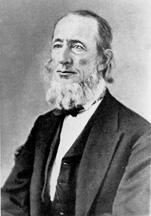
Here you will find contact information for Senator Alfred Osborn Pope Nicholson, including email address, phone number, and mailing address.
| Name | Alfred Osborn Pope Nicholson |
| Position | Senator |
| State | Tennessee |
| Party | Democratic |
| Status | Former Representative |
| Term Start | January 1, 1840 |
| Term End | December 31, 1861 |
| Terms Served | 2 |
| Born | August 31, 1808 |
| Gender | Male |
| Bioguide ID | N000096 |
About Senator Alfred Osborn Pope Nicholson
Alfred Osborn Pope Nicholson (August 31, 1808 – March 23, 1876) was a lawyer, newspaper editor, banker, jurist, and Democratic politician from Tennessee who twice served as a United States Senator from that state. Over a public career that extended from the Jacksonian era through Reconstruction, he held legislative, financial, and judicial posts at both the state and federal levels and participated in the national debates that preceded the Civil War.
Nicholson was born on August 31, 1808, near Franklin in Williamson County, Tennessee. Little is recorded about his early childhood, but he came of age in a rapidly developing Middle Tennessee region shaped by frontier expansion and the politics of the early republic. He pursued higher education at the University of North Carolina at Chapel Hill, from which he graduated in 1827. After completing his collegiate studies, he read law and prepared for a professional career in the legal field.
By 1831 Nicholson had been admitted to the bar, and he opened a law practice in Columbia, Tennessee. Alongside his legal work, he quickly became involved in journalism and public affairs. From 1832 to 1835 he edited the Western Mercury, a newspaper published in Columbia, using the press as a platform to engage with the political issues of the day. During this period he also entered elective office, serving in the Tennessee House of Representatives from 1833 to 1839. His early legislative service coincided with the ascendancy of the Democratic Party in Tennessee and helped establish his reputation as a committed Democrat and an influential figure in state politics.
Nicholson’s growing prominence led to his first service in the United States Senate. In 1840 he was appointed on an interim basis to succeed to the Senate seat left vacant by the death of Senator Felix Grundy. He served in the United States Congress as a Senator from Tennessee from December 25, 1840, to February 7, 1842, contributing to the legislative process during what his official congressional biography characterizes as part of a broader period of service from 1839 to 1861. A member of the Democratic Party, he participated in the democratic process and represented the interests of his Tennessee constituents during this first term in office. After leaving the Senate in 1842, he returned to state politics, serving in the Tennessee State Senate from 1843 to 1845 and relocating to Nashville during this time.
In addition to his legislative duties, Nicholson remained active in journalism and finance. He edited the Nashville Union from 1844 to 1846, further solidifying his role as a leading Democratic voice in Tennessee’s press. From 1846 to 1847 he served as a director and then as president of the Bank of Tennessee, reflecting his engagement with the state’s financial institutions during a period of economic development and political contention over banking policy. Like many Southern political leaders of his era, Nicholson was a slave owner, a fact that placed him within the prevailing social and economic order of the antebellum South.
Nicholson’s national profile increased in the 1850s. In 1853 President Franklin Pierce sought to appoint him to a Cabinet position, but Nicholson declined to serve. Instead, he moved into influential federal patronage and media roles, editing the Washington Union, a prominent Democratic newspaper in the nation’s capital, from 1853 to 1856. He subsequently served as public printer to the United States House of Representatives, overseeing the printing of congressional documents and further entrenching his connections within Democratic circles in Washington.
In 1859 Nicholson returned to the United States Senate after being elected by the Tennessee General Assembly. He served this second term from March 4, 1859, to March 3, 1861, during a critical period in American history as sectional tensions over slavery and states’ rights escalated toward civil war. As a Democratic Senator from a Southern state, he was aligned with those who sympathized with the emerging Confederacy. Anticipating Tennessee’s secession, he withdrew from participation in the Senate on March 3, 1861, and later in 1861 he formally resigned, as did all other Senators from states that joined the Confederacy. However, the official Congressional biography of Nicholson records that he was expelled from the Senate for sympathy to the Confederacy, placing him among the United States senators expelled or censured in the run-up to and early months of the Civil War. During this same moment, his fellow Tennessee senator Andrew Johnson, a Southern Unionist, notably remained in the Senate and did not resign when Tennessee seceded.
After the Civil War, Nicholson resumed public service in a reconstructed Tennessee. In 1870 he was appointed chief justice of the Tennessee Supreme Court, a position he held from 1870 until his death. In this judicial role he helped guide the state’s highest court through the complex legal issues of the postwar era, including questions arising from emancipation, reconstruction of civil government, and the reordering of Tennessee’s legal and social systems. His tenure as chief justice marked the culmination of a long career that had encompassed law, journalism, banking, state legislation, and national office.
Alfred Osborn Pope Nicholson died on March 23, 1876, in Columbia, Tennessee, the community where he had first established his law practice decades earlier. He was buried in Rose Hill Cemetery in Columbia. His life spanned from the early national period through Reconstruction, and his career reflected both the opportunities and the profound conflicts that shaped Tennessee and the United States in the nineteenth century.