Representative Alfred Alexander Taylor
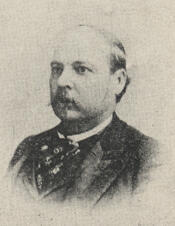
Here you will find contact information for Representative Alfred Alexander Taylor, including email address, phone number, and mailing address.
| Name | Alfred Alexander Taylor |
| Position | Representative |
| State | Tennessee |
| District | 1 |
| Party | Republican |
| Status | Former Representative |
| Term Start | December 2, 1889 |
| Term End | March 3, 1895 |
| Terms Served | 3 |
| Born | August 6, 1848 |
| Gender | Male |
| Bioguide ID | T000064 |
About Representative Alfred Alexander Taylor
Alfred Alexander Taylor (August 6, 1848 – November 25, 1931) was an American politician, lecturer, and Republican leader from eastern Tennessee who served three terms in the United States House of Representatives from 1889 to 1895 and later as the 34th governor of Tennessee from 1921 to 1923. One of only three Republicans to hold the governorship of Tennessee between the end of Reconstruction and the latter half of the twentieth century, he became a prominent figure in the state’s political life over several decades and was widely known for his oratorical skill and colorful campaign style.
Taylor was born in eastern Tennessee, where he grew up in a region that would long remain a Republican stronghold within the state. He was the elder brother of Robert Love Taylor (1850–1912), who would also become a major political figure and serve as a Democratic governor and United States senator. The brothers’ intertwined careers and contrasting party affiliations would shape much of Alfred Taylor’s public life and give rise to some of the most memorable political contests in Tennessee history.
Taylor’s early political ambitions focused on representing Tennessee’s 1st Congressional District. In 1878, he sought the Republican nomination for the district’s seat, then held by Augustus Pettibone. Although Taylor enjoyed substantial popular support, Pettibone secured the nomination at the party’s convention, angering many of Taylor’s backers. In response, Taylor’s brother Robert, running as a Democrat, entered the general election against Pettibone. With the combined support of Democrats and Alfred Taylor’s disgruntled Republican supporters, Robert captured the seat. He was defeated for reelection by Pettibone after just one term, and no Democrat has been elected to the 1st District seat since.
In 1886, Alfred Alexander Taylor emerged as the Republican nominee for governor of Tennessee in a race that would become famous as the “War of the Roses.” Republicans, hoping to exploit divisions within the Democratic Party, put forward Taylor as their candidate, while Democrats nominated his younger brother, Robert Love Taylor, believing him best able to reunite the party and counter Alfred’s popular appeal. The brothers canvassed the state together, drawing large crowds with their light-hearted political banter and musical performances on the fiddle, a marked contrast to the fierce and often bitter debates that had characterized earlier gubernatorial campaigns. At a stop in Madisonville, Robert remarked that he and Alfred were both roses, though he was a white rose and Alfred a red rose. Their supporters adopted white and red roses as symbols, and the contest became known as the “War of the Roses,” a name that also recalled the fifteenth-century English conflict. On election day, Robert defeated Alfred by about 16,000 votes, but the campaign significantly enhanced Alfred Taylor’s statewide popularity.
That enhanced standing helped propel Alfred Taylor to Congress two years later. In 1888, he successfully ran as a Republican for the 1st District seat in the U.S. House of Representatives, defeating Democrat David P. Wilcox by about 7,000 votes. He was reelected in 1890, narrowly defeating Roderick R. Butler, who ran as an independent, by less than a thousand votes, and he secured a third term in 1892. Serving as a Representative from Tennessee in the United States Congress from 1889 to 1895, Taylor participated actively in the legislative process during a significant period in American history and represented the interests of his East Tennessee constituents. A member of the Republican Party, he supported key elements of the national Republican program, including the McKinley Tariff, a protectionist measure that raised tariffs on imports by 50 percent, and the Lodge Bill, which sought to provide federal protections for Black voters in the South.
After leaving Congress in 1895, Taylor turned to the lecture circuit, often appearing with his brother Robert in a series of popular public programs. Together they co-wrote and presented a widely attended lecture entitled “Yankee Doodle and Dixie,” which blended humor, reminiscence, and commentary on national affairs. The tour was a major financial success, netting the brothers tens of thousands of dollars and further cementing their joint reputation as gifted entertainers and public speakers as well as political figures.
Taylor remained an active participant in Tennessee politics in the early twentieth century. In 1906, he ran as an independent candidate for the 1st District congressional seat against Walter P. Brownlow, the state Republican Party boss, but was defeated by a substantial margin. In 1910, he again sought the governorship, this time pursuing the Republican nomination, but lost to Ben W. Hooper, who went on to defeat Alfred’s brother Robert in the general election. These setbacks did not end Taylor’s public career, and he continued to be regarded as a leading Republican voice in the state.
In 1920, at the age of 71, Taylor was again nominated by the Republican Party for governor of Tennessee. His Democratic opponent was the incumbent governor, Albert H. Roberts, who had alienated a significant portion of his party by enacting unpopular tax reforms and by supporting ratification of the Nineteenth Amendment to the United States Constitution, which granted women the right to vote. Taylor himself supported the Nineteenth Amendment, and on the campaign trail he focused his criticism primarily on Roberts’s tax policies. He traveled the state accompanied by a four-piece quartet composed of three of his sons and a friend, and he frequently told the story of “Old Limber,” an aging foxhound who, despite his years, could still outrun the pack—an allegory for his own candidacy. In the general election, which was the first gubernatorial contest in Tennessee in which women could vote, Taylor defeated Roberts by a vote of 229,143 to 185,890.
As governor from 1921 to 1923, Taylor advanced what he called the “Big Four” priorities: tax reform, rural school reform, highway development, and economic improvement. Operating with a state legislature controlled by Democrats, he saw much of his agenda blocked, but he nonetheless secured several notable achievements. His administration created the position of state tax commissioner, obtained funding for a state historical commission, and helped resolve a number of labor disputes. Taylor also played a role in persuading the federal government to convert a nitrate plant built during World War I at Wilson Dam in Muscle Shoals, Alabama, into an electrical power facility intended to benefit residents of the Tennessee Valley. In 1922, the Democrats nominated former party leader Austin Peay to challenge Taylor. Although Peay lacked Taylor’s charisma and relied on straightforward stump speeches rather than the entertaining rallies favored by the governor, he enjoyed the backing of a unified Democratic Party and the support of entrepreneur Clarence Saunders, founder of the Piggly Wiggly grocery chain. Peay defeated Taylor in the general election by a vote of 141,002 to 102,586.
Alfred Alexander Taylor left office in 1923, concluding a public career that had spanned nearly half a century and included service in Congress, multiple statewide campaigns, and a term as governor during a period of political realignment and social change. He died on November 25, 1931. His life and career, closely intertwined with those of his brother Robert Love Taylor, left a distinctive imprint on Tennessee’s political history, particularly in the development of the Republican Party in the state and in the memorable “War of the Roses” campaign that made the Taylor brothers legendary figures in Southern politics.