Representative Allan Oakley Hunter
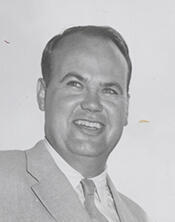
Here you will find contact information for Representative Allan Oakley Hunter, including email address, phone number, and mailing address.
| Name | Allan Oakley Hunter |
| Position | Representative |
| State | California |
| District | 12 |
| Party | Republican |
| Status | Former Representative |
| Term Start | January 3, 1951 |
| Term End | January 3, 1955 |
| Terms Served | 2 |
| Born | June 15, 1916 |
| Gender | Male |
| Bioguide ID | H000979 |
About Representative Allan Oakley Hunter
Allan Oakley Hunter (June 15, 1916 – May 2, 1995) was an American lawyer, businessman, and Republican politician who served in the United States House of Representatives from California from 1951 to 1955. He represented California’s 9th congressional district from 1951 to 1953 and California’s 12th congressional district from 1953 to 1955, contributing to the legislative process during two terms in office and participating actively in the democratic governance of the post–World War II era.
Hunter was born on June 15, 1916, in Los Angeles, California. He grew up in Southern California during a period of rapid regional growth and economic development that would later shape his interest in public policy and housing. Details of his early family life are not extensively documented in public sources, but his formative years in Los Angeles placed him in one of the nation’s most dynamic urban centers, an environment that would influence his later work in both law and federal housing finance.
Hunter pursued higher education in California, preparing for a career in law and public service. He studied at the University of California, Los Angeles (UCLA), and went on to earn a law degree, after which he was admitted to the bar and began practicing law. His legal training provided the foundation for his later work as a legislator and as an executive in the housing finance sector, equipping him with expertise in statutory interpretation, contracts, and regulatory frameworks that would prove important in both his congressional and post-congressional roles.
By the late 1940s, Hunter had become active in Republican politics in California, aligning himself with the party’s postwar emphasis on economic growth, private enterprise, and anti-communism. Building on his legal career and political involvement, he successfully ran for Congress in 1950. Taking office on January 3, 1951, he served in the U.S. House of Representatives during a significant period in American history marked by the early Cold War, the Korean War, and the beginning of the modern civil rights era. From 1951 to 1953 he represented California’s 9th congressional district, and after redistricting or political realignment, he represented California’s 12th congressional district from 1953 to 1955. During these two terms, he represented the interests of his constituents in California, participated in debates over national security and domestic policy, and contributed to the legislative process as a member of the House.
Hunter’s congressional service ended on January 3, 1955, after two consecutive terms. Following his departure from elective office, he returned to the private sector and continued his work as an attorney and businessman. His experience in Congress, particularly his familiarity with federal programs and economic policy, positioned him for later leadership roles in national housing and finance institutions. Over time he developed a reputation as an able administrator and policy practitioner, bridging the worlds of politics, law, and business.
In 1970, Hunter began the most prominent phase of his post-congressional career when he was appointed president and chairman of the Federal National Mortgage Association, commonly known as Fannie Mae. He served in this dual leadership role from 1970 to 1981, overseeing the organization during a period of substantial change in the American housing market and in federal housing finance policy. Under his leadership, Fannie Mae navigated shifting interest-rate environments, evolving federal regulations, and growing demand for homeownership, helping to expand the secondary mortgage market and increase the availability of mortgage credit nationwide. His tenure coincided with broader efforts to stabilize and modernize housing finance in the United States.
After stepping down from Fannie Mae in 1981, Hunter largely withdrew from public life, though he remained associated with the legal and business communities and was remembered for his contributions to both Congress and the housing finance system. Allan Oakley Hunter died on May 2, 1995. His career spanned law, elective office, and high-level financial administration, and he is remembered as a California Republican who played a role in mid-twentieth-century national policymaking and in the development of the modern secondary mortgage market.