Representative Allard Henry Gasque
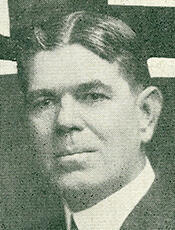
Here you will find contact information for Representative Allard Henry Gasque, including email address, phone number, and mailing address.
| Name | Allard Henry Gasque |
| Position | Representative |
| State | South Carolina |
| District | 6 |
| Party | Democratic |
| Status | Former Representative |
| Term Start | December 3, 1923 |
| Term End | January 3, 1939 |
| Terms Served | 8 |
| Born | March 8, 1873 |
| Gender | Male |
| Bioguide ID | G000092 |
About Representative Allard Henry Gasque
Allard Henry Gasque (March 8, 1873 – June 17, 1938) was a Democratic U.S. Representative from South Carolina who served in the United States Congress from 1923 until his death in 1938. Over eight consecutive terms in the House of Representatives, he represented his constituents during a significant period in American history and contributed to the legislative process in the interwar and early New Deal years. Following his death in office, he was succeeded by his wife, Elizabeth Hawley Gasque.
Gasque was born on Friendfield Plantation, near Hyman in Marion County, South Carolina, an area that later became part of Florence County. He attended the local public schools and spent his early years working on a farm, experiences that grounded him in the rural life and agricultural economy of his home state. Before pursuing higher education, he taught in country schools for several years, beginning a lifelong association with public education and educational reform in South Carolina.
Gasque enrolled at the University of South Carolina in Columbia and graduated in 1901. Immediately after completing his studies, he became principal of the Waverly Graded School in Columbia, serving from 1901 to 1902. His brief but formative tenure as a school administrator helped establish his reputation as an educator and prepared him for a broader role in county and state educational leadership.
In 1902, Gasque was elected superintendent of education for Florence County, South Carolina, a position he held continuously by reelection until 1923. Over more than two decades in that office, he oversaw local school administration and became a prominent figure in state educational circles. He served as president of the county superintendents’ association of South Carolina in 1911 and 1912, and later as president of the State Teachers’ Association in 1914 and 1915, reflecting his influence on educational policy and professional standards for teachers across the state.
Parallel to his educational career, Gasque became increasingly active in Democratic Party politics. He served as a member of the Democratic State Executive Committee from 1912 to 1920, participating in the party’s organizational and electoral strategies during a period of one-party dominance in South Carolina. From 1919 to 1923, he chaired the Democratic county committee, further consolidating his local political base and positioning himself for national office.
Gasque was elected as a Democrat to the Sixty-eighth Congress and to the seven succeeding Congresses, serving in the U.S. House of Representatives from March 4, 1923, until his death on June 17, 1938. During his tenure, he participated in the democratic process at the national level and represented the interests of his South Carolina constituents through periods of economic expansion, the Great Depression, and the early implementation of New Deal policies. He rose to a position of particular responsibility as chairman of the House Committee on Pensions during the Seventy-second through Seventy-fifth Congresses, where he played a role in overseeing legislation related to federal pensions, including benefits for veterans and other beneficiaries.
Allard Henry Gasque died in office in Washington, D.C., on June 17, 1938, while still serving in the House of Representatives. His death placed him among the members of the United States Congress who died in office in the first half of the twentieth century. He was interred in Mount Hope Cemetery in Florence, South Carolina. In the subsequent special election, his wife, Elizabeth Hawley Gasque, was elected to succeed him, continuing the representation of their district in Congress and extending the family’s public service legacy. His papers are preserved in the Allard Henry Gasque Papers at South Carolina Political Collections at the University of South Carolina, documenting his long career in education and national politics.