Representative Allard Kenneth Lowenstein
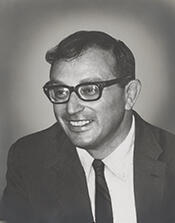
Here you will find contact information for Representative Allard Kenneth Lowenstein, including email address, phone number, and mailing address.
| Name | Allard Kenneth Lowenstein |
| Position | Representative |
| State | New York |
| District | 5 |
| Party | Democratic |
| Status | Former Representative |
| Term Start | January 3, 1969 |
| Term End | January 3, 1971 |
| Terms Served | 1 |
| Born | January 16, 1929 |
| Gender | Male |
| Bioguide ID | L000477 |
About Representative Allard Kenneth Lowenstein
Allard Kenneth Lowenstein (January 16, 1929 – March 14, 1980) was an American Democratic politician, lawyer, and activist who served as the U.S. representative for New York’s 5th congressional district in Nassau County for one term from 1969 to 1971. A member of the Democratic Party, he contributed to the legislative process during this single term in office, representing the interests of his constituents during a turbulent period in American political and social life.
Lowenstein pursued an education that prepared him for a career in public service and international affairs, developing an early interest in human rights, global governance, and democratic participation. By the mid-1950s he was already engaged in national and international policy circles, and in 1957 he worked with Eleanor Roosevelt at the American Association for the United Nations, an experience that deepened his commitment to international law and decolonization. His association with Roosevelt, a leading advocate for human rights and the United Nations, helped shape his later work on issues of colonial rule and self-determination.
In 1959, Lowenstein undertook a clandestine tour of South-West Africa, then a United Nations Trust Territory administered by South Africa and now the independent nation of Namibia. During this trip he gathered testimony and documentary evidence against the South African-controlled government, focusing on abuses associated with apartheid and the denial of self-government to the territory’s inhabitants. After returning to the United States, he devoted a year to promoting his findings to student organizations and civic groups, seeking to mobilize public opinion against South Africa’s continued control of the territory. He subsequently authored the book “A Brutal Mandate,” which detailed conditions in South-West Africa and featured an introduction by Eleanor Roosevelt, underscoring the international significance of his work.
Lowenstein’s growing prominence as an advocate for civil rights, decolonization, and democratic reform led him into increasingly visible roles within American party politics. In 1960 he served as a delegate to the Democratic National Convention, participating in the selection of the party’s national ticket and platform at a moment when civil rights and Cold War policy were central issues. Reflecting his wide network of political relationships and his interest in bipartisan dialogue, he also attended the 1964 Republican National Convention with his close friend and future congressional colleague Donald Rumsfeld. In 1966 he assisted Senator Robert F. Kennedy in drafting the “Day of Affirmation” address, delivered to the National Union of South African Students at the University of Cape Town, a speech that became one of Kennedy’s most celebrated statements on moral courage, individual responsibility, and opposition to apartheid.
Lowenstein was elected to the U.S. House of Representatives as a Democrat from New York’s 5th congressional district and served from January 3, 1969, to January 3, 1971. His tenure in Congress coincided with the Vietnam War, the height of the civil rights movement, and intense domestic debate over foreign policy and social justice. As a member of the House of Representatives, he participated in the democratic process and contributed to legislative deliberations on issues affecting both his Nassau County constituents and the nation at large. Although he served only one term, his time in Congress reflected his broader career-long engagement with questions of war and peace, human rights, and the responsibilities of democratic government.
The assassination of Senator Robert F. Kennedy in Los Angeles on June 6, 1968, had a profound impact on Lowenstein, who had been closely associated with Kennedy’s presidential campaign and his broader political vision. In the years that followed, Lowenstein emerged as one of the first public figures to question the official account of the killing. In a notable one-hour appearance on the PBS television program “Firing Line” in 1975, he was interviewed by William F. Buckley Jr. and stated that he did not believe Sirhan Sirhan had acted alone in shooting Kennedy. His public doubts reflected his continuing concern with the integrity of American political institutions and the need for full transparency in matters of national tragedy.
Lowenstein’s life ended violently on March 14, 1980, when he was shot in his Manhattan office by Dennis Sweeney, a former political associate who was mentally ill and believed that Lowenstein was plotting against him. After the shooting, Sweeney calmly waited for the police to arrive and was taken into custody. He was later found not guilty by reason of insanity and committed to full-time psychiatric treatment for schizophrenia. Two decades later, in 2000, a judge determined that Sweeney was no longer a danger to society and granted him a conditional release. Lowenstein’s death at age fifty-one cut short a career marked by activism, public service, and a sustained commitment to democratic ideals at home and abroad.