Representative Allen Boyd
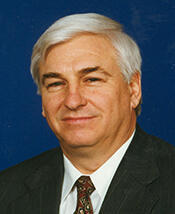
Here you will find contact information for Representative Allen Boyd, including email address, phone number, and mailing address.
| Name | Allen Boyd |
| Position | Representative |
| State | Florida |
| District | 2 |
| Party | Democratic |
| Status | Former Representative |
| Term Start | January 7, 1997 |
| Term End | January 3, 2011 |
| Terms Served | 7 |
| Born | June 6, 1945 |
| Gender | Male |
| Bioguide ID | B000716 |
About Representative Allen Boyd
Frederick Allen Boyd Jr. (born June 6, 1945) is an American farmer, lobbyist, and politician who served as the United States Representative for Florida’s 2nd congressional district from January 3, 1997, to January 3, 2011. A member of the Democratic Party, he represented a largely rural and moderate district in the Florida Panhandle for seven consecutive terms. His tenure in Congress coincided with a significant period in recent American history, spanning the late 1990s economic expansion, the September 11 attacks and ensuing wars, and the financial crisis of 2008, during which he participated in the legislative process and represented the interests of his constituents.
Boyd was born on June 6, 1945, in Valdosta, Georgia, and was raised in the rural South, where he developed early ties to agriculture and farming that would later shape both his professional life and political identity. Growing up in an agricultural environment, he gained firsthand experience with the concerns of farmers and small communities, experience that later informed his policy positions and his reputation as a moderate, pro-agriculture Democrat.
After completing his early education, Boyd attended Florida State University in Tallahassee, Florida. His time in higher education, combined with his background in farming, helped prepare him for a career that blended agriculture, business, and public service. Following his studies, he returned to work as a farmer, establishing himself in the agricultural sector and building a livelihood that kept him closely connected to the economic realities of rural North Florida.
Boyd’s political career began at the state level, where he served in the Florida House of Representatives before seeking federal office. In the state legislature, he worked alongside other Florida lawmakers, including State Senator Al Lawson, with whom he would later cross paths in a congressional primary. His service in the Florida House helped him build a reputation as a centrist Democrat attentive to fiscal issues, agriculture, and the needs of his district, laying the groundwork for his successful run for Congress.
In 1996, Boyd was elected to the U.S. House of Representatives from Florida’s 2nd congressional district, taking office on January 3, 1997. He went on to serve seven terms, remaining in Congress until January 3, 2011. During these years, he participated actively in the democratic process, contributing to the legislative work of the House and advocating for his constituents in the Panhandle and North Florida region. As a member of the Democratic Party, he often positioned himself as a moderate or conservative Democrat, reflecting the political character of his district and focusing on issues such as agriculture, rural development, and fiscal responsibility.
Boyd’s final term in Congress was marked by a challenging political environment. In 2010, he faced a strong primary challenge from a more liberal Democrat, State Senator Al Lawson, with whom he had previously served in the Florida House. Boyd successfully fended off Lawson’s spirited challenge in the Democratic primary, securing renomination. However, in the general election that followed, he was defeated by Republican nominee Steve Southerland in the 2010 election, receiving only 41 percent of the vote. The general election ballot also included independent candidates Paul C. McKain and Dianne Berryhill, and Ray Netherwood qualified as a write-in candidate, reflecting a competitive and fragmented race that ultimately ended Boyd’s fourteen-year tenure in the House.
After leaving Congress in January 2011, Boyd transitioned to work in the private sector while maintaining his longstanding ties to public policy. Drawing on his experience as a farmer and legislator, he became a lobbyist and joined the Twenty-First Century Group, a lobbying firm in Washington, D.C. In this role, he has continued to engage with federal policy and legislative issues, particularly those affecting agriculture, rural communities, and the economic interests of his former district and similar regions. Throughout his post-congressional career, Boyd has remained identified with the Democratic Party and with the pragmatic, rural-focused perspective that characterized his years in elected office.