Representative Allen Foster Cooper
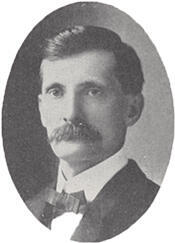
Here you will find contact information for Representative Allen Foster Cooper, including email address, phone number, and mailing address.
| Name | Allen Foster Cooper |
| Position | Representative |
| State | Pennsylvania |
| District | 23 |
| Party | Republican |
| Status | Former Representative |
| Term Start | November 9, 1903 |
| Term End | March 3, 1911 |
| Terms Served | 4 |
| Born | June 16, 1862 |
| Gender | Male |
| Bioguide ID | C000745 |
About Representative Allen Foster Cooper
Allen Foster Cooper (June 16, 1862 – April 20, 1917) was a Republican member of the United States House of Representatives from Pennsylvania who served four consecutive terms in Congress from 1903 to 1911. His congressional career unfolded during a significant period in American history marked by the Progressive Era and the presidency of Theodore Roosevelt, and he was an active participant in the legislative process, representing the interests of his Pennsylvania constituents as a member of the Republican Party.
Cooper was born on June 16, 1862, in Franklin Township, Fayette County, Pennsylvania. Raised in southwestern Pennsylvania, he came of age during the final years of the Civil War and the Reconstruction era, in a region shaped by agriculture, coal, and emerging industry. His early life in Franklin Township provided the local grounding that would later inform his work as a lawyer and legislator representing a largely rural and small-town constituency.
Cooper pursued his education in the public and normal school systems of Pennsylvania. He graduated in 1881 from the State Normal School in California, Pennsylvania, an institution established to train teachers for the expanding public school system. Seeking further academic advancement, he attended Mount Union College in Alliance, Ohio, in 1883. Following his studies there, he returned to the classroom as an educator, teaching in public schools for six years. This period as a teacher not only reflected his commitment to education but also gave him firsthand experience with the needs of local communities and families in his region.
Determined to enter the legal profession, Cooper enrolled in the law department of the University of Michigan at Ann Arbor, one of the leading law schools in the country at the time. He graduated in 1888 and, in the same year, was admitted to the bar. Cooper then commenced the practice of law in Uniontown, Pennsylvania, the county seat of Fayette County. Establishing himself as an attorney in Uniontown, he built a legal and business career that connected him closely with the civic and economic life of the area, laying the groundwork for his later entry into public office.
Cooper’s formal political career began with his election as a Republican to the Fifty-eighth Congress, which convened on March 4, 1903. He was subsequently reelected to the Fifty-ninth, Sixtieth, and Sixty-first Congresses, serving continuously from March 4, 1903, to March 3, 1911. During these four terms in the U.S. House of Representatives, he took part in the national legislative debates of the early twentieth century, a time when Congress addressed issues such as tariff policy, regulation of corporations, and improvements in transportation and infrastructure. As a member of the House, Cooper participated in the democratic process and contributed to the legislative work of the Republican majority, representing Pennsylvania during a period of rapid industrial growth and political reform.
After concluding his service in Congress in 1911, Cooper returned to Uniontown, Pennsylvania, where he resumed both his legal practice and his business activities. Drawing on his experience in national affairs, he continued to be a figure of local prominence, applying his legal expertise and congressional background to the service of clients and the community. He remained in Uniontown for the rest of his life, maintaining the professional pursuits that had preceded his time in Washington.
Allen Foster Cooper died on April 20, 1917. His career traced a path from rural Fayette County and the public schools of Pennsylvania and Ohio, through a respected legal practice and four terms in the U.S. House of Representatives, and back to the community in which he had built his professional life. His years in Congress, spanning 1903 to 1911, placed him among the Republican legislators who helped shape federal policy during a transformative era in American political and economic history.