Representative Alonzo Dillard Folger
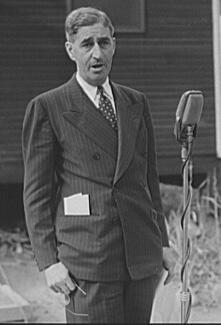
Here you will find contact information for Representative Alonzo Dillard Folger, including email address, phone number, and mailing address.
| Name | Alonzo Dillard Folger |
| Position | Representative |
| State | North Carolina |
| District | 5 |
| Party | Democratic |
| Status | Former Representative |
| Term Start | January 3, 1939 |
| Term End | January 3, 1943 |
| Terms Served | 2 |
| Born | July 9, 1888 |
| Gender | Male |
| Bioguide ID | F000240 |
About Representative Alonzo Dillard Folger
Alonzo Dillard Folger (July 9, 1888 – April 30, 1941) was a Democratic U.S. Representative from North Carolina who served in the United States Congress from 1939 until his death in 1941. Over the course of his service, he contributed to the legislative process during a critical period in American history on the eve of and early involvement in World War II, representing the interests of his North Carolina constituents as a member of the Democratic Party.
Folger was born in Dobson, Surry County, North Carolina, on July 9, 1888. He was educated in the public schools of Surry County, reflecting the rural educational environment of the early twentieth century in that region. Demonstrating early academic promise, he went on to attend the University of North Carolina at Chapel Hill, the state’s flagship public university, which would remain an important institution in his later public service.
At the University of North Carolina, Folger completed his undergraduate studies and received a bachelor’s degree in 1912. He continued at Chapel Hill for professional training in the law, earning his law degree in 1914. That same year, he was admitted to the bar and began the practice of law in his hometown of Dobson. Shortly thereafter, he relocated his practice to Mount Airy, North Carolina, where he established himself as an attorney and became increasingly involved in civic and political affairs.
Folger’s legal and civic work led to broader responsibilities in state educational and judicial institutions. From 1932 to 1938, he served as a trustee of the University of North Carolina, helping oversee the governance of the institution from which he had graduated. In 1937 he was appointed to the North Carolina Superior Court, joining the state’s higher trial judiciary. His tenure on the bench was brief, however; after serving only about two months as a judge, he resigned in order to devote himself to national party work as a member of the Democratic National Committee. He had been named to the Committee in 1936 and would remain a member from 1936 until his death in 1941, participating in the national leadership of the Democratic Party during the New Deal era.
Building on his prominence in state and national Democratic circles, Folger was elected as a Democrat to the 76th United States Congress in 1938, taking office on January 3, 1939, as a Representative from North Carolina. He was re-elected in 1940 to the 77th Congress, thereby securing a second term in the House of Representatives. His service in Congress, spanning from 1939 to 1941, coincided with a significant period in American history marked by the final years of the Great Depression and the mounting global tensions that would lead to U.S. involvement in World War II. During his time in the House, he participated in the democratic process and contributed to legislative deliberations on behalf of his district and state.
Folger’s congressional career was cut short by his untimely death. While serving his second term, he was killed in an automobile accident in Mount Airy, North Carolina, on April 30, 1941. At the time of his death, he had served one full term and a portion of a second term in Congress, and he remained a sitting member of the Democratic National Committee. In the special election held to fill the vacancy created by his death, his brother, John Hamlin Folger, was elected to succeed him in the U.S. House of Representatives, continuing the family’s representation of the district.
Alonzo Dillard Folger was interred in Dobson Cemetery in his hometown of Dobson, North Carolina. His career encompassed service as an attorney, university trustee, state judge, national party official, and member of Congress, and his death placed him among the members of the United States Congress who died in office during the first half of the twentieth century.