Representative Alston Gordon Dayton
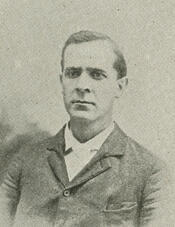
Here you will find contact information for Representative Alston Gordon Dayton, including email address, phone number, and mailing address.
| Name | Alston Gordon Dayton |
| Position | Representative |
| State | West Virginia |
| District | 2 |
| Party | Republican |
| Status | Former Representative |
| Term Start | December 2, 1895 |
| Term End | March 3, 1907 |
| Terms Served | 6 |
| Born | October 18, 1857 |
| Gender | Male |
| Bioguide ID | D000163 |
About Representative Alston Gordon Dayton
Alston Gordon Dayton (October 18, 1857 – July 30, 1920) was a United States representative from West Virginia and a United States district judge of the United States District Court for the Northern District of West Virginia. He served as a Representative from West Virginia in the United States Congress from 1895 to 1907 and, as a member of the Republican Party, contributed to the legislative process during six terms in office. His public career spanned a period of significant political and economic change in the United States at the turn of the twentieth century.
Dayton was born on October 18, 1857, in Philippi, then in Virginia (now West Virginia). He was the son of Spencer Dayton, with whom he would later practice law. He attended the public schools in his native community before pursuing higher education at West Virginia University. There he received an Artium Baccalaureus degree in 1878 and went on to earn a Master of Arts degree from the same institution in 1880. In addition to his formal studies, he read law as was customary at the time, preparing for admission to the bar.
Upon completion of his legal studies, Dayton was admitted to the bar and entered private practice in Philippi in 1878, initially in partnership with his father. He practiced there from 1878 to 1879 before moving into public service as a local prosecutor. He served as prosecutor for Upshur County, West Virginia, from 1879 to 1884, gaining experience in criminal law and county administration. He then became prosecutor for Barbour County, West Virginia, holding that position from 1884 to 1888. During and after these prosecutorial roles, he resumed and expanded his private law practice in West Virginia, practicing from 1886 to 1895 and establishing himself as a prominent attorney in the region.
Dayton’s legal and prosecutorial work provided the foundation for his entry into national politics. A Republican, he was elected from West Virginia’s 2nd congressional district to the United States House of Representatives in the 54th Congress and was reelected to the five succeeding Congresses. He served from March 4, 1895, until his resignation on March 16, 1905, to accept a federal judicial appointment. His decade in the House coincided with an era of industrial expansion, debates over tariffs and monetary policy, and the emergence of the United States as an international power. As a member of the House of Representatives, Dayton participated in the democratic process and represented the interests of his constituents in northern West Virginia, contributing to the legislative work of the Republican majority during much of his tenure.
In 1905, Dayton transitioned from the legislative to the judicial branch of the federal government. He was nominated by President Theodore Roosevelt on March 7, 1905, to a seat on the United States District Court for the Northern District of West Virginia, filling the vacancy created by the departure of Judge John Jay Jackson Jr. The United States Senate confirmed his nomination on March 14, 1905, and he received his commission the same day. Dayton’s acceptance of this appointment prompted his resignation from Congress on March 16, 1905, marking the end of his congressional service and the beginning of a fifteen-year tenure on the federal bench.
As a United States district judge, Dayton presided over a wide range of civil and criminal matters arising in the Northern District of West Virginia during a period marked by the growth of the coal, timber, and railroad industries, as well as increasing federal regulation of commerce and labor. His judicial service extended from March 14, 1905, until his death on July 30, 1920. His work on the bench contributed to the development and application of federal law in a region undergoing rapid economic and social transformation.
Dayton died on July 30, 1920, in Battle Creek, Michigan, where he had gone for health-related reasons. His service on the United States District Court for the Northern District of West Virginia terminated upon his death. He was interred in Fraternity Cemetery in Philippi, West Virginia, returning to the community where he had been born, educated, and begun his legal career. His papers are preserved at the West Virginia & Regional History Center at West Virginia University, providing a documentary record of his work as a lawyer, congressman, and federal judge and offering insight into the political and legal history of West Virginia and the nation during his lifetime.