Senator Alva Moore Lumpkin
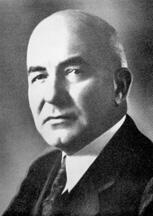
Here you will find contact information for Senator Alva Moore Lumpkin, including email address, phone number, and mailing address.
| Name | Alva Moore Lumpkin |
| Position | Senator |
| State | South Carolina |
| Party | Democratic |
| Status | Former Representative |
| Term Start | July 17, 1941 |
| Term End | December 31, 1941 |
| Terms Served | 1 |
| Born | November 13, 1886 |
| Gender | Male |
| Bioguide ID | L000510 |
About Senator Alva Moore Lumpkin
Alva Moore Lumpkin (November 13, 1886 – August 1, 1941) was a United States district judge of the United States District Court for the Eastern District of South Carolina and the United States District Court for the Western District of South Carolina and was a United States senator from South Carolina. A member of the Democratic Party, he served in the United States Senate from 1941 to 1941, contributing to the legislative process during one term in office. His brief congressional service occurred during a significant period in American history on the eve of the United States’ entry into World War II, during which he participated in the democratic process and represented the interests of his South Carolina constituents.
Lumpkin was born on November 13, 1886, in Milledgeville, Baldwin County, Georgia. In 1898 he moved with his parents to Columbia, South Carolina, where he was raised in a large family of seven siblings. By birth order the children were Elizabeth, who became a teacher; Hope, who entered the clergy; Alva, who pursued a political and legal career; Morris, who became a lawyer; Grace, who became a writer; and Katharine, who became an academic. He attended the public schools in Milledgeville and Columbia, laying the foundation for his later legal and political work in South Carolina.
Lumpkin received a Bachelor of Laws degree from the University of South Carolina School of Law in 1908 and was admitted to the bar the same year. He immediately entered private practice in Columbia, where he practiced law from 1908 to 1939. Even before completing his legal education, he became involved in the workings of state government, serving as an assistant clerk for the South Carolina Senate from 1906 to 1908. His early legal and clerical experience at the state capitol helped establish his reputation in Columbia’s legal and political circles.
Lumpkin’s formal political career began in the South Carolina House of Representatives, where he served from 1911 to 1913. His public service extended beyond state borders when, in 1914, he was appointed a member of the Conciliation Commission for the Advancement of Peace between the United States and Uruguay, reflecting contemporary efforts to promote international arbitration and peaceful resolution of disputes. During World War I, he served as an acting assistant attorney general for South Carolina in 1918, contributing to the state’s legal administration during a time of national mobilization.
In the 1920s and 1930s, Lumpkin continued to hold a series of important legal and judicial positions in South Carolina. He was a member of the South Carolina Board of Pardons from 1922 to 1923, participating in the review of clemency and pardon applications. From 1926 to 1934 he served as an acting Associate Justice of the Supreme Court of South Carolina, a role that placed him at the center of the state’s highest judicial body and further solidified his standing as a prominent jurist. Throughout this period he maintained his private law practice in Columbia, balancing his professional work with his growing responsibilities in public service.
Lumpkin’s federal judicial career began when President Franklin D. Roosevelt nominated him on May 17, 1939, to a joint seat on the United States District Court for the Eastern District of South Carolina and the United States District Court for the Western District of South Carolina, filling the vacancy created by the departure of Judge John Lyles Glenn Jr. The United States Senate confirmed his nomination on May 22, 1939, and he received his commission on July 19, 1939. As a United States district judge, he presided over federal trial matters in both districts until July 22, 1941, when his service on the bench terminated due to his resignation in order to accept appointment to the Senate.
Lumpkin entered the United States Senate in the summer of 1941. On July 17, 1941, he was appointed as a Democrat to the Senate to fill the vacancy caused by the resignation of Senator James F. Byrnes, who had left the chamber to assume a position in the Roosevelt administration. Lumpkin took his Senate seat and served from July 22, 1941, until his death on August 1, 1941. Although his tenure was extremely brief, it occurred during a critical period in American history, as Congress debated national defense measures and responded to the escalating global conflict of World War II. During this time, he participated in the legislative process and represented South Carolina in the upper chamber of Congress.
Lumpkin died in office in Washington, D.C., on August 1, 1941, following a gastric hemorrhage suffered two days earlier. His death placed him among the members of the United States Congress who died in office in the first half of the twentieth century. He was interred in Elmwood Cemetery in Columbia, South Carolina, returning to the city that had been the center of his legal practice, judicial service, and political life.