Representative Alvin Morell Bentley
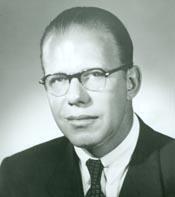
Here you will find contact information for Representative Alvin Morell Bentley, including email address, phone number, and mailing address.
| Name | Alvin Morell Bentley |
| Position | Representative |
| State | Michigan |
| District | 8 |
| Party | Republican |
| Status | Former Representative |
| Term Start | January 3, 1953 |
| Term End | January 3, 1961 |
| Terms Served | 4 |
| Born | August 30, 1918 |
| Gender | Male |
| Bioguide ID | B000391 |
About Representative Alvin Morell Bentley
Alvin Morell Bentley III (August 30, 1918 – April 10, 1969) was an American politician and philanthropist from the state of Michigan who served as a Republican Representative in the United States Congress from 1953 to 1961. A four-term member of the U.S. House of Representatives, he represented Michigan’s 8th congressional district and contributed to the legislative process during a significant period in American history. He gained national attention in 1954 as one of the five Representatives wounded in the United States Capitol shooting.
Bentley was born in Portland, Maine, the only child of Alvin M. Bentley Jr. and Helen Webb Bentley. He was born just three months before his father was killed while serving in France during World War I. Although he grew up fatherless, Bentley was heir to a substantial family fortune derived from his grandfather, who founded the Owosso Manufacturing Company in Owosso, Michigan. He spent much of his youth in the South, graduating from Southern Pines High School in Southern Pines, North Carolina, in 1934, and from Asheville Prep School in Asheville, North Carolina, in 1936. He then attended the University of Michigan, where he received his bachelor’s degree in 1940. Intending to enter government service, he went on to attend Turner’s Diplomatic School in Washington, D.C., to qualify for the U.S. diplomatic service.
Bentley embarked on a diplomatic career during World War II and the early Cold War. He joined the United States Foreign Service and served as vice consul and secretary in several overseas posts. From 1942 to 1944 he was stationed in Mexico, followed by service in Colombia from 1945 to 1946. He then served in Hungary from 1947 to 1949, a period marked by the consolidation of communist power in Eastern Europe, and in Italy from 1949 to 1950. On March 15, 1950, he returned to Washington, D.C., to work in the U.S. Department of State. Disagreeing with the foreign policy of the Truman administration, particularly in the context of emerging Cold War tensions, Bentley resigned from the diplomatic service in 1950 and returned to Owosso, Michigan, to enter Republican politics and private business.
Back in Michigan, Bentley quickly became active in party affairs and local enterprise. He served as a delegate to the Republican state conventions in 1950, 1951, and 1952. In the private sector, he became vice president of the Lake Huron Broadcasting Company in Saginaw, Michigan, beginning in 1952, and served as a director of the Mitchell-Bentley Corporation, a family-associated manufacturing concern. In 1952, he challenged and defeated incumbent Republican U.S. Representative Fred L. Crawford in the primary election for Michigan’s 8th congressional district, then went on to win the general election. He was elected to the Eighty-third and the three succeeding Congresses, serving from January 3, 1953, to January 3, 1961. During his tenure in the House of Representatives, Bentley participated in the democratic process and represented the interests of his constituents at a time of domestic change and international tension. On civil rights legislation, he voted “present” on the Civil Rights Act of 1957 and voted in favor of the Civil Rights Act of 1960.
Bentley’s congressional career was dramatically marked by violence on March 1, 1954, when four Puerto Rican nationalists opened fire from the visitors’ gallery into the chamber of the U.S. House of Representatives. He was one of five Representatives shot in the attack and was struck in the chest and abdomen. Despite the seriousness of his wounds, he survived and returned to public life, his experience becoming a notable episode in the history of the Capitol and of mid-twentieth-century American politics. In 1960, rather than seek re-nomination to the House, Bentley ran for the United States Senate. He was the Republican nominee but lost in the general election to the Democratic incumbent, Senator Patrick V. McNamara.
After leaving Congress in 1961, Bentley remained active in public affairs at both the state and national levels while also returning to academic life. From 1961 to 1962, he served as a delegate from Michigan’s 15th Senatorial District to the Michigan Constitutional Convention, which drafted the state constitution adopted in 1963. In 1962, he again sought a seat in the U.S. House of Representatives, running for a one-term, at-large seat created as a result of the 1960 census, but he was defeated in the general election by Democrat Neil Staebler. He had already begun graduate study in the History Department at the University of Michigan after leaving Congress, commuting by air between Washington, D.C., where he maintained offices, and Ann Arbor to attend classes. He received a Master of Arts degree in 1963 and continued work toward a doctoral degree. In 1960, he also served on the board of directors of the National Conference on Citizenship, reflecting his continuing interest in civic engagement and democratic institutions.
Bentley’s later years were marked by extensive philanthropic and educational endeavors. In 1961, he established the Alvin M. Bentley Foundation to support educational, scientific, and charitable projects, through which he continued to foster academic excellence in Michigan. In 1967, he contributed funds to the University of Michigan to endow a professorship in the Department of History in memory of his parents. In 1983, the foundation created the Bentley Scholarships at the University of Michigan for Michigan residents demonstrating academic excellence and promise, and it also sponsors Operation Bentley, a week-long intensive academic program at Albion College for high school juniors focused on local, state, and national politics. In the mid-1960s, Bentley broadened his public service to international humanitarian efforts, serving as chairman of the Michigan Freedom from Hunger Council, which worked to gather and disseminate information about global hunger, particularly in the Western Hemisphere. He also chaired the Michigan branch of Partners of the Alliance, formed in 1964 to link civic and professional groups in the United States with communities in Latin America to promote self-help development programs; under this initiative, the State of Michigan partnered with British Honduras (now Belize). In 1966, while still pursuing his doctoral studies, Governor George W. Romney appointed him to the board of regents of the University of Michigan, further cementing his influence on higher education in the state.
Alvin Morell Bentley died on April 10, 1969, at the age of 50 while on vacation in Tucson, Arizona, from an inflammation affecting the central nervous system. He had used a wheelchair for two years following corrective surgery, and his condition had suddenly worsened prior to his death. He was interred in Oak Hill Cemetery in Owosso, Michigan. His legacy in education and historical preservation was further extended in 1971 when his widow, Arvella D. Bentley, made a substantial donation to the University of Michigan’s Michigan Historical Collections, enabling the construction of a new building that was subsequently renamed the Bentley Historical Library in his honor. Through his congressional service, diplomatic work, and enduring philanthropic initiatives, Bentley’s influence continued to be felt in Michigan and beyond long after his death.