Representative Alvin Evans
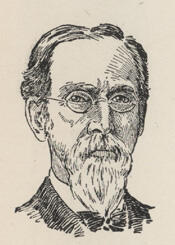
Here you will find contact information for Representative Alvin Evans, including email address, phone number, and mailing address.
| Name | Alvin Evans |
| Position | Representative |
| State | Pennsylvania |
| District | 19 |
| Party | Republican |
| Status | Former Representative |
| Term Start | December 2, 1901 |
| Term End | March 3, 1905 |
| Terms Served | 2 |
| Born | October 4, 1845 |
| Gender | Male |
| Bioguide ID | E000232 |
About Representative Alvin Evans
Alvin Evans (October 4, 1845 – June 19, 1906) was an American lawyer, banker, and Republican member of the U.S. House of Representatives from Pennsylvania. He served as a Representative from Pennsylvania in the United States Congress from 1901 to 1905, completing two terms in office during a significant period in American history. As a member of the House of Representatives, Evans participated in the legislative process and represented the interests of his constituents in Pennsylvania.
Evans was born in Ebensburg, Cambria County, Pennsylvania, on October 4, 1845, the son of David J. Evans and Jane Ann (Jones) Evans. He was a grandson of John Evans, a carpenter and native of Cardiganshire, Wales, reflecting the strong Welsh heritage present in parts of Pennsylvania during the nineteenth century. He attended the local public schools in Ebensburg and later pursued further training at the Iron City Business College in Pittsburgh, Pennsylvania. When his father’s business failed following the financial crash of 1857, Evans entered the workforce at an early age, obtaining a job in the lumber industry at the age of sixteen to help support himself and his family.
During the American Civil War, Evans responded to the emergency mobilization of Pennsylvania troops. In 1862, he enlisted with a volunteer military unit that was organized in response to the threat of a Confederate invasion of Pennsylvania. Although his service was of a defensive and short-term nature, it placed him among the many Pennsylvanians who contributed to the Union war effort during a critical phase of the conflict.
Following the war, Evans turned to the study of law. In 1870, he began reading law under George M. Reade, a prominent attorney in Ebensburg. After three years of study, he was admitted to the bar in 1873. He established a law practice in Ebensburg and built a substantial legal career, appearing not only in local courts but also before the Superior Court of Pennsylvania, the Supreme Court of Pennsylvania, and in federal court. His legal work, combined with his growing involvement in civic affairs, made him a leading figure in the public life of Ebensburg and Cambria County.
Evans’s public service began at the local level. He served one term as burgess of the borough of Ebensburg, effectively acting as the town’s chief municipal officer. He was also a member of the Ebensburg school board and city council, helping to oversee local education and municipal governance. In addition, he served as solicitor for the Pennsylvania Railroad in Cambria County, representing the company’s legal interests in the region. His business acumen extended into banking: he was involved in the incorporation of the First National Bank of Ebensburg and later became president of its board of directors, a position that underscored his influence in local financial and commercial affairs.
Evans entered national politics as a member of the Republican Party. Elected as a Republican to the Fifty-seventh and Fifty-eighth Congresses, he served in the U.S. House of Representatives from March 4, 1901, to March 3, 1905. During his two terms in Congress, he contributed to the legislative process at a time when the nation was grappling with issues of industrial expansion, regulatory reform, and the aftermath of the Spanish-American War. Representing his Pennsylvania district, he participated in the democratic process and advocated for the interests of his constituents. Choosing not to seek renomination in 1904, Evans concluded his congressional career after his second term and returned to the practice of law in Ebensburg.
In his personal life, Evans married Kate Shryock (1846–1886) in Wilmore, Pennsylvania, on November 17, 1875. The couple had three children. Beyond his professional and political roles, Evans was active in religious and fraternal organizations. He served on the board of trustees of the First Congregational Church of Ebensburg, reflecting his engagement in the spiritual and community life of the town. He was also a member of the Grand Army of the Republic, belonging to the Captain John M. Jones Post, which brought together veterans of the Union Army, and he was affiliated with the Free and Accepted Masons, Summit Lodge No. 312, further indicating his prominence in civic and fraternal circles.
Alvin Evans died in his native Ebensburg, Pennsylvania, on June 19, 1906. He was interred in Lloyd Cemetery in Ebensburg. His life encompassed service as a Civil War-era volunteer, local official, lawyer, banker, and two-term Republican member of Congress, reflecting a career deeply rooted in the civic and political life of Pennsylvania.