Representative Amasa Cobb
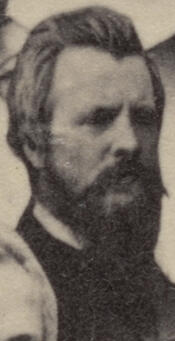
Here you will find contact information for Representative Amasa Cobb, including email address, phone number, and mailing address.
| Name | Amasa Cobb |
| Position | Representative |
| State | Wisconsin |
| District | 3 |
| Party | Republican |
| Status | Former Representative |
| Term Start | December 7, 1863 |
| Term End | March 3, 1871 |
| Terms Served | 4 |
| Born | September 27, 1823 |
| Gender | Male |
| Bioguide ID | C000543 |
About Representative Amasa Cobb
Amasa Cobb (September 27, 1823 – July 5, 1905) was an American politician, judge, and military officer who served as a Republican Representative from Wisconsin in the United States Congress from 1863 to 1871. Over the course of four consecutive terms in the House of Representatives, he participated in the legislative process during a critical era encompassing the Civil War and Reconstruction, representing the interests of his Wisconsin constituents. He later became the 6th and 9th Chief Justice of the Nebraska Supreme Court and the 5th Mayor of Lincoln, Nebraska, and earlier in his career served as the 13th Speaker of the Wisconsin State Assembly. In addition to his political and judicial service, Cobb was a Union Army officer during the American Civil War and received the brevet rank of brigadier general of volunteers.
Cobb was born in Crawford County, Illinois, near Palestine, Illinois, the son of Nancy (Briggs) Cobb and John Cobb. In 1842 he moved to the Wisconsin Territory, where he engaged in lead mining, a common occupation in the mineral-rich southwestern region of the territory. He served as a private in the Mexican–American War, an experience that introduced him to military service and national affairs. After returning from that conflict, Cobb studied law, was admitted to the bar, and established a legal practice in Mineral Point, Wisconsin, a prominent mining and commercial center of the period.
Cobb’s public career in Wisconsin began in local legal office. He served as district attorney from 1850 to 1854, gaining experience in prosecution and public law. In 1855 he was elected to the Wisconsin State Senate, where he served until 1856. During this same period he held a key military-administrative post as adjutant general of Wisconsin from 1855 to 1858, overseeing aspects of the state militia. He continued his legislative career in the lower house of the state legislature, becoming a member of the Wisconsin State Assembly in 1860. In 1861 he was chosen as the 13th Speaker of the Wisconsin State Assembly, a position that placed him at the forefront of state politics on the eve of the Civil War.
With the outbreak of the Civil War, Cobb entered active military service. On July 12, 1861, he joined the Union Army as colonel of the 5th Wisconsin Infantry Regiment. Serving with the Army of the Potomac, he took part in several campaigns and battles. He notably succeeded Brigadier General Winfield S. Hancock in command of a brigade in the Second Division, VI Corps, at the Battle of Antietam after Hancock was transferred to command the First Division, II Corps. Cobb’s last action with the 5th Wisconsin Infantry was at the Battle of Fredericksburg. Despite his growing political responsibilities, he continued to play an active role in the war. On September 29, 1864, while still a sitting member of the House of Representatives, he resumed his military career as colonel of the newly raised 43rd Wisconsin Infantry Regiment. After arriving in Nashville, Tennessee, in October 1864, Cobb and his regiment were assigned to guard the important supply and railroad depot at Johnsonville in Benton County, Tennessee, on the Tennessee River. On November 4, 1864, his men helped repel an attack by Confederate forces under Major General Nathan Bedford Forrest in the Battle of Johnsonville. For the remainder of the war, the regiment was stationed at various points in Tennessee to protect railroads and supply routes, and Cobb briefly commanded a brigade under Major General Robert H. Milroy. He and his regiment were mustered out of service on June 24, 1865, in Nashville before returning to Wisconsin and civilian life.
Cobb’s military service was formally recognized after the war. On January 13, 1866, President Andrew Johnson nominated him for appointment to the grade of brevet brigadier general of volunteers, to rank from March 13, 1865, in acknowledgment of his distinguished services at the Battles of Williamsburg and Golding’s Farm, Virginia, during the Seven Days Battles, and at Antietam. The United States Senate confirmed this appointment on March 12, 1866. In the postwar years he became a member of the Military Order of the Loyal Legion of the United States, an organization of Union officers formed to commemorate their service and preserve the history of the conflict.
Cobb’s congressional career began while he was still in uniform. In the fall of 1862 he was elected as a Republican to the Thirty-eighth Congress from Wisconsin’s 3rd congressional district for a two-year term. He was subsequently reelected to the Thirty-ninth, Fortieth, and Forty-first Congresses, serving in the U.S. House of Representatives from 1863 to 1871. During these four terms, he contributed to the legislative process at the national level during one of the most consequential periods in American history, encompassing the prosecution of the Civil War and the initial phases of Reconstruction. As a member of the House, Cobb participated in debates and votes on issues central to the preservation of the Union, the abolition of slavery, and the reorganization of the former Confederate states, while representing the interests of his Wisconsin constituents.
After leaving Congress in 1871, Cobb moved west to Lincoln, Nebraska, where he resumed the practice of law. His prominence and legal experience soon drew him into public office in his new state. In 1873 he was appointed mayor of Lincoln, becoming the city’s 5th mayor and helping guide the community during its early years as Nebraska’s capital. His judicial career began in earnest when he was appointed an associate justice of the Nebraska Supreme Court in 1878. He served on that court until 1892, and during the last four years of his tenure, from 1888 to 1892, he held the position of chief justice. In this capacity he is recorded as the 6th and 9th Chief Justice of the Nebraska Supreme Court, reflecting his leadership of the state’s highest court during a formative period in Nebraska’s legal and institutional development.
In his later years, Cobb remained a respected figure in the legal and political communities of Nebraska and among veterans of the Civil War. He eventually relocated to California, where he spent his final years. Amasa Cobb died in Los Angeles, California, on July 5, 1905. His remains were returned to Nebraska, and he was buried in Wyuka Cemetery in Lincoln, a resting place for many of the state’s leading public figures, underscoring his long and varied service as soldier, legislator, mayor, and jurist in the American Midwest and West.