Senator Amos Nourse
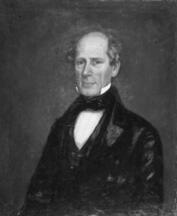
Here you will find contact information for Senator Amos Nourse, including email address, phone number, and mailing address.
| Name | Amos Nourse |
| Position | Senator |
| State | Maine |
| Party | Republican |
| Status | Former Representative |
| Term Start | December 7, 1857 |
| Term End | December 31, 1857 |
| Terms Served | 1 |
| Born | December 17, 1794 |
| Gender | Male |
| Bioguide ID | N000162 |
About Senator Amos Nourse
Amos Nourse (December 17, 1794 – April 7, 1877) was an American physician, educator, and politician who represented Maine in the United States Senate for a brief period in 1857. Born in Bolton, Massachusetts, he came of age in the early years of the American republic and pursued a classical education that prepared him for both professional and public life. His early years in Massachusetts laid the foundation for a career that would combine medicine, academic instruction, and public service in his adopted state of Maine.
Nourse attended Harvard College, from which he graduated in 1812, and subsequently studied medicine at Harvard Medical School, receiving his medical degree in 1817. His education at one of the nation’s leading institutions placed him among the better-trained physicians of his generation. After completing his medical studies, he began the practice of medicine and soon looked northward to Maine, which at that time was still part of Massachusetts, as the setting for his professional and civic endeavors.
After leaving Massachusetts, Nourse first settled in Wiscasset, Maine, where he established himself as a physician. He later moved to Hallowell, Maine, continuing his medical practice and integrating into the civic and professional life of the community. In 1845 he relocated to Bath, Maine, a growing coastal city whose commercial activity and maritime trade offered new opportunities. That same year he was appointed collector of customs at Bath, serving from 1845 to 1846, a federal position that placed him at the center of the port’s regulatory and revenue-collection activities. Following his customs service, he commenced the active practice of medicine in Bath, becoming a well-known local physician.
In addition to his medical practice, Nourse pursued an academic career in medical education. He joined the medical faculty associated with Bowdoin College in Brunswick, Maine, where he specialized in obstetrics. From 1846 to 1854 he served as a lecturer on obstetrics, and in 1855 he was elevated to professor of that branch. He held the professorship from 1855 to 1866, training future physicians in a period when formal medical instruction was becoming increasingly systematized. His dual role as practitioner and educator gave him a prominent position in Maine’s medical community and contributed to the professionalization of medical practice in the region.
Nourse entered national public life as a member of the Republican Party during a period of mounting sectional tension in the United States. A supporter of the new party that had emerged in the 1850s in opposition to the expansion of slavery, he was elected by the Maine legislature to the United States Senate as a Republican to fill the vacancy caused by the resignation of Senator Hannibal Hamlin, who had left the Senate to become governor of Maine. Nourse served in the Senate from January 16 to March 3, 1857, a term of only forty-seven days, during the closing weeks of the Thirty-fourth Congress. Although his tenure was brief and encompassed only part of a single term in office, he participated in the legislative process at a time of significant national debate over slavery, territorial expansion, and the balance of power between free and slave states. As a senator from Maine, he represented the interests of his constituents and contributed to the work of the Senate during this critical period.
After leaving the Senate at the expiration of the term he had been chosen to complete, Nourse returned to Maine and resumed his professional and judicial responsibilities. In 1860 he became judge of probate for Sagadahoc County, Maine, a position that involved oversight of wills, estates, and related legal matters. His appointment to the probate bench reflected the confidence placed in his judgment and integrity, and it added a judicial dimension to a career that had already encompassed medicine, education, and federal service. He continued to be identified with Bath and the surrounding region through his medical, academic, and judicial work.
Amos Nourse spent his later years in Bath, where he remained a respected figure in the community he had served in multiple capacities. He died in Bath on April 7, 1877. Although interred away from his final residence, he was buried in Hallowell, Maine, a community in which he had earlier lived and practiced medicine. His life traced a path from rural Massachusetts to the emerging towns and cities of Maine, and from the lecture halls of Harvard and Bowdoin to the chamber of the United States Senate, reflecting the varied avenues of service open to educated professionals in nineteenth-century America.