Representative Amos Slaymaker
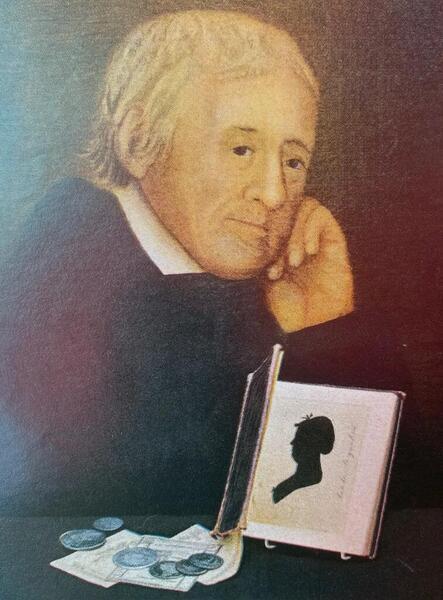
Here you will find contact information for Representative Amos Slaymaker, including email address, phone number, and mailing address.
| Name | Amos Slaymaker |
| Position | Representative |
| State | Pennsylvania |
| District | 3 |
| Party | Federalist |
| Status | Former Representative |
| Term Start | May 24, 1813 |
| Term End | March 3, 1815 |
| Terms Served | 1 |
| Born | March 11, 1755 |
| Gender | Male |
| Bioguide ID | S000483 |
About Representative Amos Slaymaker
Amos Slaymaker (March 11, 1755 – June 21, 1837) was a Federalist member of the U.S. House of Representatives from Pennsylvania. He was born at London Lands in Lancaster County in the Province of Pennsylvania, then part of British colonial America. He was part of a prominent local family; his younger sister, Faithful Slaymaker, was the mother of the nineteenth-century Presbyterian minister George Duffield, linking him to one of the notable religious figures of the era.
Slaymaker came of age during the American Revolutionary period and participated directly in the struggle for independence. During the Revolutionary War, he served as an ensign in the company of Captain John Slaymaker, reflecting both his family’s local leadership and his own early assumption of responsibility. In addition to his military service, he was a member of an association formed for the suppression of Tory activities in Lancaster County, Pennsylvania, aligning himself with the Patriot cause and the broader effort to secure the new nation against internal opposition.
After the war, Slaymaker established himself as a businessman and community leader in Lancaster County. He built and operated a hotel on the Philadelphia and Lancaster Turnpike, one of the earliest major turnpikes in the United States and a critical transportation link between the interior of Pennsylvania and the port city of Philadelphia. His role as a hotel proprietor on this important route placed him at the center of commercial and social life in the region, bringing him into contact with travelers, merchants, and political figures and helping to cement his standing in local affairs.
Slaymaker’s public career advanced through a series of local and county offices before he entered state and national politics. He served as a justice of the peace of Salisbury Township, Pennsylvania, where he was responsible for local judicial and administrative matters, and he was a county commissioner of Lancaster County from 1806 to 1810. In these roles he helped oversee county governance, finance, and public works at a time when Pennsylvania was rapidly developing. His experience and reputation led to his election to the Pennsylvania State Senate, in which he served in 1810 and 1811, participating in state-level legislative deliberations during the early years of the nineteenth century.
Slaymaker’s state service provided the foundation for his brief but notable tenure in the national legislature. A member of the Federalist Party, he was elected to the U.S. House of Representatives as a Federalist to the Thirteenth Congress to fill the vacancy caused by the resignation of James Whitehill. His single term in Congress placed him in office during a significant period in American history, as the nation confronted the challenges of the War of 1812 and its aftermath. As a representative from Pennsylvania, he contributed to the legislative process, participating in the democratic governance of the young republic and representing the interests of his constituents in Lancaster County and the surrounding region.
After his service in Congress, Slaymaker returned to private life in Lancaster County, where he remained a respected figure in local society. He continued to be associated with the community in and around Salisbury Township, reflecting the pattern of many early American legislators who alternated between public office and local business or agricultural pursuits. His life spanned the transition from colonial rule through the Revolution and into the formative decades of the United States, and his career illustrated the close connection between local leadership and national service in the early republic.
Amos Slaymaker died in Salisbury, Lancaster County, Pennsylvania, on June 21, 1837. He was interred in the Leacock Presbyterian Cemetery in Paradise, Pennsylvania. His burial in a local Presbyterian cemetery underscored his enduring ties to the Lancaster County community in which he had been born, conducted his business, held local and state office, and from which he had gone on to serve in the Congress of the United States.