Representative Amos Townsend
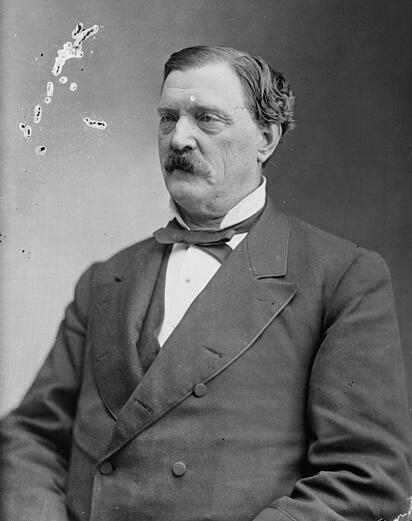
Here you will find contact information for Representative Amos Townsend, including email address, phone number, and mailing address.
| Name | Amos Townsend |
| Position | Representative |
| State | Ohio |
| District | 20 |
| Party | Republican |
| Status | Former Representative |
| Term Start | October 15, 1877 |
| Term End | March 3, 1883 |
| Terms Served | 3 |
| Gender | Male |
| Bioguide ID | T000328 |
About Representative Amos Townsend
Amos Townsend (1821 – March 17, 1895) was a 19th-century American businessman and Republican politician who served three terms as a U.S. Representative from Ohio from 1877 to 1883. His congressional service occurred during a significant period in American history in the years following the Civil War and Reconstruction, and he participated actively in the legislative process while representing the interests of his Ohio constituents.
Townsend was born in 1821 in Brownsville, Pennsylvania. He attended the common schools of nearby Pittsburgh, Pennsylvania, where he received his basic education. As a young man, he clerked in a store in Pittsburgh, gaining early experience in commerce and trade that would shape his later business career. In 1839 he moved west to Mansfield, Ohio, where he engaged in mercantile pursuits, establishing himself in the growing commercial life of the state.
During the turbulent period known as the “Kansas troubles,” when violent conflict erupted over the extension of slavery into the Kansas Territory in the 1850s, Townsend served as a United States marshal. In that capacity he was involved in federal law enforcement at a time of intense sectional tension and political unrest, an experience that further acquainted him with national issues and the workings of the federal government.
In 1858 Townsend relocated to Cleveland, Ohio, which would remain his principal home and the base of his business and political activities. There he engaged in the wholesale grocery business, becoming part of the city’s expanding commercial sector as Cleveland developed into a major Great Lakes port and industrial center. His success in business and growing prominence in the community led naturally to involvement in local public affairs.
Townsend’s political career began at the municipal level. He served as a member of the Cleveland City Council from 1866 to 1876, a decade in which the city underwent rapid growth and modernization. During this period he was chosen president of the council for seven years, reflecting the confidence of his colleagues in his leadership and administrative abilities. In addition to his municipal service, he was selected as a member of the Ohio state constitutional convention in 1873, participating in deliberations over the structure and powers of state government.
A member of the Republican Party, Townsend was elected to the United States House of Representatives as a Republican to the Forty-fifth, Forty-sixth, and Forty-seventh Congresses, serving from March 4, 1877, to March 3, 1883. Representing Ohio in the House of Representatives, he contributed to the legislative process during three terms in office and took part in the democratic governance of the nation during the post-Reconstruction era. In the Forty-seventh Congress he served as chairman of the Committee on Railways and Canals, a significant assignment at a time when the expansion and regulation of the nation’s transportation infrastructure were central economic and political issues. After three consecutive terms, he declined renomination and thus concluded his congressional service in 1883.
Following his retirement from Congress, Townsend returned to private life and resumed his business interests. He became a member of a wholesale food-packing firm, continuing his long association with the wholesale trade and contributing to the commercial development of Cleveland and the surrounding region. He remained a respected figure in both business and political circles, his career reflecting the close ties between commerce and public service in the late 19th century.
Amos Townsend died on March 17, 1895, while on a visit to St. Augustine, Florida. His body was returned to Ohio, and he was interred in Lake View Cemetery in Cleveland, a resting place for many of the city’s prominent citizens. His life encompassed significant roles in local government, state constitutional reform, federal law enforcement, and national legislative service, marking him as an important figure in Ohio’s political and commercial history in the decades after the Civil War.