Representative Andrew John Biemiller
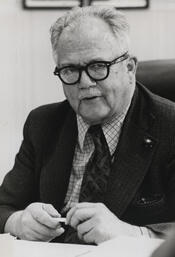
Here you will find contact information for Representative Andrew John Biemiller, including email address, phone number, and mailing address.
| Name | Andrew John Biemiller |
| Position | Representative |
| State | Wisconsin |
| District | 5 |
| Party | Democratic |
| Status | Former Representative |
| Term Start | January 3, 1945 |
| Term End | January 3, 1951 |
| Terms Served | 2 |
| Born | July 23, 1906 |
| Gender | Male |
| Bioguide ID | B000448 |
About Representative Andrew John Biemiller
Andrew John Biemiller (July 23, 1906 – April 3, 1982) was an American politician and labor union officer who became a prominent figure in mid‑twentieth‑century liberal and labor politics. Born in Sandusky, Erie County, Ohio, he grew up in the Midwest and came of age during a period of intense social and economic change that shaped his later commitments to progressive politics and organized labor. Although detailed records of his early family life are limited, his subsequent career reflected a strong identification with working people and reform movements that were influential in the industrial centers of the Great Lakes region.
Biemiller pursued higher education at the University of Wisconsin–Madison, an institution known for its progressive political climate and the “Wisconsin Idea,” which emphasized the role of government in promoting social welfare and economic fairness. Immersed in this environment, he became active in left‑of‑center politics, gravitating toward the Socialist movement and later the Wisconsin Progressive Party. His early political affiliations and organizing work laid the foundation for his later roles in both state and national politics, as well as in the labor movement.
Biemiller’s formal political career began in Wisconsin state government. In 1936 he was elected to the Wisconsin State Assembly from the 2nd Milwaukee County district, representing the 2nd and 10th Wards of the City of Milwaukee, on the ticket of the Wisconsin Progressive Party at a time when Socialists and Progressives were practicing a form of electoral fusion. His biography of the period identified him as an active Socialist. He unseated Democratic incumbent Clarence Kretlow, receiving 6,767 votes to Kretlow’s 5,867 and 2,129 for Republican Alex Klose. In the Assembly he was appointed to the standing committees on the judiciary and public welfare, to a special joint committee on “Legislation on Administration of State Government,” and to the influential “Interim Committee” appointed in 1937 by the Legislature to discuss reorganization of Wisconsin government. He was re‑elected in 1938, winning 5,098 votes to 2,934 for Republican Edward J. Mueller and 2,848 for Democrat William W. Murphy, and remained on the judiciary committee while also serving on special committees on “Revenue Needs of the State for the Current Biennium” and automobile title laws. Biemiller secured a third term in 1940, with 7,812 votes to 4,869 for former Socialist State Representative Otto Kehrein (then running as a Republican) and 4,095 for Democrat Elmer Foerster. During this term he was assigned to the committee on engrossed bills and to a special committee on “Subversive and Un-American Activities of Certain Groups of Employes Engaged in the Manufacture of National Defense Materials.” His official biography no longer listed him as an active member of the Socialist Party, but described him as a member of the Progressive Party Federation, and he rose to become the floor leader of the Progressive Party in the Assembly.
Alongside his legislative duties, Biemiller maintained close ties to organized labor. He worked as a special organizer for the Wisconsin State Federation of Labor through 1942, helping to build union strength in an era of rapid industrial expansion and labor unrest. In 1942 he moved to Washington, D.C., to take a position with the War Production Board during World War II, contributing to the federal government’s efforts to coordinate industrial output and mobilize resources for the war effort. He did not run for re‑election to the Wisconsin Assembly and was succeeded there by Democrat Michael F. O’Connell. His experience in both state government and wartime administration prepared him for a subsequent career on the national political stage.
Biemiller entered Congress as a member of the Democratic Party from Wisconsin during a pivotal period in American history. He was elected as a Democrat to the United States House of Representatives and served as a Representative from Wisconsin in the United States Congress from 1945 to 1951, holding office in the 79th Congress from January 3, 1945, to January 3, 1947, and again in the 81st Congress from January 3, 1949, to January 3, 1951. His service thus comprised two nonconsecutive terms. In Congress he participated in the legislative process during the closing months of World War II and the early years of the Cold War, representing the interests of his Wisconsin constituents while supporting broader national efforts at postwar reconstruction, veterans’ benefits, and social and economic reform. Although he lost his seat after his first term, he returned to win another, reflecting his continued standing in Wisconsin politics and within the Democratic Party.
After losing his seat in Congress following his second term, Biemiller remained in federal service through the remainder of the Truman administration, working at the Department of the Interior. In this capacity he was involved in policy areas related to natural resources, public lands, and domestic development, consistent with the Interior Department’s expanding responsibilities in the postwar period. His combined experience in state government, wartime administration, and Congress made him a valuable figure in the Democratic policy network and positioned him for a major role in the national labor movement.
In 1953 Biemiller became a legislative representative, or lobbyist, for the American Federation of Labor (AFL), marking the beginning of the most sustained phase of his public career. When the AFL and the Congress of Industrial Organizations (CIO) merged in 1955, he moved into an even more influential position. From 1956 to 1978 he served as Director of the Department of Legislation and chief lobbyist of the AFL‑CIO. In this role he was one of organized labor’s principal advocates before Congress and the executive branch. During this period he played a significant role in the passage of major civil rights legislation, the creation of Medicare, and other key social and economic measures, particularly during the Kennedy and Johnson administrations. His work helped shape federal policy on labor standards, social insurance, and equal rights at a time when the modern American welfare state was being consolidated.
Andrew John Biemiller retired from his position with the AFL‑CIO in 1978, concluding more than four decades of continuous engagement in public life as a legislator, administrator, and labor advocate. He died on April 3, 1982, leaving a legacy as a committed progressive who bridged the worlds of third‑party politics, the Democratic Party, and organized labor. Throughout his career he remained closely identified with efforts to expand social protections, strengthen workers’ rights, and advance civil rights, and his influence was felt in both Wisconsin politics and national legislative achievements of the mid‑twentieth century.