Representative Andrew R. Brodbeck
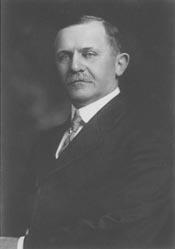
Here you will find contact information for Representative Andrew R. Brodbeck, including email address, phone number, and mailing address.
| Name | Andrew R. Brodbeck |
| Position | Representative |
| State | Pennsylvania |
| District | 20 |
| Party | Democratic |
| Status | Former Representative |
| Term Start | April 7, 1913 |
| Term End | March 3, 1919 |
| Terms Served | 2 |
| Born | April 11, 1860 |
| Gender | Male |
| Bioguide ID | B000855 |
About Representative Andrew R. Brodbeck
Andrew R. Brodbeck (April 11, 1860 – February 27, 1937) was an American businessman and Democratic member of the U.S. House of Representatives from Pennsylvania, serving two non-consecutive terms from 1913 to 1915 and again from 1917 to 1919. Over the course of his public career, he represented the interests of his Pennsylvania constituents during a significant period in American history and contributed to the legislative process in the House of Representatives.
Brodbeck was born on April 11, 1860, in Jefferson, Pennsylvania. In his early years he was engaged in agricultural pursuits, reflecting the rural character of the region in which he was raised. He entered public service at a young age through education, teaching in the public schools of York County from 1878 to 1880. This early experience in local schools helped establish his ties to the community and laid the groundwork for his later involvement in county and national affairs.
In 1880, Brodbeck moved to Hanover, Pennsylvania, where he embarked on a business career. He engaged in the farm implement and fertilizer business, a line of work closely connected to the agricultural economy of south-central Pennsylvania, and continued in that enterprise until 1896. His business activities expanded his profile in the community, and he went on to serve as a member of the board of directors of various business enterprises, further solidifying his reputation as a local businessman and civic leader.
Brodbeck’s formal political career began at the county level. He was elected sheriff of York County, serving from 1896 to 1899. In that capacity he was responsible for law enforcement and the administration of the county jail, a position that brought him into regular contact with citizens and local officials and enhanced his standing in Democratic Party circles. Building on this experience, he sought higher office and became an unsuccessful candidate for election to Congress in 1910, marking his first attempt to enter national politics.
Brodbeck was elected as a Democrat to the Sixty-third Congress, serving his first term in the U.S. House of Representatives from 1913 to 1915. As a member of the House of Representatives from Pennsylvania, he participated in the democratic process and represented the interests of his constituents during a time of major national developments, including the early years of the Woodrow Wilson administration and the enactment of significant domestic reforms. He was an unsuccessful candidate for reelection in 1914, temporarily interrupting his congressional service.
Undeterred by this setback, Brodbeck returned to national office when he was elected again as a Democrat to the Sixty-fifth Congress, serving from 1917 to 1919. His second term coincided with the United States’ entry into World War I and the accompanying debates over wartime policy, mobilization, and postwar planning. Although he contributed to the legislative work of the House during this critical period, he was again an unsuccessful candidate for reelection in 1918, bringing his congressional career—two non-consecutive terms totaling four years—to a close.
After leaving Congress, Brodbeck remained active in Democratic Party affairs. He served as a delegate at large to the 1920 Democratic National Convention, participating in the party’s national deliberations at the close of the Wilson era. He retired from active business and political life in 1920, concluding a career that had spanned education, business, county law enforcement, and national legislative service.
Andrew R. Brodbeck spent his later years in Hanover, Pennsylvania. He died there on February 27, 1937. He was interred in Mount Olivet Cemetery in Hanover, closing a life marked by steady advancement from local educator and businessman to county sheriff, party leader, and member of the United States Congress.