Senator Andrew Pickens Butler
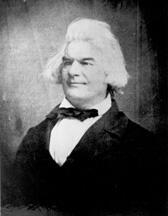
Here you will find contact information for Senator Andrew Pickens Butler, including email address, phone number, and mailing address.
| Name | Andrew Pickens Butler |
| Position | Senator |
| State | South Carolina |
| Party | Democratic |
| Status | Former Representative |
| Term Start | January 1, 1846 |
| Term End | December 31, 1857 |
| Terms Served | 3 |
| Born | November 18, 1796 |
| Gender | Male |
| Bioguide ID | B001173 |
About Senator Andrew Pickens Butler
Andrew Pickens Butler (November 18, 1796 – May 25, 1857) was an American lawyer, slaveholder, and United States senator from South Carolina who served in the Senate from 1845 until his death in 1857. A member of the Democratic Party and a leading States’ Rights Democrat, he became one of the most prominent pro-slavery voices in Congress and was a co-author, with Senator Stephen A. Douglas of Illinois, of the Kansas-Nebraska Act of 1854. Over the course of three terms in office, Butler contributed actively to the legislative process during a period of mounting sectional conflict in the United States.
Butler was born on November 18, 1796, in South Carolina, into a politically influential family connected to the state’s planter elite. He was a nephew of Revolutionary War general and U.S. Senator Andrew Pickens by marriage, and he grew up in an environment steeped in public affairs, law, and the defense of Southern interests, including slavery. Raised in a slaveholding society that shaped his worldview, Butler’s early life prepared him for a career in law and politics that would be closely tied to the preservation of the Southern social and economic order.
Educated in South Carolina, Butler studied law and was admitted to the bar, beginning a legal career that quickly brought him into the orbit of state politics. As a lawyer, he developed a reputation for forceful advocacy and oratorical skill, qualities that would later define his public life. His legal practice and connections within the state’s Democratic and States’ Rights circles helped establish him as a trusted defender of Southern constitutional interpretations, particularly regarding slavery and state sovereignty.
Butler’s political career advanced through his alignment with the Democratic Party and the States’ Rights faction in South Carolina. Identified with the defense of slavery and the doctrine that states retained broad powers within the federal system, he emerged as a natural choice for higher office as sectional tensions intensified in the 1840s. His standing among South Carolina legislators and his reputation as an eloquent spokesman for Southern interests led to his selection for national service in the United States Senate.
Andrew Pickens Butler entered the United States Senate in 1845 and was formally appointed to the body in 1846 as a States’ Rights Democrat from South Carolina. He was appointed to fill a vacancy and then elected to complete the term ending in 1849. The South Carolina legislature re-elected him to a full term in 1848 and again in 1854, ensuring that he would serve continuously in the Senate for the remainder of his life. During much of his tenure he was chairman of the Senate Judiciary Committee, a powerful position from which he helped shape national legislation and legal policy. As a senator, Butler participated fully in the democratic process, representing the interests of his constituents in South Carolina during a critical era that included debates over territorial expansion, slavery, and the balance of power between North and South.
An ardent advocate of slavery, Butler played a central role in one of the most consequential pieces of antebellum legislation, the Kansas-Nebraska Act of 1854. Co-authored with Senator Stephen A. Douglas, the act organized the Kansas and Nebraska territories for westward expansion but, in order to secure Southern support, effectively repealed the Missouri Compromise of 1820. It did so by allowing the residents of the new territories to decide by popular sovereignty whether to permit slavery. This measure opened vast new areas to the potential expansion of slavery and intensified national conflict, contributing directly to the violence in “Bleeding Kansas” and the deepening sectional crisis. Butler’s authorship of the act cemented his reputation as a leading pro-slavery legislator and a key architect of the South’s congressional strategy in the 1850s.
Butler’s Senate career is also remembered for an episode in which he was not physically present but in which his name figured prominently. In May 1856, during his famous “Crime Against Kansas” speech, abolitionist Senator Charles Sumner of Massachusetts denounced the Kansas-Nebraska Act, harshly criticized South Carolina, and personally attacked Butler in language widely regarded as exceeding parliamentary propriety. Sumner likened Butler to Don Quixote and declared that Butler “has chosen a mistress to whom he has made his vows, and who, though ugly to others, is always lovely to him; though polluted in the sight of the world, is chaste in his sight. I mean the harlot, Slavery.” Senator Stephen Douglas, who was also criticized in the speech, remarked to a colleague while Sumner was speaking that “this damn fool [Sumner] is going to get himself shot by some other damn fool,” reflecting the volatile atmosphere of the time.
The aftermath of Sumner’s speech produced one of the most infamous acts of violence in congressional history and further linked Butler’s name to the sectional crisis. South Carolina Congressman Preston Brooks, Butler’s first cousin once removed, regarded Sumner’s remarks as a grave insult to his family and his state. Two days after the speech, Brooks confronted Sumner on the Senate floor and brutally beat him with a gutta-percha cane, while fellow South Carolina Representative Laurence Keitt brandished a pistol to prevent other senators from intervening. Sumner, trapped at his desk, was left defenseless on the floor as Brooks continued the assault, nearly killing him and incapacitating him for years. Butler later remarked that, had he been present during Sumner’s address, he would have called the Massachusetts senator to order in hopes of preventing such an escalation and further offense, though his own record as a staunch defender of slavery and Southern honor had helped create the charged climate in which the attack occurred.
Contemporaries described Butler as a singular and powerful presence in the Senate. Biographer U. R. Brooks observed that available biographical material on Butler was limited, but emphasized that his influence derived from his personal presence and “grand gifts of eloquence, action, pathos, and convincing argument.” The writer Ellet similarly portrayed him as “the most unique and original intellect in the Senate,” noting that his face, though not handsome, was “sturdily expressive, with massive features and ‘troubled, streaming, silvery hair, that looked as though it had been contending with the blasts of winter.’” His power as a speaker was acknowledged by members of both houses of Congress. Restless and impetuous, he was often seen pacing behind the Speaker’s desk, shaking hands with younger senators, and plunging into debate. Observers remarked that the moment a question was submitted to him, his mind instinctively applied what he regarded as the great governing principles at stake, reflecting both his intellectual confidence and his firm ideological commitments.
Andrew Pickens Butler remained in office until his death on May 25, 1857, still serving as a United States senator from South Carolina. His career spanned a formative and turbulent period in American history, during which he consistently represented the interests of his slaveholding constituents and the Southern Democratic cause. His legislative work, particularly on the Kansas-Nebraska Act, and his role in the political culture that produced the caning of Charles Sumner, made him a significant, if deeply controversial, figure in the years leading up to the American Civil War.