Representative Andrew Edmiston
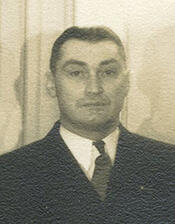
Here you will find contact information for Representative Andrew Edmiston, including email address, phone number, and mailing address.
| Name | Andrew Edmiston |
| Position | Representative |
| State | West Virginia |
| District | 3 |
| Party | Democratic |
| Status | Former Representative |
| Term Start | March 9, 1933 |
| Term End | January 3, 1943 |
| Terms Served | 5 |
| Born | November 13, 1892 |
| Gender | Male |
| Bioguide ID | E000051 |
About Representative Andrew Edmiston
Andrew Edmiston Jr. (November 13, 1892 – August 28, 1966) was a Democratic politician who served as a United States Representative from West Virginia during a decade of profound national change. He was born in Weston, Lewis County, West Virginia, on November 13, 1892, and spent most of his life closely associated with his native community. His later service in Congress, from 1933 to 1943, placed him at the center of federal policymaking during the Great Depression and the early years of World War II, where he contributed to the legislative process over five consecutive terms in office.
Edmiston received his early education at Friends’ Select School in Washington, D.C., an institution associated with the Society of Friends, which emphasized rigorous academic preparation. He continued his studies at the Kentucky Military Institute at Lyndon, Kentucky, where he received military training that would later inform his service in World War I. He subsequently attended West Virginia University in Morgantown, West Virginia, further grounding himself in the educational and civic life of his home state. These formative years combined academic, military, and regional influences that shaped his later careers in business, journalism, and public service.
Before entering national politics, Edmiston pursued a variety of professional and civic roles. From 1915 to 1917 he was engaged in agricultural pursuits, reflecting the agrarian character of much of early twentieth-century West Virginia. After the First World War, he entered the glass manufacturing industry, beginning in 1925 in Weston, where glassmaking was an important local enterprise. At the same time, he became a significant figure in local journalism, serving from 1920 to 1935 as editor of the Weston Democrat, a newspaper that provided him with a platform in Democratic Party politics and local public affairs. His prominence in the community led to his election as mayor of Weston, a position he held from 1924 to 1926, giving him early executive experience in municipal government.
Edmiston’s military service during World War I was a defining period in his life. From 1917 to 1919 he served overseas as a second lieutenant with the Thirty-ninth Infantry, Fourth Division, of the United States Army. His combat service was marked by conspicuous bravery and sacrifice. He was awarded the Distinguished Service Cross, one of the nation’s highest decorations for valor, as well as the Purple Heart with Oak Leaf Cluster, signifying that he was wounded in action on more than one occasion. In recognition of his service and heroism, he also received the Distinguished Service Medal of West Virginia. These honors underscored both his personal courage and the high regard in which he was held by state and federal authorities.
Building on his local prominence and military record, Edmiston rose within the Democratic Party in West Virginia. He served as state chairman of the Democratic executive committee from 1928 to 1932, a period in which the party was consolidating its strength leading into the New Deal era. He was chosen as a delegate to the Democratic National Convention in 1928, reflecting his growing influence in state and national party affairs, and he would again serve as a delegate in 1952. His leadership in party organization and his visibility as a newspaper editor and former mayor positioned him as a natural candidate for higher office when a congressional vacancy arose.
Edmiston entered the United States House of Representatives by special election, winning the seat left vacant by the death of Representative Lynn Hornor. A member of the Democratic Party, he was elected to the Seventy-third Congress and subsequently re-elected to the Seventy-fourth and three succeeding Congresses, serving continuously from November 28, 1933, to January 3, 1943. During this period he represented his West Virginia district in the House of Representatives throughout the New Deal and the initial phase of American involvement in World War II. As a member of Congress, he participated in the democratic process and represented the interests of his constituents while contributing to the legislative work of the Seventy-third through Seventy-seventh Congresses. His service coincided with major federal initiatives in economic recovery, social welfare, and national defense, and he was part of the Democratic majority that supported President Franklin D. Roosevelt’s program. His candidacy for re-election in 1942 was unsuccessful, bringing his decade of congressional service to a close on January 3, 1943.
After leaving Congress, Edmiston returned to his former business pursuits, including his involvement in local industry and community affairs in Weston. His experience in wartime legislation and manpower issues soon led to another important public assignment. On June 28, 1943, he was appointed Director of War Manpower for West Virginia, a position he held until June 30, 1945. In that role, he was responsible for coordinating the allocation and utilization of labor within the state to support the national war effort, working at the intersection of federal policy and state-level implementation during World War II. Upon his resignation from that post, he again resumed private business, remaining an influential figure in his hometown and state Democratic circles.
Andrew Edmiston Jr. spent his later years in Weston, maintaining the close ties to the community that had characterized his entire life. He continued to be remembered as a decorated war veteran, newspaper editor, local executive, party leader, and five-term member of Congress who had served West Virginia during a critical era in American history. He died in Weston on August 28, 1966, at the age of 73. He was buried in Machpelah Cemetery, leaving a legacy of military valor, public service, and long-standing commitment to his state and its people.