Senator Andrew Jackson Houston
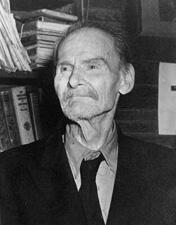
Here you will find contact information for Senator Andrew Jackson Houston, including email address, phone number, and mailing address.
| Name | Andrew Jackson Houston |
| Position | Senator |
| State | Texas |
| Party | Democratic |
| Status | Former Representative |
| Term Start | April 21, 1941 |
| Term End | December 31, 1941 |
| Terms Served | 1 |
| Born | June 21, 1854 |
| Gender | Male |
| Bioguide ID | H000821 |
About Senator Andrew Jackson Houston
Andrew Jackson Houston (June 21, 1854 – June 26, 1941) was an American politician, lawyer, military officer, and historian who served briefly as a United States senator from Texas in 1941. A member of the Democratic Party at the time of his Senate service, he was appointed to temporarily fill the vacancy left by the death of longtime Senator Morris Sheppard and represented Texas in the United States Congress during one term in office in 1941. He was a son of Texas statesman and former president of the Republic of Texas Sam Houston and his wife Margaret Lea Houston, and was named for his father’s mentor, President Andrew Jackson.
Houston was born in Independence, Washington County, Texas, on June 21, 1854, into one of the most prominent political families in the state. Growing up in the shadow of his father’s central role in the Texas Revolution and early statehood, he was exposed from an early age to public affairs and the legacy of the Battle of San Jacinto. He received his early education at several military academies and colleges, reflecting both his family’s interest in public service and the martial traditions of the post–Civil War South. He attended Baylor University in Texas and later entered the United States Military Academy at West Point as a member of the Class of 1875, although he left the academy before graduating.
After leaving West Point, Houston turned to the study of law. He read law in the traditional manner of the period and was admitted to the bar in 1876. Establishing himself in legal practice in Texas, he began a long and varied public career that combined legal work, federal service, and military involvement. Over time he developed a reputation as a capable administrator and a figure with deep ties to both the legal and political communities of Texas.
Houston’s early professional life included several significant federal and state appointments. He served as clerk of the federal court in Dallas, a position that placed him at the center of important judicial and administrative activity in a rapidly growing Texas city. He was also commissioned a colonel in the Texas National Guard, reflecting his continued interest in military affairs. In addition, he served as United States Marshal for the Eastern District of Texas, a post that involved responsibility for federal law enforcement across a wide region during a period of social and economic change.
Houston’s political activity was marked by shifting party affiliations and engagement with several reform movements. In 1892 he ran unsuccessfully for Governor of Texas as a lily-white Republican candidate, aligning himself with a faction of the Republican Party that sought to appeal primarily to white voters in the post-Reconstruction South. During the Spanish–American War in 1898, he raised and organized a cavalry troop that was mustered into service as part of the Rough Riders, the volunteer cavalry regiment made famous by Theodore Roosevelt. In the early twentieth century he became associated with the Prohibition movement; in 1910 and 1912 he ran for Governor of Texas as a Prohibition Party candidate, advocating temperance and related reforms even though these campaigns did not result in electoral victory.
By the 1910s Houston had become a longtime resident of La Porte, Texas, near the San Jacinto battleground where his father had won the decisive battle securing Texas independence from Mexico. In 1918 he retired from most active political pursuits to study and write history, devoting himself to research on the Texas Revolution and related subjects. From 1924 until his Senate appointment in 1941 he held a sinecure as superintendent of the state park at the San Jacinto battleground, a symbolic position that connected his custodial role over the historic site with his family’s legacy in Texas history.
Houston’s semi-retirement ended abruptly in 1941 following the death of Senator Morris Sheppard, who had long represented Texas in the United States Senate. Texas Governor W. Lee O’Daniel desired to succeed Sheppard but recognized that appointing himself as interim senator pending a special election would be politically controversial. Confident that the 86-year-old Houston would not seek the seat in the special election, O’Daniel appointed him to temporarily fill the vacancy. Houston, who joined the Senate as a Democrat, was sworn in on April 21, 1941, 82 years after his father had served in the same Senate seat. At the time of his swearing-in he was the oldest man ever to enter the United States Senate; the oldest person overall to have served in the Senate remained Rebecca Latimer Felton of Georgia. Houston’s service in Congress occurred during a significant period in American history, as the United States moved closer to direct involvement in World War II, and he participated in the democratic process and represented the interests of his Texas constituents during his brief tenure.
Houston’s advanced age and the rigors of travel quickly affected his ability to serve. The early June 1941 trip from Texas to Washington, D.C., to begin his duties had a negative effect on his health. Although he formally held office from April 21, 1941, until his death later that year, he was able to attend only one committee meeting as a senator and spent most of his time in Washington hospitalized. Nonetheless, his appointment briefly extended the Houston family’s direct connection to national legislative service into the mid-twentieth century. He is one of four senators—along with William Johnson, Edmund Pettus, and Strom Thurmond—to have been the oldest living U.S. senator while serving, and he is the only senator subsequent to the Second U.S. Congress to become the oldest living senator upon entering office.
Andrew Jackson Houston died in a hospital in Baltimore, Maryland, on June 26, 1941, five days after his eighty-seventh birthday and just over two months after taking his Senate seat. He was initially interred at Abbey Mausoleum in Arlington County, Virginia, but was later disinterred and reburied in the Texas State Cemetery in Austin, among other prominent figures in Texas history. In the special election held only days after his death, Governor W. Lee O’Daniel defeated then-Representative Lyndon B. Johnson and several other candidates to win the Senate seat in his own right.
Houston was married twice. His first wife was Carrie Glenn Purnell of Austin, whom he married in the late nineteenth century; she died in 1884. He later married Elizabeth Hart Goode of Dallas, who died in 1907. Houston was the father of three daughters—Ariadne, Marguerite, and Josephine. Ariadne and Marguerite in particular devoted much of their adult lives to caring for their father. Both accompanied him to Washington after his Senate appointment in 1941 and were with him at the time of his death.