Representative Andrew Jackson Hunter
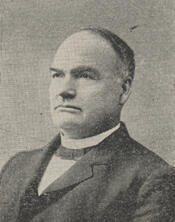
Here you will find contact information for Representative Andrew Jackson Hunter, including email address, phone number, and mailing address.
| Name | Andrew Jackson Hunter |
| Position | Representative |
| State | Illinois |
| District | 19 |
| Party | Democratic |
| Status | Former Representative |
| Term Start | August 7, 1893 |
| Term End | March 3, 1899 |
| Terms Served | 2 |
| Born | December 17, 1831 |
| Gender | Male |
| Bioguide ID | H000980 |
About Representative Andrew Jackson Hunter
Andrew Jackson Hunter (December 17, 1831 – January 12, 1913) was a Democratic U.S. Representative from Illinois who served in the United States Congress from 1893 to 1895 and from 1897 to 1899. His congressional service spanned a significant period in American history marked by economic and political realignment in the late nineteenth century, during which he participated in the legislative process and represented the interests of his Illinois constituents in the House of Representatives.
Hunter was born in Greencastle, Putnam County, Indiana, on December 17, 1831. In 1832, when he was still an infant, he moved with his parents to Paris, Edgar County, Illinois, a community that would remain the center of his personal, professional, and political life. He was educated in the common schools of Paris and attended Edgar Academy, receiving the foundational education that prepared him for work in both technical and legal fields.
Before entering the legal profession, Hunter worked as a civil engineer from 1852 to 1856, a role that reflected the expanding infrastructure and internal improvements of the antebellum Midwest. He subsequently studied law, was admitted to the bar in 1856, and commenced the practice of law in Paris, Illinois. His legal career established him as a prominent figure in Edgar County and provided the basis for his later judicial and legislative service.
Hunter entered public office during the Civil War era, serving as a member of the Illinois Senate from 1864 to 1868. In the state senate he took part in overseeing public affairs during Reconstruction and also served as a member of the board of investigation of State institutions, contributing to the supervision and evaluation of Illinois’s public facilities and services. Seeking to extend his public service to the national level, he was an unsuccessful Democratic candidate for election to the Forty-second Congress in 1870 and again for the Forty-eighth Congress in 1882, reflecting his continued engagement in state and national politics despite electoral setbacks.
In addition to his legislative work, Hunter held judicial office at the county level. He served as judge of the Edgar County court from 1886 to 1892, presiding over local judicial matters and further solidifying his reputation as a public servant in his home community. This combination of legislative and judicial experience positioned him for eventual success in national office.
Hunter was elected as a Democrat to the Fifty-third Congress, serving from March 4, 1893, to March 4, 1895. During this first term in the U.S. House of Representatives, he contributed to the legislative process at a time when issues such as economic policy, tariffs, and monetary questions were at the forefront of national debate. He was an unsuccessful candidate for reelection in 1894 to the Fifty-fourth Congress, but remained an active figure in Illinois Democratic politics.
Regaining his seat two years later, Hunter was elected to the Fifty-fifth Congress and served from March 4, 1897, to March 4, 1899. His second term coincided with the aftermath of the Panic of 1893 and the evolving political climate of the late 1890s. Once again he was an unsuccessful candidate for reelection, this time in 1898 to the Fifty-sixth Congress, concluding his service in the national legislature after two nonconsecutive terms.
In his later years, Hunter continued to participate in party affairs and remained identified with the Democratic Party. He served as a delegate to the Democratic National Convention in 1908, underscoring his ongoing involvement in national political deliberations even after leaving Congress. He spent the remainder of his life in Paris, Illinois, where he had long practiced law and held public office. Andrew Jackson Hunter died in Paris on January 12, 1913, and was interred in Edgar Cemetery, closing a career that encompassed engineering, law, state legislation, county judicial service, and representation of Illinois in the United States Congress.