Senator Andrew Moore
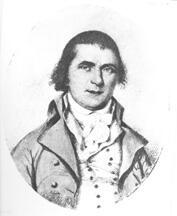
Here you will find contact information for Senator Andrew Moore, including email address, phone number, and mailing address.
| Name | Andrew Moore |
| Position | Senator |
| State | Virginia |
| Party | Republican |
| Status | Former Representative |
| Term Start | March 4, 1789 |
| Term End | March 3, 1809 |
| Terms Served | 5 |
| Gender | Male |
| Bioguide ID | M000891 |
About Senator Andrew Moore
Andrew Moore (1752–1821) was an American politician who served as both a United States Representative and a United States Senator from Virginia during the formative decades of the federal republic. Born in 1752 in the Colony of Virginia, he came of age in a period marked by growing colonial unrest and the eventual struggle for independence from Great Britain. His early life in Virginia placed him within the social and political milieu that produced many of the nation’s first generation of public leaders, and it laid the groundwork for his later role in national affairs as a representative of his state’s interests in the new federal government.
Details of Moore’s formal education are not extensively documented, but, like many Virginia political figures of his era, he is understood to have received the kind of practical and classical instruction that prepared men for public life, landholding, and legal or legislative work. His education would have included exposure to the political philosophy and legal traditions that informed the debates of the Revolutionary and early national periods. This background equipped him to participate effectively in the legislative and constitutional discussions that shaped both Virginia and the United States in the late eighteenth and early nineteenth centuries.
Moore’s public career developed alongside the establishment of the United States under the Constitution of 1787. Identified with the emerging Republican Party—often referred to at the time as the Democratic-Republican Party—he aligned himself with those who favored a more limited federal government and a strong role for the states, in contrast to the Federalist Party. Before and alongside his service in the United States Senate, Moore served as a U.S. Representative from Virginia, representing his constituents in the House of Representatives. In that capacity, he took part in the early legislative work of the new Congress, helping to define the powers and practices of the federal legislature and to address the needs of a largely agrarian state whose economy and society were closely tied to land and local governance.
From 1789 to 1809, Andrew Moore served in the United States Congress, including a substantial period as a Senator from Virginia. Over the course of approximately five terms in office, he contributed to the legislative process during a time when the young nation was confronting foundational questions of governance, finance, foreign policy, and territorial expansion. As a member of the Senate, Moore participated in the democratic process at the highest legislative level, debating and voting on measures that would shape the trajectory of the United States in its first decades under the Constitution. Throughout his tenure, he represented the interests of his Virginia constituents, bringing their concerns into national deliberations and helping to articulate the Republican Party’s perspective on the balance between federal authority and state sovereignty.
Moore’s congressional service coincided with a period of intense political development, including the administrations of George Washington, John Adams, Thomas Jefferson, and James Madison. During these years, the United States navigated challenges such as the establishment of a stable financial system, conflicts over the scope of federal power, and the pressures exerted by European wars on American neutrality and trade. Within this context, Moore’s work as both Representative and Senator from Virginia placed him at the center of debates that would define the character of the early republic, including questions about the rights of states, the role of the executive branch, and the direction of the nation’s westward growth.
After leaving the Senate in 1809, Andrew Moore withdrew from the forefront of national politics, concluding a two-decade span of service in the federal legislature. In his later years, he remained part of the Virginia political and social landscape shaped by the very institutions and policies he had helped to form. He lived to see the United States endure the War of 1812 and continue to consolidate its independence and national identity. Andrew Moore died in 1821, closing the life of a statesman whose career bridged the revolutionary generation and the early maturation of the American constitutional system, and whose long service in Congress reflected Virginia’s central role in the nation’s founding era.