Representative Andrew James Peters
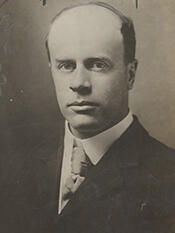
Here you will find contact information for Representative Andrew James Peters, including email address, phone number, and mailing address.
| Name | Andrew James Peters |
| Position | Representative |
| State | Massachusetts |
| District | 11 |
| Party | Democratic |
| Status | Former Representative |
| Term Start | December 2, 1907 |
| Term End | March 3, 1915 |
| Terms Served | 4 |
| Born | April 3, 1872 |
| Gender | Male |
| Bioguide ID | P000251 |
About Representative Andrew James Peters
Andrew James Peters (April 3, 1872 – June 26, 1938) was an American politician who served as a member of the United States House of Representatives from Massachusetts and as Mayor of Boston. A member of the Democratic Party, he represented Massachusetts in Congress from 1907 to 1915, contributing to the legislative process during four terms in office. He is also remembered for his later involvement as a central figure and suspect in the widely publicized case surrounding the death of Starr Faithfull.
Peters was born on April 3, 1872, in West Roxbury, Massachusetts, into a family long established in the Commonwealth; the first Andrew Peters in his lineage arrived in Massachusetts in 1657. Raised in this longstanding New England milieu, he was educated in local schools before attending Harvard University. He received an A.B. degree from Harvard in 1895 and went on to study law at Harvard Law School, earning an LL.B. in 1898. His legal training provided the foundation for his subsequent career in public service and politics.
Peters entered elective office in the early twentieth century, serving in the Massachusetts State Senate in the 125th and 126th Massachusetts General Courts in 1904 and 1905. His work in the state legislature helped establish his reputation within the Democratic Party and prepared him for national office. In 1906, he was elected to the United States House of Representatives. He took his seat in March 1907 and served continuously until 1915, representing his Massachusetts district during a significant period in American history marked by Progressive Era reforms and the presidency of Woodrow Wilson. As a member of the House of Representatives, Andrew James Peters participated in the democratic process, represented the interests of his constituents, and contributed to the legislative work of Congress over the course of four terms.
In 1914, during his final term in Congress, Peters was appointed Assistant Secretary of the Treasury under Secretary William Gibbs McAdoo in the first administration of President Woodrow Wilson. He served in that post from 1914 until 1918, a period that included the onset of World War I and major changes in federal fiscal and monetary policy. His responsibilities in the Treasury Department placed him at the center of national financial administration at a time of expanding federal power and wartime mobilization.
Peters returned to elective office at the municipal level when he successfully ran for Mayor of Boston in the 1917 election, defeating the incumbent, James Michael Curley. He assumed the mayoralty in 1918 and served through a turbulent period in the city’s history. His tenure is particularly noted for his handling of the 1919 Boston police strike, a major labor and public order crisis that drew national attention and had lasting implications for public-sector unionism and urban governance. Although he remained a prominent figure in Massachusetts Democratic politics and was considered a potential candidate for Governor of Massachusetts later in the 1920s, he was never nominated for that office.
In his later public life, Peters continued to hold roles in civic and economic affairs. In 1932, at the request of President Herbert Hoover, he served as treasurer of a Massachusetts state campaign organized to discourage money-hoarding during the Great Depression, reflecting ongoing concern with financial stability and public confidence. The following year, in 1933, he was named to the Massachusetts Advisory Committee of the Home Owners’ Loan Corporation, a New Deal–era body created to address the crisis in home mortgages and prevent foreclosures, thereby extending his influence into housing and economic relief policy.
Peters married Martha Phillips in 1910, and the couple had six children. Through this marriage he became related to the Faithfull family; his cousin-in-law, Helen Faithfull, had a young daughter, Starr Wyman (later known as Starr Faithfull), who first attracted his attention in 1917. A student at the Rogers Hall School in Lowell, Massachusetts, Starr spent summers with the Peters family. During this period, Peters began to sexually abuse her when she was about eleven years old, reportedly dosing her with ether, reading to her from the sexological writings of Havelock Ellis, and taking her to hotels. On June 8, 1931, she drowned under mysterious circumstances off Long Island. When her diaries were discovered, allegations about Peters’s conduct became public, and her stepfather produced evidence that Peters had paid him and Helen Faithfull to keep quiet about the abuse. Through a family friend and attorney, Peters denied having “improper relations” with her, but the scandal was widely reported, and he is said to have suffered a nervous breakdown as a result. The case inspired later literary treatments, including John O’Hara’s novel BUtterfield 8, and Peters appears as a key character in Dennis Lehane’s novel The Given Day.
Andrew James Peters died of pneumonia in Boston, Massachusetts, on June 26, 1938. His career spanned local, state, and national office, including service in the Massachusetts State Senate, the United States House of Representatives from 1907 to 1915, the Treasury Department, and the Boston mayoralty, and his life remained a subject of historical and cultural interest in part because of the enduring notoriety of the Starr Faithfull case.