Senator Andrew Frank Schoeppel
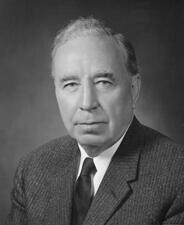
Here you will find contact information for Senator Andrew Frank Schoeppel, including email address, phone number, and mailing address.
| Name | Andrew Frank Schoeppel |
| Position | Senator |
| State | Kansas |
| Party | Republican |
| Status | Former Representative |
| Term Start | January 3, 1949 |
| Term End | January 21, 1962 |
| Terms Served | 3 |
| Born | November 23, 1894 |
| Gender | Male |
| Bioguide ID | S000138 |
About Senator Andrew Frank Schoeppel
Andrew Frank Schoeppel (November 23, 1894 – January 21, 1962) was an American politician and a member of the Republican Party who served as the 29th governor of Kansas from 1943 to 1947 and as a United States senator from Kansas from 1949 until his death in 1962. He was born near Claflin, Kansas, in Barton County, to immigrant parents from Bohemia, and grew up in the public school system of rural Kansas. His early life on the plains and in a community of recent immigrants helped shape his understanding of agricultural and small-town concerns that later informed his public career.
Schoeppel attended the University of Kansas, but his studies were interrupted by World War I. He left college to join the Naval Air Service, serving in the United States Navy during the conflict. After the war, he resumed his education, this time in law, and graduated from the University of Nebraska Law School in 1922. He was admitted to the Kansas bar in 1923, beginning a legal career that would serve as the foundation for his entry into public office.
Schoeppel’s early political life developed at the local and county levels in western Kansas. He first gained public office as county attorney in Ness County, Kansas, where he became one of the early local officials for Ness City. His work as county attorney led to broader recognition, and he was later elected mayor of Ness City. These roles gave him practical experience in local governance and law enforcement, and they established his reputation as a Republican leader in the state. Building on this experience, he advanced to statewide regulatory responsibilities as chairman of the Kansas Corporation Commission, where he dealt with public utilities and corporate oversight, further broadening his administrative and political credentials.
In 1942, Schoeppel was elected governor of Kansas, and he took office as the state’s 29th governor in January 1943. Serving two terms, from 1943 to 1947, he led the state through the final years of World War II and the beginning of the postwar transition. His administration confronted wartime mobilization issues, including manpower, production, and support for servicemembers and their families, as well as the challenges of reconversion to a peacetime economy. As governor, he remained aligned with the Republican Party’s generally conservative fiscal approach while navigating the demands placed on state government by the war and its aftermath.
After leaving the governorship, Schoeppel successfully sought federal office. He was elected to the United States Senate from Kansas in 1948 and took his seat on January 3, 1949. A member of the Republican Party, he served continuously in the Senate from 1949 until his death in 1962, contributing to the legislative process during three terms in office and representing the interests of his Kansas constituents during a significant period in American history that encompassed the early Cold War, the Korean War, and the beginnings of the civil rights era. In the 1952 presidential election, he notably supported Senator Robert A. Taft of Ohio for the Republican nomination over fellow Kansan General Dwight D. Eisenhower, reflecting his alignment with the more traditional, conservative wing of the party.
During his Senate career, Schoeppel participated actively in the democratic process and cast important votes on major national issues. He voted in favor of the Civil Rights Act of 1957, supporting the first federal civil rights legislation enacted since Reconstruction, which focused on voting rights protections. However, he did not vote on the Civil Rights Act of 1960, another key measure aimed at strengthening federal enforcement of voting rights. Throughout his tenure, he was regarded as a representative of Kansas’s agricultural and rural interests, and he worked within the Republican caucus during a period of shifting national priorities in defense, foreign policy, and domestic affairs.
Andrew Frank Schoeppel died of abdominal cancer on January 21, 1962, at the National Naval Medical Center in Bethesda, Maryland, while still serving in the United States Senate. His death brought to a close a public career that had spanned local, state, and national office, from county attorney and mayor to governor of Kansas and U.S. senator.