Representative Andrew Lawrence Somers
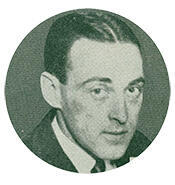
Here you will find contact information for Representative Andrew Lawrence Somers, including email address, phone number, and mailing address.
| Name | Andrew Lawrence Somers |
| Position | Representative |
| State | New York |
| District | 10 |
| Party | Democratic |
| Status | Former Representative |
| Term Start | December 7, 1925 |
| Term End | January 3, 1951 |
| Terms Served | 13 |
| Born | March 21, 1895 |
| Gender | Male |
| Bioguide ID | S000676 |
About Representative Andrew Lawrence Somers
Andrew Lawrence Somers (March 21, 1895 – April 6, 1949) was an American politician who served as a Democratic member of the United States House of Representatives from New York from 1925 until his death in 1949. Representing a Brooklyn district with a substantial immigrant and Jewish population, Somers’s thirteen consecutive terms in Congress spanned the economic upheavals of the interwar period, the New Deal, World War II, and the early stages of the Cold War. Over the course of his long tenure, he became known for his expertise in monetary legislation, his support for President Franklin D. Roosevelt’s economic reforms, and his vigorous efforts to aid European Jews during the Holocaust and to advance the cause of a Jewish homeland in Palestine.
Somers was born in Brooklyn, New York, on March 21, 1895. He was educated in local Catholic and preparatory institutions, attending St. Teresa’s Academy in Brooklyn, Brooklyn College Preparatory School, Manhattan College, and the Pratt Institute. After completing his studies, he entered private business as an entrepreneur in the dry color and chemical fields, gaining experience in commerce and industry that would later inform his legislative interests in economic and regulatory matters.
With the entry of the United States into World War I, Somers enlisted in the United States military on July 18, 1917. He initially served as a naval aviator in the United States Naval Flying Corps, reflecting the early development of American military aviation. He was later transferred to the United States Marine Corps, where he attained the rank of captain in the Marine Corps Reserve. Somers was honorably discharged from military service on March 4, 1919. His wartime experience and leadership responsibilities contributed to his public profile in Brooklyn and helped launch his subsequent political career.
Following the war, Somers became active in Democratic Party politics in Brooklyn under the tutelage of influential borough leader John H. McCooey. Benefiting from McCooey’s organizational backing and his own appeal as a young veteran and businessman, he ran for Congress in the mid-1920s and defeated his Republican challenger, Warren I. Lee. Taking office at the age of 29 on March 4, 1925, he was one of the youngest members of the House of Representatives and acquired the nickname “the boy Congressman.” He was a delegate to the Democratic National Convention in 1928, reflecting his growing prominence within the party’s state and national ranks.
Somers’s congressional service, which lasted from 1925 to 1949, coincided with major transformations in American government and society. As a member of the House of Representatives from a Brooklyn district, he participated in the legislative process during the onset of the Great Depression, the implementation of the New Deal, and the mobilization for World War II. A strong supporter of President Franklin D. Roosevelt’s New Deal policies, Somers joined the majority of House Democrats in backing landmark social and economic legislation, including the Social Security Act, which established a federal safety net of old-age pensions, unemployment insurance, and aid for the disabled. He also supported key banking reforms such as the Glass–Steagall Act of 1933, which created the Federal Deposit Insurance Corporation (FDIC) and separated commercial from investment banking in an effort to stabilize the financial system.
Within the House, Somers developed particular expertise in monetary and economic legislation. He chaired the Committee on Coinage, Weights, and Measures from the Seventy-second through the Seventy-fifth Congresses (1931–1939). Under his leadership, the committee oversaw legislation regulating United States currency and coinage and worked to standardize weights and measures to ensure fair trade and consumer protection in interstate commerce. During the New Deal period, he presided over hearings and guided bills dealing with silver purchases, gold revaluation, and modifications to U.S. coinage standards. Somers successfully steered Roosevelt’s gold devaluation measures through the House, and his committee’s work intersected with major administration initiatives such as the Gold Reserve Act of 1934, which sought to restore confidence in the banking system and recalibrate the dollar’s value. After the Legislative Reorganization Act of 1946 merged the Coinage Committee into the broader House banking structure, Somers continued to participate in shaping financial and banking measures relevant to the United States’ emerging role in the postwar global economy.
In addition to his work on monetary issues, Somers held other important committee chairmanships later in his career. He served as chairman of the Committee on Mines and Mining during the Seventy-ninth Congress and as chairman of the Committee on Public Lands in the Eighty-first Congress. These assignments placed him at the center of legislative debates over the development and regulation of the nation’s natural resources and public lands in the immediate postwar period. Throughout his service, he remained closely attuned to the concerns of his Brooklyn constituents, many of whom were immigrants or the children of immigrants, and he used his positions to address both local and national economic issues.
Somers was particularly active in efforts to rescue Jews during the Holocaust and to support Jewish national aspirations in Palestine. During World War II, he backed congressional resolutions and joined appeals urging the Roosevelt Administration and Allied governments to facilitate the rescue and admission of Jewish refugees fleeing Nazi persecution. He supported proposals related to the Wagner–Rogers Bill of 1939, which sought to admit refugee children to the United States, and later measures calling for the establishment of government agencies to assist victims of Nazi oppression. Although the Wagner–Rogers Bill did not pass, the sustained pressure from Somers and like-minded legislators contributed to the eventual creation of the War Refugee Board in 1944. The Congressional Record from 1943–1944 contains multiple references to broad congressional support, including Somers’s, for more robust U.S. action to save Jews trapped under Nazi rule. His name became associated with House caucuses sympathetic to Jewish rescue efforts, and he joined appeals to the State Department and President Roosevelt urging more proactive steps to address the humanitarian crisis.
As the war ended and international attention turned to the fate of Holocaust survivors and the political future of Palestine, Somers emerged as a congressional advocate for the establishment of a Jewish national homeland. He participated in congressional dialogues supporting Jewish aspirations in the British Mandate of Palestine and pressed for policies that would facilitate Jewish settlement and statehood. Following President Harry S. Truman’s recognition of the State of Israel on May 14, 1948, Somers publicly welcomed the decision. In House proceedings and in correspondence preserved in archival holdings, he praised the creation of Israel as a vital step in providing a secure refuge for survivors of the Holocaust and in advancing democratic values in the Middle East.
Andrew Lawrence Somers remained in office until his death in New York City on April 6, 1949. His congressional career, extending from the mid-1920s through the aftermath of World War II, reflected both the domestic economic transformations of the New Deal era and the international crises of his time. As a long-serving representative from Brooklyn, he combined a focus on monetary and economic legislation with a sustained commitment to humanitarian causes, particularly the rescue of European Jews and the establishment of the State of Israel.