Representative Andrew John Volstead
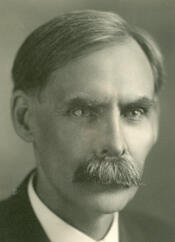
Here you will find contact information for Representative Andrew John Volstead, including email address, phone number, and mailing address.
| Name | Andrew John Volstead |
| Position | Representative |
| State | Minnesota |
| District | 7 |
| Party | Republican |
| Status | Former Representative |
| Term Start | November 9, 1903 |
| Term End | March 3, 1923 |
| Terms Served | 10 |
| Born | October 31, 1860 |
| Gender | Male |
| Bioguide ID | V000114 |
About Representative Andrew John Volstead
Andrew John Volstead (October 31, 1859 – January 20, 1947) was an American lawyer and Republican politician who served as a member of the United States House of Representatives from Minnesota from 1903 to 1923. Over the course of 10 consecutive terms, he represented his constituents during a significant period in American history, participating actively in the legislative process. His name became closely associated with the National Prohibition Act of 1919, commonly known as the Volstead Act, which provided the enabling legislation for the enforcement of Prohibition in the United States beginning in 1920.
Volstead was born in Kenyon, Goodhue County, Minnesota, to Norwegian-American parents Jon Einertson Vraalstad (also known as John Vrolstad), a distant relative of Queen Sonja of Norway, and Dorothea Mathea Lillo. Raised in a community shaped by Norwegian immigrant culture, he grew up in rural Minnesota at a time when the Upper Midwest was rapidly developing. His family background and regional upbringing would later inform his interest in agricultural policy and cooperative movements.
Volstead pursued higher education at St. Olaf College in Northfield, Minnesota, an institution founded by Norwegian-American Lutherans. After completing his studies, he read law and entered the legal profession. According to his obituary in a 1947 edition of the Minneapolis Star, he first practiced law in Grantsburg, Wisconsin, gaining early experience in small-town legal affairs. In 1886 he moved to Granite Falls, Minnesota, where he established a long-term law practice and became a prominent figure in local civic life.
In Granite Falls, Volstead’s legal career soon led to public office. He served as mayor of Granite Falls from 1900 to 1902, demonstrating administrative ability and building a base of political support. His work as a municipal leader, combined with his legal reputation, positioned him for higher office at the state and national levels. By the turn of the century, he had become a recognized Republican figure in western Minnesota.
Volstead was elected as a Republican to the Fifty-eighth Congress and subsequently re-elected to the Fifty-ninth, Sixtieth, Sixty-first, Sixty-second, Sixty-third, Sixty-fourth, Sixty-fifth, Sixty-sixth, and Sixty-seventh Congresses, serving from March 4, 1903, to March 3, 1923. During these 10 terms in the House of Representatives, he represented Minnesota at a time of profound national change, including the Progressive Era, World War I, and the onset of Prohibition. As a member of the House, he participated in the democratic process, advanced Republican legislative priorities, and worked to represent the interests of his constituents in Minnesota.
Volstead rose to particular prominence during his final years in Congress, when he served as chairman of the House Judiciary Committee from 1919 to 1923. In that capacity, he played a central role in drafting and advancing major national legislation. Although often regarded as the author of the National Prohibition Act, he in fact collaborated closely with Wayne Wheeler of the Anti-Saloon League, who conceived and largely drafted the bill. Volstead, however, sponsored the legislation, championed it on the House floor, and facilitated its passage, ensuring that the Eighteenth Amendment would be enforced through federal statute. His name became permanently linked to the measure, which was widely known as the Volstead Act. In addition to his work on Prohibition, he helped author the Capper–Volstead Act, which enabled farmers to form locally owned cooperatives without fear of prosecution under the Sherman Antitrust Act. This law, which remains in effect, became a cornerstone of American agricultural cooperative policy and contributed to his later recognition in cooperative and agricultural halls of fame.
In 1922, after nearly two decades in office, Volstead was defeated in his bid for an eleventh term in Congress, ending his service in the House with the close of the Sixty-seventh Congress in March 1923. Shortly thereafter, he was hired as legal adviser to the chief of the National Prohibition Enforcement Bureau, continuing his involvement with the federal enforcement of Prohibition that he had helped to establish legislatively. His expertise in the Volstead Act and related legal issues made him a key figure in the administration of national alcohol policy during the 1920s.
Following the repeal of Prohibition in 1933, Volstead returned to Granite Falls, Minnesota, where he resumed the private practice of law. He lived quietly in the community that had long been his home, remaining a respected elder statesman of Minnesota politics and law. His former residence at 163 Ninth Avenue in Granite Falls was later designated a National Historic Landmark in recognition of his national significance, particularly in connection with Prohibition and agricultural cooperative legislation. Andrew John Volstead died on January 20, 1947, and was buried in the city cemetery in Granite Falls, closing a life that had spanned from the post–Civil War era through the New Deal and left a lasting imprint on American legal and political history.