Representative Andrew Williams
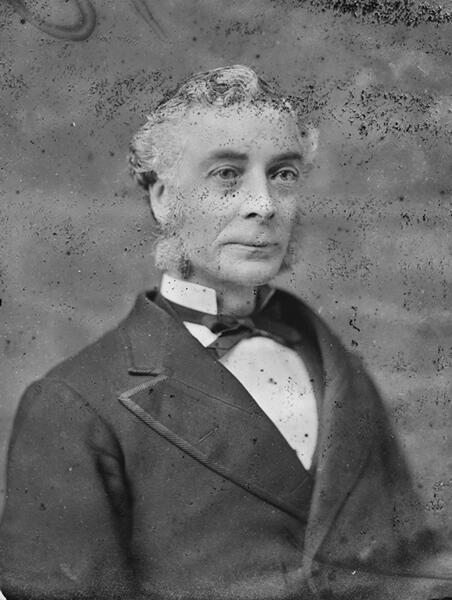
Here you will find contact information for Representative Andrew Williams, including email address, phone number, and mailing address.
| Name | Andrew Williams |
| Position | Representative |
| State | New York |
| District | 18 |
| Party | Republican |
| Status | Former Representative |
| Term Start | December 6, 1875 |
| Term End | March 3, 1879 |
| Terms Served | 2 |
| Born | August 27, 1828 |
| Gender | Male |
| Bioguide ID | W000488 |
About Representative Andrew Williams
Andrew Williams (August 27, 1828 – October 6, 1907) was an American politician and businessman who served as a Republican Representative from New York in the United States Congress from 1875 to 1879. He was born in New London, Connecticut, where he spent his early years before moving to New York State. His formative life in New England and subsequent relocation to New York placed him within the economic and political currents that shaped the mid‑19th‑century Northeast, including the rise of commerce, industry, and the Republican Party in the years leading up to and following the Civil War.
Details of Williams’s formal education are not extensively documented, but like many men of his generation who entered public life from commercial or local backgrounds, he was educated in the common schools of his region. This schooling provided him with the basic literacy, numeracy, and civic grounding necessary for participation in business and, later, in politics. His early adult years were devoted primarily to private pursuits, through which he established himself sufficiently in his community to become a viable candidate for elective office in New York.
Before entering national politics, Williams built a career in New York that combined local engagement with the broader economic development of the state. As New York expanded in population, infrastructure, and industry in the mid‑19th century, he emerged as one of the figures who translated local concerns into political action. By the early 1870s, he had aligned himself with the Republican Party, which had become the dominant political force in the North after the Civil War. His standing within the party and his reputation among constituents in New York’s congressional district positioned him for election to the United States House of Representatives.
Williams was elected as a Republican to the Forty‑fourth Congress and took his seat in the U.S. House of Representatives on March 4, 1875. He was subsequently re‑elected to the Forty‑fifth Congress, serving continuously until March 3, 1879, for a total of two terms. His service in Congress occurred during a significant period in American history, in the decade following the Civil War and during the waning years of Reconstruction. As a member of the House of Representatives, Andrew Williams participated in the democratic process and represented the interests of his New York constituents, contributing to the legislative process at a time when the nation was grappling with issues of economic adjustment, federal–state relations, and the political realignment that followed the conflict. A member of the Republican Party, he worked within the majority tradition that had preserved the Union and was then shaping postwar national policy.
During his tenure, Williams took part in the regular deliberations, debates, and votes that defined the House’s work in the mid‑1870s. While the surviving record does not single him out as the author of landmark national legislation, his role as a voting member of Congress ensured that his constituents’ perspectives were represented in decisions on appropriations, infrastructure, and other measures central to the era’s governance. His two terms coincided with the contested presidential election of 1876 and the broader transition from Reconstruction to what would become known as the Gilded Age, situating his congressional service within a critical juncture of American political development.
After leaving Congress in March 1879, Williams returned to private life in New York. Like many former members of the House in the 19th century, he did not immediately re‑enter national office but instead resumed his earlier pursuits and local engagements. His post‑congressional years unfolded against the backdrop of rapid industrialization and urban growth in New York and across the United States, and he lived long enough to witness the country’s emergence as a major industrial power at the turn of the 20th century. Andrew Williams died on October 6, 1907, in Plattsburgh, New York. His career, particularly his service from 1875 to 1879 in the U.S. House of Representatives, reflects the experience of a 19th‑century Republican legislator who helped carry the work of Congress forward during a pivotal period in the nation’s reconstruction and transformation.