Senator Angus Cameron
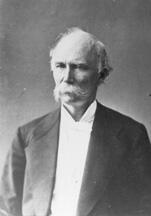
Here you will find contact information for Senator Angus Cameron, including email address, phone number, and mailing address.
| Name | Angus Cameron |
| Position | Senator |
| State | Wisconsin |
| Party | Republican |
| Status | Former Representative |
| Term Start | December 6, 1875 |
| Term End | March 3, 1885 |
| Terms Served | 2 |
| Born | July 4, 1826 |
| Gender | Male |
| Bioguide ID | C000064 |
About Senator Angus Cameron
Angus Cameron was an American politician who represented Wisconsin in the United States Senate from 1875 to 1885. A member of the Republican Party, he served two full terms in the Senate and contributed to the legislative process during a significant period in American history, participating in the democratic process and representing the interests of his constituents. He was born in 1826 and died in 1897, and is distinguished from several other notable individuals of the same name, including an Australian politician, a British colonial administrator, an American book editor and publisher, a Canadian ice hockey player, a Scottish rugby union player, a Canadian academic, a British director, and an American chemist.
Born in 1826, Angus Cameron came of age in the antebellum era, a time of rapid territorial expansion and intensifying national debate over slavery and states’ rights. Details of his early life and family background are less prominently recorded than his later public service, but his formative years coincided with the growth of the Upper Midwest and the development of Wisconsin from frontier territory into a settled state. This environment helped shape his later interest in law, governance, and the institutional development of a relatively young state within the federal Union.
Cameron’s education prepared him for a career in public life and the law, a common pathway for nineteenth-century American politicians. He studied in an era when formal legal training was often acquired through apprenticeships or reading law under established attorneys, and he emerged with the skills necessary to participate in legislative drafting, statutory interpretation, and the broader work of governance. His education and legal grounding enabled him to engage effectively with the complex issues that would come before him in state and national office, including questions of reconstruction, economic development, and federal–state relations.
Before his election to the United States Senate, Cameron built his reputation in Wisconsin’s legal and political circles. As the state matured economically and demographically, he took part in its political life as a Republican, a party that had risen to prominence in the 1850s and had led the Union during the Civil War. His work in state affairs, including legislative and legal responsibilities, established him as a capable representative of Wisconsin’s interests and positioned him for higher office at the federal level. By the time he sought a Senate seat, he was recognized as a figure who could articulate the concerns of a growing Midwestern state within the national forum.
Cameron entered the United States Senate in 1875, at the close of Reconstruction and on the threshold of the Gilded Age. Serving until 1885, he completed two terms in office as a Republican senator from Wisconsin. During this decade, the Senate addressed issues such as the lingering effects of the Civil War, the integration of formerly Confederate states into the political mainstream, the regulation of rapidly expanding railroads and industry, monetary policy controversies, and questions of civil service reform. Within this context, Cameron participated in debates, committee work, and the passage of legislation that affected both Wisconsin and the nation, reflecting the priorities of his party and his constituents.
As a senator, Cameron’s role was to represent Wisconsin’s interests in matters of federal policy, including economic development, infrastructure, and the evolving relationship between the federal government and the states. He took part in the routine but essential work of the Senate—considering bills, voting on appropriations, and overseeing aspects of federal administration—at a time when the institution was consolidating its influence over national economic and regulatory policy. His decade of service coincided with the rise of powerful industrial and financial interests, and the Senate’s responses to these developments helped shape the trajectory of American political economy.
After leaving the Senate in 1885, Cameron remained a figure identified with Wisconsin’s Republican establishment and the generation of leaders who had guided the state and nation through the post–Civil War transition. His later years unfolded against the backdrop of continuing industrialization and social change in the United States, though he no longer held national office. Angus Cameron died in 1897, closing a life that spanned from the Jacksonian era through Reconstruction and into the Gilded Age. His career as a U.S. senator from Wisconsin from 1875 to 1885 placed him among the key federal legislators of his time, and his name endures in historical records alongside other notable individuals named Angus Cameron who distinguished themselves in politics, administration, publishing, science, sports, academia, and the arts.