Representative Anning Smith Prall
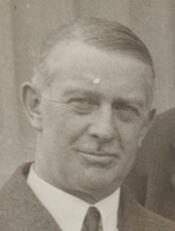
Here you will find contact information for Representative Anning Smith Prall, including email address, phone number, and mailing address.
| Name | Anning Smith Prall |
| Position | Representative |
| State | New York |
| District | 11 |
| Party | Democratic |
| Status | Former Representative |
| Term Start | December 3, 1923 |
| Term End | January 3, 1935 |
| Terms Served | 6 |
| Born | September 17, 1870 |
| Gender | Male |
| Bioguide ID | P000495 |
About Representative Anning Smith Prall
Anning Smith Prall (September 17, 1870 – July 23, 1937) was a six-term U.S. Representative from New York and the first chief commissioner of the Federal Communications Commission (FCC). A member of the Democratic Party, he represented a New York City district in the House of Representatives from 1923 to 1935, participating in the legislative process during a significant period in American history and representing the interests of his constituents during the post–World War I era, the Roaring Twenties, and the early years of the Great Depression. He was born in Port Richmond, Staten Island, New York, and maintained close ties to Staten Island throughout his life.
In his early years, Prall was employed as a clerk in a New York newspaper office, an experience that introduced him to the city’s commercial and civic life. He attended New York University, where he studied business, preparing for a career that would combine private enterprise with public service. His early work life in New York City laid the foundation for his later involvement in real estate, municipal administration, and education policy.
From 1908 until 1918, Prall was in charge of the real estate department of a bank, a position that placed him at the center of New York’s expanding property and development sector. During this period he also emerged as a leader in the local real estate community, serving as the first president of the Staten Island Board of Realtors from 1915 to 1916. His work in real estate and banking gave him practical experience in finance, property valuation, and urban growth, skills that would inform his later roles in city government and taxation.
Prall began a formal public service career in 1918, when he was appointed Clerk of New York City’s First District Municipal Court. That same year, on January 1, 1918, he was appointed a member of the New York City Board of Education. He served on the board until December 31, 1921, and was elected its president, playing a leading role in overseeing the city’s public school system during a period of rapid population growth and educational reform. Building on this experience, he was appointed New York City’s commissioner of taxes and assessment, serving from 1922 to 1923. In that capacity he was responsible for the administration of property taxes and assessments in one of the nation’s largest municipalities, further strengthening his reputation as an able administrator.
Prall’s congressional career began when he was elected as a Democrat to the Sixty-eighth Congress to fill the vacancy caused by the death of Representative Daniel J. Riordan. He won the special election held on November 6, 1923, and took his seat in the U.S. House of Representatives. He was subsequently reelected to the Sixty-ninth and to the four succeeding Congresses, serving continuously from November 6, 1923, to January 3, 1935. Over the course of his six terms, he contributed to the legislative process during a transformative era that included Prohibition, major economic expansion, and the onset of the Great Depression. He was a delegate to the 1924 Democratic National Convention, reflecting his standing within his party at both the local and national levels. Prall chose not to be a candidate for renomination in 1934, concluding his House service at the end of the Seventy-third Congress.
After leaving Congress, Prall moved into a prominent role in federal regulatory policy. He was appointed a member of the newly created Federal Communications Commission, established to oversee and regulate interstate and foreign communications by radio, telephone, and telegraph. He became the first chief commissioner of the FCC and served as a member and chairman of the commission from January 15, 1935, until his death in 1937. More specifically, he served as Chairman of the FCC from March 9, 1935, to June 23, 1937, guiding the commission in its formative years as it developed the regulatory framework for the rapidly evolving communications industry.
Prall died on July 23, 1937, at his summer home in Boothbay Harbor, Maine, while still serving on the Federal Communications Commission. He was interred at Moravian Cemetery in New Dorp, Staten Island, underscoring his lifelong connection to the borough where he had been born and where much of his early professional and civic life had unfolded. His legacy on Staten Island is reflected in the naming of Intermediate School (I.S.) 27 as the Anning S. Prall School, commemorating his long record of public service in education, municipal government, Congress, and federal regulation.