Representative Anson Peaslee Morrill
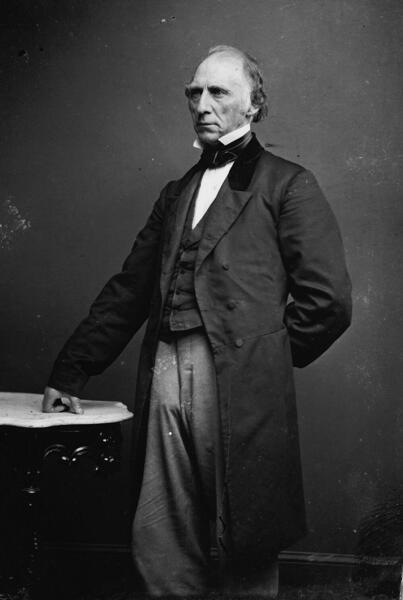
Here you will find contact information for Representative Anson Peaslee Morrill, including email address, phone number, and mailing address.
| Name | Anson Peaslee Morrill |
| Position | Representative |
| State | Maine |
| District | 4 |
| Party | Republican |
| Status | Former Representative |
| Term Start | July 4, 1861 |
| Term End | March 3, 1863 |
| Terms Served | 1 |
| Born | June 10, 1803 |
| Gender | Male |
| Bioguide ID | M000967 |
About Representative Anson Peaslee Morrill
Anson Peaslee Morrill (June 10, 1803 – July 4, 1887) was an American politician who served as the 24th governor of Maine from 1855 to 1856 and later as the U.S. representative from Maine’s 4th congressional district from 1861 to 1863. He was born in Belgrade, in what was then Massachusetts (now Maine), and spent his early years in the rural interior of the District of Maine. Raised in modest circumstances, he engaged in agricultural pursuits and local business activities as a young man, experiences that helped shape his later interest in public affairs and economic development.
Morrill’s formal education was limited, as was common in rural New England in the early nineteenth century, but he acquired practical knowledge through work and self-education. Before entering higher levels of public office, he became involved in local governance and business, including work in the lumber and mercantile trades. His early engagement in community affairs and local administration provided him with a foundation in public service and an understanding of the concerns of small farmers, tradesmen, and emerging industrial interests in Maine.
Morrill’s political career began in state and local offices. He served in the Maine House of Representatives and became active in state politics at a time when questions of temperance, economic policy, and the expansion of slavery were increasingly contentious. Initially associated with the Democratic Party, he later aligned with the emerging anti-slavery and reform movements that were reshaping political affiliations in the 1850s. His growing prominence in state politics led to his election as governor of Maine.
As the 24th governor of Maine, serving from 1855 to 1856, Morrill held office during a period of intense political realignment and sectional tension in the United States. His governorship coincided with the rise of the Republican Party and the fracturing of older party structures over the issue of slavery’s expansion into the territories. In Maine, he supported policies consistent with the emerging Republican platform, including opposition to the spread of slavery and attention to the state’s economic development and infrastructure. His administration reflected the broader transformation of Northern politics in the years immediately preceding the Civil War.
By the late 1850s, Morrill had fully identified with the Republican Party, which had consolidated various anti-slavery and reform elements. As a member of the Republican Party representing Maine, he was elected to the U.S. House of Representatives and served one term as the U.S. representative from Maine’s 4th congressional district from March 4, 1861, to March 3, 1863. Morrill’s service in Congress occurred during a significant period in American history, as the nation descended into and fought the Civil War. In the Thirty-seventh Congress, he contributed to the legislative process at a time when the federal government was mobilizing resources for the Union war effort, addressing questions of finance, military organization, and the status of slavery in the rebellious states. He participated in the democratic process and represented the interests of his constituents from Maine’s interior, whose economic and political priorities included support for the Union cause, protection of local industries, and continued development of transportation and commerce.
After his single term in the House of Representatives, Morrill did not return to Congress but remained a respected figure in Maine public life. He continued to be associated with Republican politics and maintained an interest in state and local affairs, while also attending to his business and personal interests. His long career spanned the transformation of Maine from a largely agrarian frontier to a more diversified economy and the transformation of the United States through the crises of sectional conflict and civil war.
Anson Peaslee Morrill died on July 4, 1887. His life and career reflected the trajectory of many nineteenth-century New England politicians who rose from modest rural beginnings to positions of state and national leadership. As governor of Maine and as a Republican member of Congress during the Civil War era, he played a role in the political realignments and national struggles that defined his generation, while consistently representing the concerns of his Maine constituents in both state and federal office.