Representative Anthony Caminetti
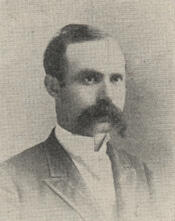
Here you will find contact information for Representative Anthony Caminetti, including email address, phone number, and mailing address.
| Name | Anthony Caminetti |
| Position | Representative |
| State | California |
| District | 2 |
| Party | Democratic |
| Status | Former Representative |
| Term Start | December 7, 1891 |
| Term End | March 3, 1895 |
| Terms Served | 2 |
| Born | July 30, 1854 |
| Gender | Male |
| Bioguide ID | C000069 |
About Representative Anthony Caminetti
Anthony Caminetti (July 30, 1854 – November 17, 1923) was an American lawyer and Democratic politician who served two terms as a United States Representative from California from 1891 to 1895. Over the course of a long public career, he held multiple offices at the county, state, and federal levels and played a prominent role in California politics and in national immigration policy in the early twentieth century.
Caminetti was born on July 30, 1854, in Jackson, Amador County, California, the son of Italian emigrants who had settled in the state during its early years. He attended the public schools of Amador County and later the grammar schools in San Francisco, reflecting the mobility of his family within California. He pursued higher education at the University of California, Berkeley, and subsequently studied law. In 1877 he was admitted to the bar and commenced the practice of law in his native town of Jackson, establishing himself professionally in the community where he had been raised.
Soon after beginning his legal career, Caminetti entered public service at the local level. He was elected district attorney of Amador County and served in that office from 1878 until 1882, gaining experience in criminal prosecution and county administration. During this period he married Ellen Martin, a native Californian who was descended from the Madison family; her great-grandmother was a cousin of President James Madison. Her great-grandfather, George Holland, had served as a First Lieutenant in the Continental Army and was with General George Washington at Valley Forge, with his oath of allegiance preserved in the records of the Department of State as one of the few such documents to survive the destruction of the War of 1812. The couple’s family life included the birth of their son, Farley Drew Caminetti, in 1886.
Caminetti’s state legislative career began with his election to the California State Assembly, where he served from 1883 to 1885. He then advanced to the California State Senate, serving from 1887 to 1891. During these years he became a recognized figure in Democratic politics in California. His wife, Ellen Martin Caminetti, was also politically active and prominently connected with educational work in the state. She served on her county’s Board of Education and occasionally acted in an explicitly political role. When her husband was unable to attend a Democratic convention in Sacramento, she appeared before the convention and delivered his speech of acceptance, presiding over and influencing the course of the proceedings in a manner that contemporary newspapers noted as unusually authoritative for a woman in that era. Her efforts in Washington during a session of the Fifty-third Congress, when she worked against a bill she opposed, drew favorable editorial comment from a San Francisco newspaper.
At the national level, Caminetti was elected as a Democrat to the Fifty-second and Fifty-third Congresses, serving as a United States Representative from California from March 4, 1891, to March 3, 1895. His two terms in the House of Representatives coincided with a significant period in American political and economic history, including debates over monetary policy, public lands, and federal regulation. As a member of the House, he participated in the legislative process and represented the interests of his California constituents. In 1892 he introduced a bill that would have eliminated Yosemite National Park, a proposal that prompted a vigorous campaign of opposition led by Sierra Club president John Muir and other conservationists, who successfully worked to defeat the measure. Caminetti was an unsuccessful candidate for reelection in 1894 to the Fifty-fourth Congress, bringing his initial period of federal legislative service to a close.
After leaving Congress, Caminetti remained active in Democratic Party affairs and state government. He served as a delegate to the Democratic National Convention in 1896 and returned to the California State Assembly, where he served from 1897 until 1901. In April 1897 he was appointed a code commissioner for California, charged with analyzing uncodified statutory law in the California Statutes and attempting to incorporate general provisions into the California Codes; he served in this capacity until July 31, 1899. He later reentered the California State Senate, serving from 1907 to 1913. During this second tenure in the Senate, he was instrumental in the enactment of the Upward Extension Act in 1907, the first state law in the United States formally authorizing the creation of junior colleges, a legislative development that eventually contributed to the establishment of the California Community Colleges system.
Caminetti’s most prominent federal executive service came with his appointment as United States Commissioner General of Immigration, a post he held from 1913 to 1921. In this role he oversaw federal immigration policy during a period marked by growing restrictionist sentiment and the pressures of World War I. As immigration chief, he argued that Congress should end all immigration of Chinese, Japanese, and Malays, characterizing them as part of an “Asiatic menace,” a stance consistent with the exclusionary policies and racial attitudes that shaped federal immigration law in the early twentieth century. In 1913, his family was drawn into national attention when his son, Farley Drew Caminetti, was arrested under the Mann Act after taking his mistress across the state line to Reno, Nevada, a case that became a notable early test of that federal statute. During his tenure in Washington, Caminetti was also assigned in 1915 to the National Employment Bureau, and in 1917 he was appointed a member of the War Industries Board, which coordinated industrial production for the war effort. After the end of World War I, he was sent to Europe to investigate conditions there, further extending his federal service into the realm of postwar economic and social assessment.
Following his years in federal office, Caminetti returned to California and resumed the practice of law in Jackson. He continued to be identified with the Democratic Party and with the legal and political life of his home region. Anthony Caminetti died in Jackson, California, on November 17, 1923. He was buried in the Protestant Cemetery in Jackson, closing a career that had spanned local, state, and national public service during a transformative era in both California and United States history.