Representative Anthony Lee Coelho
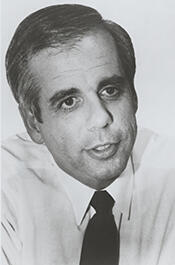
Here you will find contact information for Representative Anthony Lee Coelho, including email address, phone number, and mailing address.
| Name | Anthony Lee Coelho |
| Position | Representative |
| State | California |
| District | 15 |
| Party | Democratic |
| Status | Former Representative |
| Term Start | January 15, 1979 |
| Term End | January 3, 1991 |
| Terms Served | 6 |
| Born | June 15, 1942 |
| Gender | Male |
| Bioguide ID | C000581 |
About Representative Anthony Lee Coelho
Anthony Lee Coelho (born June 15, 1942) is an American politician and public affairs executive from California who served as a Representative from California in the United States House of Representatives from 1979 to 1989. A member of the Democratic Party, he served six terms in Congress, became a key figure in House leadership and national campaign politics, and was credited by congressional colleagues as the primary sponsor of the Americans with Disabilities Act (ADA). He later emerged as a prominent advocate for people with disabilities and a leader in business and nonprofit organizations, including as a former chairman and current member of the board of directors of the Epilepsy Foundation.
Coelho was born in Los Banos, California, and raised in the San Joaquin Valley in a Portuguese-American Catholic family. During his youth he worked on his family’s dairy farm, an experience that shaped his understanding of agricultural and rural issues that would later inform his congressional service. As a young man, he planned to enter the priesthood, but his life took a different direction after he was diagnosed with epilepsy following a serious automobile accident. The diagnosis led to the revocation of his driver’s license and, at the time, prevented him from pursuing his original vocation in the Catholic Church. This experience with disability and discrimination would later become central to his public policy priorities and his leadership in the disability rights movement.
Coelho attended Loyola University of Los Angeles (now Loyola Marymount University), where he studied political science and became active in campus and political life. After college, he entered national politics as a staff member to prominent Democratic leaders. He joined the staff of U.S. Representative Bernie Sisk of California and later became closely associated with House Majority Leader Thomas P. “Tip” O’Neill Jr. Coelho rose to serve as a senior staff member and political operative, gaining experience in legislative affairs, campaign strategy, and party organization. His work in these roles established his reputation as a skilled strategist and fundraiser within the Democratic Party and laid the groundwork for his own bid for elective office.
In 1978, Coelho was elected to the U.S. House of Representatives from a central California district, beginning his service in Congress in January 1979. He represented his constituents for six terms, serving until his resignation in 1989. As a member of the House of Representatives, Anthony Lee Coelho participated in the democratic process and represented the interests of his district during a significant period in American history, including the Carter, Reagan, and early George H. W. Bush administrations. While in the House, he was a member of the Congressional Hispanic Caucus, reflecting both his engagement with minority issues and the diverse population of his California district. His legislative work encompassed budgetary, agricultural, and social policy matters, and he became known as an energetic advocate for his party’s agenda.
Coelho’s influence within the Democratic Party expanded rapidly. In 1980, he was named chairman of the Democratic Congressional Campaign Committee (DCCC), the House campaign arm that supports Democratic candidates. His appointment as a sophomore congressman to this powerful fundraising post was widely noted; The Washington Post observed that making a second-term representative from central California the chief House fundraiser was a distinction not bestowed on such a junior member since a young Texas congressman named Lyndon B. Johnson received a similar role in 1940. Coelho aggressively raised money from businesses and other sources, a strategy that consumer advocate Ralph Nader later criticized as contributing to a shift in the party’s relationship with corporate interests. As a member of the House leadership, Coelho helped lead efforts to hold Republicans politically accountable for the Reagan economic program. In the 1982 election cycle, he oversaw Democratic campaign messaging, including a notable advertisement showing scissors cutting a Social Security card while a voice accused Republicans of trying to cut benefits.
Coelho’s leadership trajectory continued when he was elected House Majority Whip in 1986, making him the third-ranking Democrat in the House and the chief vote counter for his party. In this capacity, he played a central role in organizing Democratic majorities on key votes. Under his whip leadership, House Democrats secured a series of victories on issues ranging from the federal budget to cutting off funds for U.S. involvement in the wars in Central America. During his tenure, he was also credited by his colleagues as the primary sponsor of the Americans with Disabilities Act, landmark civil rights legislation for people with disabilities that was ultimately signed into law by President George H. W. Bush in 1990. By 1994, four years after the ADA’s passage, the U.S. Census Bureau reported that approximately 800,000 more people with severe disabilities were employed than when the law was first enacted, underscoring the measure’s significant impact.
In 1989, after a decade in Congress and six terms in office, Coelho resigned from the House in the wake of press reports that he had received a loan from a savings and loan executive to purchase junk bonds. Although he was not charged with any crime, the controversy led him to step down from his seat and from his leadership position. His departure marked the end of his formal congressional career but not his involvement in public life, politics, or disability advocacy. Since his retirement from Congress, Coelho has pursued careers in business and public service while remaining active in the disabilities community.
Following his exit from elective office, Coelho joined the investment firm Wertheim Schroder & Company as a managing director. From 1990 to 1995, he served as president and chief executive officer of Wertheim Schroder Investment Services, during which time the firm’s managed investments grew from approximately $400 million to $4 billion under his management. In 1995, he founded ETC w/tci, an education and training technology company based in Washington, D.C., serving as its chairman and chief executive officer until 1997. He also served as an advisor to ZeniMax Media and later became a founding partner of Vectis Strategies, a national public affairs firm, extending his influence into corporate strategy, media, and public policy consulting.
Coelho’s later public service centered on disability rights, employment, and public policy. President Bill Clinton appointed him chairman of the President’s Committee on Employment of People with Disabilities, a position he held from 1994 to 2001, and he also served as vice chair of the National Task Force on Employment of Adults with Disabilities. In 1998, Clinton named him United States Commissioner General at the 1998 World Expo in Portugal. Clinton further appointed Coelho as co-chair of the U.S. Census Monitoring Board, where he served until he became general chairman of Vice President Al Gore’s presidential campaign. In the summer of 1994, Coelho had already returned to high-level political strategy as the principal Democratic political strategist during the run-up to the midterm congressional elections, officially serving as Senior Advisor to the Democratic National Committee. Despite his efforts, the Republican Party won a landslide victory in the 1994 elections, capturing both the House and Senate.
In 1999, Coelho was appointed chairman of Vice President Al Gore’s 2000 presidential campaign. In that role, he moved the campaign headquarters from Washington, D.C., to Nashville, Tennessee, oversaw an overhaul of the campaign’s message and strategy, and reorganized personnel and consultants. Under this revamped structure, Gore prevailed over former Senator Bill Bradley in every primary and caucus contest and secured the Democratic nomination for president in 2000. Before the 2000 Democratic National Convention, however, Coelho became seriously ill and resigned his position as general campaign chairman. Physicians later discovered and removed a tumor on the left side of his brain. He was succeeded in the campaign leadership by former Commerce Secretary William M. Daley.
In addition to his political and business roles, Coelho has remained deeply engaged in academic, advocacy, and nonprofit work. He participates annually in the Tony Coelho Lecture in Disability Employment Law & Policy at New York Law School and has endowed a chair in public policy at the University of California, Merced. He has served as chairman of the board of directors of the Epilepsy Foundation and is a former chairman and current member of the board of directors of the American Association of People with Disabilities. In partnership with NBCUniversal and the American Association of People with Disabilities, he helped create the NBCUniversal Tony Coelho Media Scholarship to encourage people with disabilities to pursue media-related degrees and careers. He also sits on the Council on American Politics, the advisory board of the George Washington University Graduate School of Political Management. His contributions to disability advocacy have been recognized with numerous honors, including being one of the recipients of the inaugural Henry Viscardi Achievement Awards in 2013 and being named in 2015 as an inaugural inductee to the Susan M. Daniels Disability Mentoring Hall of Fame by the National Disability Mentoring Coalition for his commitment to mentoring and improving the lives of people with disabilities. Reflecting his enduring role within the Democratic Party, Coelho was named a vice-chair of the 2020 Democratic National Convention.