Representative Anthony Joseph Dimond
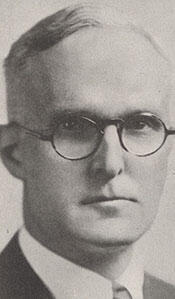
Here you will find contact information for Representative Anthony Joseph Dimond, including email address, phone number, and mailing address.
| Name | Anthony Joseph Dimond |
| Position | Representative |
| State | Alaska |
| District | At-Large |
| Party | Democratic |
| Status | Former Representative |
| Term Start | March 9, 1933 |
| Term End | January 3, 1945 |
| Terms Served | 6 |
| Born | November 30, 1881 |
| Gender | Male |
| Bioguide ID | D000353 |
About Representative Anthony Joseph Dimond
Anthony Joseph Dimond (November 30, 1881 – May 28, 1953) was an American Democratic Party politician who served as the Alaska Territory Delegate in the United States House of Representatives from 1933 to 1945. Known as “Tony,” he was an early and persistent champion of Alaska statehood and played a significant role in territorial politics and governance over several decades. A member of the Democratic Party, Dimond contributed to the legislative process during six terms in Congress, representing the interests of Alaskan constituents during a transformative period in American history that encompassed the Great Depression and World War II.
Dimond was born on November 30, 1881, in Palatine Bridge, Montgomery County, New York. He was raised in a Roman Catholic family and attended Catholic schools in his youth. After completing his schooling, he remained in Montgomery County and worked as a schoolteacher from 1900 to 1903. Drawn by the opportunities of the North, he moved to Alaska in the early twentieth century, joining the many prospectors and adventurers heading to the territory. From 1905 to 1912 he worked as a prospector and miner in Alaska, gaining firsthand experience of the challenges and conditions of frontier life that would later inform his political advocacy.
Following his years in mining, Dimond turned to the study of law and began to establish himself in public service. He studied law in Alaska and was admitted to the bar, commencing legal practice in Valdez in 1913. That same year he was appointed United States Commissioner in Chisana, Alaska, a position he held from 1913 to 1914. His legal and administrative abilities led to further federal responsibilities; in 1917 he served as Special Assistant United States Attorney for the Third Judicial Division of Alaska, based in Valdez. Through these early legal and judicial roles, he developed a reputation as a capable advocate for the territory and its residents.
Dimond’s formal political career began at the local level in Valdez. He was elected mayor of Valdez and served multiple terms, first from 1920 to 1922 and again from 1925 to 1932. Concurrently, he advanced to territorial office as a member of the Alaska Territorial Senate, serving from 1923 to 1926 and from 1929 to 1932. In these roles he worked to improve local governance and infrastructure and to strengthen the political voice of Alaskans within the broader framework of United States territorial administration. His growing prominence in Democratic Party circles was reflected in his later selection as a delegate to the Democratic National Conventions in 1936 and 1940.
In 1933 Dimond was elected as the Alaska Territory Delegate to the United States House of Representatives, beginning a congressional tenure that lasted until 1945. As a non-voting delegate, he nonetheless participated actively in committee work, debate, and the formulation of legislation affecting Alaska and the nation. His service in Congress spanned six terms and coincided with the New Deal era and World War II, a significant period in American history. Dimond was an early and vocal advocate of Alaska statehood, pressing for greater self-government, improved transportation and communication links, and economic development in the territory. In 1940, when President Franklin D. Roosevelt considered a proposal to establish Alaska as an international Jewish homeland, Dimond was the principal force in Congress behind defeating the effort, reflecting his views on the future political and demographic development of the territory.
During his years in Washington, Dimond also helped mentor younger Alaskan political figures. From 1933 to 1934 his secretary was Bob Bartlett, who would later become one of Alaska’s first United States senators after statehood, serving from 1959 to 1968. Dimond’s influence extended into the next generation of Alaskan leadership in other ways as well. His godson, William A. “Bill” Egan, became the first Governor of the State of Alaska after statehood, serving from 1959 to 1966 and again from 1970 to 1974. Dimond’s son, John H. Dimond, went on to become a justice of the Alaska Supreme Court following statehood, further cementing the family’s long-standing role in the legal and political life of Alaska.
After leaving Congress in 1945, Dimond returned to Alaska and resumed full-time judicial service. That same year he was appointed District Judge for the Third Division of Alaska, a position he held from 1945 until his death in 1953. In this capacity he oversaw a wide range of civil and criminal matters in a vast and still-developing jurisdiction, bringing to the bench the experience he had gained as a lawyer, local official, and territorial delegate. A practicing Roman Catholic throughout his life, he was active in civic and fraternal organizations, including the Elks, Moose, and Eagles, reflecting his engagement with community life beyond formal politics.
Anthony Joseph Dimond died on May 28, 1953, in Anchorage, Alaska. His legacy in the state is reflected not only in the careers of those he mentored and in his family’s continued public service, but also in the honors accorded to his memory. The State of Alaska observes November 30 as “Anthony Dimond Day” in recognition of his contributions to the territory and its path toward statehood. In Anchorage, A. J. Dimond High School and Dimond Boulevard, a major thoroughfare, bear his name, and the nearby Dimond Center likewise derives its name from its proximity to Dimond Boulevard. His life and career have also entered American cultural memory; the 2007 alternate history novel “The Yiddish Policemen’s Union” by Michael Chabon imagines a divergent history beginning with Dimond’s fictional death in a 1941 car accident, underscoring his historical importance in shaping Alaska’s twentieth-century trajectory.