Representative Anthony Eickhoff
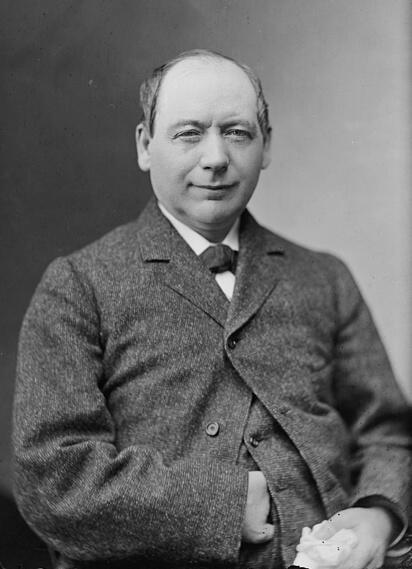
Here you will find contact information for Representative Anthony Eickhoff, including email address, phone number, and mailing address.
| Name | Anthony Eickhoff |
| Position | Representative |
| State | New York |
| District | 7 |
| Party | Democratic |
| Status | Former Representative |
| Term Start | October 15, 1877 |
| Term End | March 3, 1879 |
| Terms Served | 1 |
| Born | September 11, 1827 |
| Gender | Male |
| Bioguide ID | E000095 |
About Representative Anthony Eickhoff
Gerhard Anton Eickhoff, commonly known in the United States as Anthony Eickhoff, was born on September 11, 1827, in the rural hamlet of Kaldewei, part of the village of Benninghausen in Prussia, an area that is today suburbanized into Lippstadt in North Rhine-Westphalia, Germany. He was the son of Caspar Eickhoff (1803–1867) and Maria Catharina Trockel (1803–1863). His family and their forefathers were peasants in Kaldewei, originally born in serfdom to the Cistercian Cloister of Benninghausen, founded in 1240 and secularized in 1804, and were ultimately released from serfdom by the Grand Duke in 1809. Raised in this rural environment, Eickhoff received a school education sufficient to qualify him for teaching and early intellectual pursuits.
After completing his schooling, Eickhoff began working as a teacher in Lippstadt and became involved in the ferment of pre-revolutionary Prussia. He publicized radical writings that reflected the democratic and reformist currents of the time, continuing this activity until 1847. Facing political constraints and attracted by the opportunities of the United States, he decided to emigrate. On October 24, 1847, he boarded the ship Itzstein & Welcker at Bremen, and after a transatlantic voyage arrived in New Orleans on January 6, 1848. This move marked the beginning of his life as a German-American immigrant who would become active in journalism, law, and public service.
Upon his arrival in the United States, Eickhoff’s first employment was as a deckhand on a Mississippi steamboat, work that introduced him to the geography and commerce of the interior. He soon moved to St. Louis, Missouri, where he taught in a Jesuit school and studied law. At the same time, he embarked on a career in journalism that would establish his prominence among German-speaking communities in the Midwest. In 1848 and 1849 he founded and edited the St. Louis Zeitung. He then moved to Dubuque, Iowa, where from 1849 to 1850 he edited Der Nordwestliche Demokrat, later renamed the Iowa Staatszeitung. From 1850 to 1852 he edited Der Beobachter am Ohio in Louisville, Kentucky. By 1852 he had settled in New York City, where he edited Die Abendpost and, from 1854 to 1856, the influential New Yorker Staats-Zeitung. He became a naturalized citizen in 1855 and began practicing law, combining legal work with his editorial and literary activities.
Around 1855, Eickhoff married Louise Elisa Neuenschwander, who had immigrated from Switzerland to the United States. The couple had a son, Henry Eickhoff (January 17, 1856 – October 17, 1933), and two daughters. His family remained connected to the legal profession and public life; his grandson, Henry Eickhoff, Jr. (February 17, 1898 – August 12, 1954), became a lawyer. Alongside his professional and family responsibilities, Eickhoff authored works in German, including “In der Neuen Heimath: geschichtliche Mittheilungen über die deutschen Einwanderer in allen Theilen der Union,” first published in New York City in 1884 with a second edition in 1885, and “Mexico. Aus einer Discussion in einem deutschen demokratischen Vereine zu New York,” published in 1865, reflecting his engagement with the experiences of German immigrants and contemporary political issues.
During the American Civil War, Eickhoff entered public service in support of the Union war effort. In 1863 he was appointed Commissary General of Subsistence for the State of New York troops, overseeing the provision of supplies and subsistence for New York’s soldiers. His administrative abilities and prominence in New York’s German-American community helped propel him into elective office. In 1864 he was elected to the New York State Legislature, beginning a formal political career as a Democrat. He continued to build his reputation in municipal affairs and, in 1874, was elected Coroner of New York City, serving in that office until 1876.
Eickhoff’s federal legislative service came during the post–Civil War era of Reconstruction and its aftermath. A member of the Democratic Party, he was elected in 1876 as a Democrat to the Forty-fifth Congress as the Representative from New York’s 7th congressional district. He served one term in the United States House of Representatives from March 4, 1877, to March 3, 1879. During this significant period in American history, he contributed to the legislative process, participated in the democratic deliberations of the House, and represented the interests of his New York constituents. He was an unsuccessful candidate for reelection in 1878 to the Forty-sixth Congress, thus concluding his congressional service after a single term.
After leaving Congress, Eickhoff continued his public career in both federal and municipal roles. From August 1, 1885, to May 17, 1889, he served as Fifth Auditor in the United States Treasury Department, a position that involved oversight and examination of federal accounts. Returning to New York City affairs, he was appointed Fire Commissioner of New York City in 1889. He was reappointed and continued in that office until 1896, playing a role in the administration and modernization of the city’s fire services during a period of rapid urban growth. In 1898 he became an Auditor of the New York City Fire Department, a post he held until his death, further extending his long record of public administration.
Anthony Eickhoff died on November 5, 1901, in New York City. He was interred in Green-Wood Cemetery in Brooklyn. Over the course of his life, he was known as a German-American journalist, editor, author, lawyer, Congressman from New York, United States Treasury auditor, and New York City Fire Commissioner, and he remained an influential figure within both the German-American community and the broader civic life of New York and the United States.