Senator Anthony Kennedy
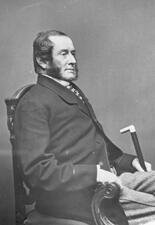
Here you will find contact information for Senator Anthony Kennedy, including email address, phone number, and mailing address.
| Name | Anthony Kennedy |
| Position | Senator |
| State | Maryland |
| Party | Unionist |
| Status | Former Representative |
| Term Start | December 7, 1857 |
| Term End | March 3, 1863 |
| Terms Served | 1 |
| Born | December 21, 1810 |
| Gender | Male |
| Bioguide ID | K000103 |
About Senator Anthony Kennedy
Anthony McLeod Kennedy (born July 23, 1936) is an American attorney and jurist who served as an associate justice of the Supreme Court of the United States from 1988 until his retirement in 2018. He was nominated to the Court in 1987 by President Ronald Reagan and was sworn in on February 18, 1988. Following the retirement of Justice Sandra Day O’Connor in 2006, he was widely regarded as the “swing vote” in many of the Roberts Court’s closely divided 5–4 decisions. After the death of Justice Antonin Scalia in February 2016, Kennedy became the senior associate justice of the Court. He retired during the presidency of Donald J. Trump and was succeeded by his former law clerk, Brett Kavanaugh. Following O’Connor’s death in 2023, Kennedy became the oldest living former Supreme Court justice.
Kennedy was born in Sacramento, California, to Anthony J. Kennedy, a prominent attorney and lobbyist, and Gladys McLeod Kennedy, who was active in civic affairs. He was raised in Sacramento and attended local schools before enrolling at Stanford University, where he studied political science and spent a year at the London School of Economics. He received his Bachelor of Arts degree from Stanford in 1958. Kennedy then attended Harvard Law School, earning his Bachelor of Laws (LL.B.) in 1961. Shortly after completing his legal education, he returned to Sacramento and took over his father’s legal practice, establishing himself in private practice while also beginning a long association with legal education.
In addition to managing the family law practice in Sacramento, Kennedy served as a professor of constitutional law at the McGeorge School of Law at the University of the Pacific, beginning in the 1960s. He developed a reputation as a careful scholar and teacher of constitutional structure and individual rights. His early legal career combined private practice, academic work, and civic involvement, which brought him into contact with state and national political figures and helped establish his reputation for moderation and analytical rigor. These experiences laid the groundwork for his later federal judicial service.
Kennedy entered the federal judiciary in 1975 when President Gerald R. Ford appointed him to the United States Court of Appeals for the Ninth Circuit. Confirmed by the Senate that same year, he served on the Ninth Circuit for more than a decade, participating in a wide range of cases involving federal law, constitutional questions, and the administration of justice in the western United States. On the appellate bench he became known for his careful writing style and for opinions that often emphasized limits on governmental power and respect for individual liberty. His record on the Ninth Circuit, marked by a generally conservative but institutionally minded approach, made him an acceptable nominee to both major political parties when a vacancy later arose on the Supreme Court.
In November 1987, after two unsuccessful nominations to fill the Supreme Court seat vacated by Associate Justice Lewis F. Powell Jr., President Reagan nominated Kennedy as Powell’s successor. His hearings before the Senate Judiciary Committee began on December 14, 1987, and lasted three consecutive days. During the hearings, Kennedy discussed concepts such as a “zone of liberty, a zone of protection, a line that’s drawn where the individual can tell the Government, ‘Beyond this line you may not go.’” He was notably reticent about commenting on the reasoning or result in Griswold v. Connecticut, stating, “I really think I would like to draw the line and not talk about the Griswold case so far as its reasoning or its result.” When the Senate voted on his nomination, Kennedy received broad bipartisan support. On February 3, 1988, the Senate confirmed him by a vote of 97–0, making him the most recent Supreme Court justice to be confirmed unanimously; three Democratic senators—Paul Simon and Al Gore, who were campaigning, and Joe Biden, who was ill—were absent from the vote. Attorney General Edwin Meese presented Kennedy’s commission to the Court at a swearing-in ceremony on February 18, 1988.
During his three decades on the Supreme Court, Kennedy authored the majority opinion in several of the most consequential decisions of his era. He wrote the Court’s opinion in Boumediene v. Bush, recognizing habeas corpus rights for certain detainees held at Guantánamo Bay, and in Citizens United v. Federal Election Commission, which held that the Bipartisan Campaign Reform Act’s prohibition on independent expenditures by corporations and unions violated the First Amendment’s protection of free speech. In Citizens United, Kennedy wrote that “If the First Amendment has any force, it prohibits Congress from fining or jailing citizens, or associations of citizens, for simply engaging in political speech,” and concluded that independent expenditures, including those made by corporations, do not give rise to corruption or the appearance of corruption. His opinion emphasized that the First Amendment does not distinguish between media and other corporations, warning that restrictions on corporate political speech could allow Congress to suppress political expression in newspapers, books, television, and blogs. The decision overruled Austin v. Michigan Chamber of Commerce (1990) and portions of McConnell v. FEC (2003), effectively freeing corporations and unions to spend money on “electioneering communications” and to advocate for the election or defeat of candidates, though direct contributions to candidates and parties remained prohibited.
Kennedy played a central role in the Court’s modern jurisprudence on gay rights and substantive due process. He authored the majority opinions in four landmark gay rights cases: Romer v. Evans (1996), which invalidated a Colorado constitutional amendment that discriminated against gay and lesbian individuals; Lawrence v. Texas (2003), which struck down laws criminalizing consensual same-sex intimacy; United States v. Windsor (2013), which invalidated key provisions of the Defense of Marriage Act; and Obergefell v. Hodges (2015), which recognized a constitutional right to same-sex marriage. In Obergefell, Kennedy wrote that “No union is more profound than marriage, for it embodies the highest ideals of love, fidelity, devotion, sacrifice and family. In forming a marital union, two people become something greater than once they were.” He also co-authored the controlling joint opinion in Planned Parenthood v. Casey (1992) with Justices Sandra Day O’Connor and David Souter, reaffirming the core holding of Roe v. Wade while modifying the framework for evaluating abortion regulations. Across these and other cases, Kennedy’s opinions often reflected his view that certain essential or fundamental rights should exist in any just society, while recognizing that not all such rights are necessarily enforceable under the written Constitution and that states retain political liberty to make decisions “wrong in the ideal sense,” subject to correction through ordinary political processes.
Kennedy retired from active service on the Supreme Court on July 31, 2018, after more than thirty years on the nation’s highest court. His retirement allowed President Trump to nominate Brett Kavanaugh, Kennedy’s former law clerk, as his successor. In retirement, Kennedy has remained a figure of continuing interest in legal and political circles, frequently cited for his pivotal role in shaping modern constitutional law in areas ranging from free speech and campaign finance to personal autonomy and equality.