Representative Antonio Fernós-Isern
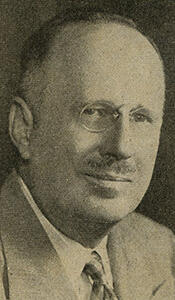
Here you will find contact information for Representative Antonio Fernós-Isern, including email address, phone number, and mailing address.
| Name | Antonio Fernós-Isern |
| Position | Representative |
| State | Puerto Rico |
| District | At-Large |
| Party | Popular Democrat |
| Status | Former Representative |
| Term Start | January 3, 1945 |
| Term End | January 3, 1965 |
| Terms Served | 10 |
| Born | May 10, 1895 |
| Gender | Male |
| Bioguide ID | F000087 |
About Representative Antonio Fernós-Isern
Antonio Fernós Isern (May 10, 1895 – January 19, 1974) was the first Puerto Rican cardiologist and the longest serving Resident Commissioner of Puerto Rico in the United States Congress. A leading member of the Popular Democratic Party (Partido Popular Democrático), he served as Puerto Rico’s Resident Commissioner, a non-voting Representative from Puerto Rico in the United States Congress, from 1945 to 1965, contributing to the legislative process during ten terms in office and representing the interests of his constituents during a significant period in American and Puerto Rican history.
Fernós Isern was born in San Lorenzo, Puerto Rico, and attended primary and intermediate schools in nearby Caguas. During his high school years, his family moved to Bloomsburg, Pennsylvania, where he completed his secondary education at the Pennsylvania State Normal School. After finishing his pre-medical training, he applied to and was accepted by the College of Physicians and Surgeons of the University of Maryland, College Park, where he pursued medical studies and earned his doctor’s degree in May 1915, preparing for a career that would place him at the forefront of public health and cardiology in Puerto Rico.
Upon completing his medical education, Fernós Isern returned to Puerto Rico and settled in the city of Caguas, where he practiced medicine for two years. His abilities soon led him into public health administration. Between 1918 and 1933 he held a succession of important positions in the island’s health services. In 1918 he served as Director of Health for the City of San Juan. From 1919 to 1921 he was Under-Secretary of Health, and from 1921 to 1923 he served as Director of Health in San Juan. He again held the post of Under-Secretary of Health from 1923 to 1929, and from 1930 to 1933 he was Secretary of Health of Puerto Rico, overseeing island-wide public health policy during a period of modernization and expansion of health services.
In 1933, Fernós Isern resigned as health commissioner and moved to New York City to pursue advanced medical training. There he completed a residency in cardiology at Columbia University, becoming the first Puerto Rican cardiologist. After this specialization, he returned to Puerto Rico and joined the Public School of Tropical Medicine of Puerto Rico, where he served on the faculty, having previously held positions as both assistant professor and associate professor. His work in medical education and research contributed to the development of modern medical practice on the island and reinforced his reputation as a leading physician and public health expert.
Fernós Isern’s transition into formal politics came in the late 1930s. In 1937, he joined Luis Muñoz Marín in organizing the Partido Popular Democrático (Popular Democratic Party), which would become the dominant political force in mid‑20th‑century Puerto Rico and the principal architect of the island’s new political status. During World War II, he assumed key responsibilities in civil defense and wartime administration. In 1941 he served as Director of Civil Defense for the San Juan Metropolitan Area. In 1942 he returned to head the Department of Health and also directed the Administration of Public Housing, while simultaneously serving as Director of the War Effort Office for Puerto Rico. From 1943 to 1946, under appointment as Permanent Acting Governor approved by President Franklin D. Roosevelt, he served as acting governor of Puerto Rico during the governorship of Rexford G. Tugwell, exercising broad executive responsibilities at a critical moment in the island’s political evolution.
In 1946, Jesús T. Piñero, the first Puerto Rican to serve as governor of Puerto Rico, appointed Fernós Isern as his replacement in the position of Resident Commissioner to the U.S. Congress, following unanimous endorsement from the island legislature. As Resident Commissioner, he took office in 1945 and was subsequently re‑elected on four consecutive occasions, serving a total of nineteen years, from 1945 to 1965, and becoming the longest serving Resident Commissioner in the history of the office. During his ten terms in Congress, he participated actively in the democratic process, working within the House of Representatives to advance legislation affecting Puerto Rico and to secure greater self-government for the island.
Fernós Isern played a central role in the transformation of Puerto Rico’s political status. In 1947, he was instrumental in the development and congressional approval of what was known as the Crawford Project, which allowed Puerto Ricans to elect their own governor. This measure was approved by Congress and signed into law by President Harry S. Truman, marking a major step toward internal self-government. On June 8, 1950, the United States Senate approved Public Law 600, which permitted Puerto Rico to establish its own constitutional, locally autonomous government. Fernós Isern served as president of the Constitutional Convention that drafted the Constitution of the Commonwealth of Puerto Rico (Estado Libre Asociado), a foundational document that redefined the island’s relationship with the United States and formalized its new commonwealth status.
Choosing not to seek re‑election as Resident Commissioner in 1964, Fernós Isern returned to Puerto Rico from Washington, D.C., and continued his public service in local government. He was elected to the Senate of Puerto Rico, where he served from 1965 to 1969. After retiring from elective politics, he rejoined academic life at the University of Puerto Rico as a Resident Scholar. In this capacity he devoted himself to writing and reflection on Puerto Rico’s political development, producing a major two‑part work: “El Estado Libre Asociado” (The Commonwealth of Puerto Rico) and “Filosofía y Doctrina del Estadolibrismo” (Philosophy and Doctrine of the Puerto Rican Commonwealth), which articulated the principles and rationale of the commonwealth status he had helped to create.
Antonio Fernós Isern died in San Juan, Puerto Rico, on January 19, 1974. He was buried with full state honors in the Santa María Magdalena de Pazzis Cemetery in Old San Juan, a resting place for many of the island’s most distinguished figures. His memory is honored at the Capitol in San Juan with a bust facing the urn that preserves the original Constitution of Puerto Rico, symbolizing his central role in its creation. His collected papers are held in trust in the Fernós Isern Room at the Inter American University Law School in Hato Rey, San Juan, ensuring that his contributions as a physician, public health administrator, political leader, and Resident Commissioner remain accessible to scholars and the public.