Delegate Antonio B. Won Pat
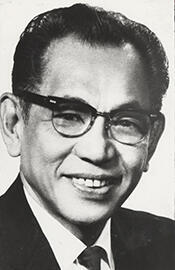
Here you will find contact information for Delegate Antonio B. Won Pat, including email address, phone number, and mailing address.
| Name | Antonio B. Won Pat |
| Position | Delegate |
| State | Guam |
| District | At-Large |
| Party | Democratic |
| Status | Former Representative |
| Term Start | January 3, 1973 |
| Term End | January 3, 1985 |
| Terms Served | 6 |
| Born | December 10, 1908 |
| Gender | Male |
| Bioguide ID | W000686 |
About Delegate Antonio B. Won Pat
Antonio Borja Won Pat (December 10, 1908 – May 1, 1987) was a Guamanian politician and member of the Democratic Party of Guam who became the first Delegate from Guam to the United States House of Representatives, serving six terms from January 3, 1973, to January 3, 1985. A central figure in Guam’s 20th‑century political development, he helped guide the island’s transition from U.S. Navy rule to civil government and later secured Guam’s voice in the U.S. Congress. As a member of the Democratic Party, he contributed to the legislative process during a significant period in American history and represented the interests of his constituents in Washington, D.C.
Won Pat was born on December 10, 1908, in Sumay (now part of Santa Rita), Guam, to Ignacio Won Pat, an immigrant from China, and Maria Soriano Borja. He grew up in a modest family with two brothers, Francisco and Vicente, and a sister, Eulalia. His early years unfolded under U.S. naval administration, a period in which Guam’s residents had limited political rights and no U.S. citizenship. These circumstances would later shape his lifelong commitment to expanding civil and political rights for the people of Guam.
For his primary education, Won Pat attended the Normal School in Hagåtña, where he prepared for a career in teaching. After completing his studies, he became a teacher and taught for eight years, gaining firsthand experience with the island’s educational and social conditions. His work as an educator brought him into close contact with local communities and helped establish his reputation as a capable and engaged civic leader. This early public service laid the groundwork for his entry into formal politics.
In 1932, Won Pat married Ana Salas Perez (1912–1995), and together they had eight children: Aveline Ploke, Marilyn (1934–1990), Jacqueline Won Pat, Ellen Chargualaf, Anthony Won Pat, Rosalind Fleet, Mark Won Pat, and Judith Won Pat. His family would remain deeply involved in Guam’s public life; his daughter Judith, in particular, later served as Speaker of the Legislature of Guam from 2008 to 2017. The family’s multigenerational participation in public service reflected the enduring influence of Won Pat’s political and civic legacy.
Won Pat’s formal political career began in 1936, when, after eight years as a teacher, he was nominated to the advisory Guam Congress. At that time, prior to the signing of the Guam Organic Act in 1950, Guam was under complete U.S. Navy rule. The pre‑Organic Act Guam Congress, composed of the House of Council and the House of Assembly, functioned only as an advisory body to the naval governor, with its members elected by the people of their districts but lacking binding legislative authority. During and after World War II, as Guam endured Japanese occupation and then returned to American control, Won Pat emerged as an influential figure. In 1946 he helped form the Guam Commercial Corporation, an entity supported by the naval government that aimed to promote economic self‑sufficiency before the attainment of U.S. citizenship. Although the corporation contributed to the postwar economic boom, it ultimately went bankrupt in 1954. By that time, however, Won Pat had become firmly established in the island’s political leadership, entering the House of Assembly in 1948 and becoming Speaker of the Guam Legislature in 1951.
In the postwar years, the drive for American citizenship and greater self‑government gained momentum, fueled in part by the demonstrated loyalty of the Chamorro people during the Japanese occupation. As Speaker of the Guam Congress, Won Pat worked closely with naval Governor Carlton Skinner and fellow leader Francisco B. Leon Guerrero on what became the Guam Organic Act of 1950. This landmark legislation, approved in Washington, D.C., granted the people of Guam U.S. citizenship and provided for the establishment of a civil government, replacing exclusive naval rule. Won Pat’s role in this process made him one of the principal architects of modern Guamanian political status and institutions.
Guam took another step toward self‑representation under Won Pat’s leadership in the 1960s. In 1964, the 7th Guam Legislature (I Mina’ Siete na Liheslaturan Guåhan) created Guam’s Washington Office as an elected position to advocate for the island’s interests in the nation’s capital. Won Pat successfully lobbied for and won this post, relocating to Washington, D.C., where he worked to raise awareness among members of Congress about Guam’s political situation and needs. Through persistent lobbying, he increased federal support for Guam and built relationships with influential lawmakers, setting the stage for the island’s eventual representation in Congress.
In his Washington role, Won Pat intensified efforts to secure a nonvoting congressional delegate for Guam. He developed key alliances, notably with California Congressman Philip Burton, a member of the House Interior and Insular Affairs Committee. Burton used his influence to gain the support of committee chairman Wayne Aspinall and twenty co‑sponsors for legislation to provide congressional representation to Guam and the U.S. Virgin Islands. Their efforts culminated in the passage of Public Law 92‑271 on April 10, 1972, which authorized each territory to elect a Delegate to the U.S. House of Representatives for two‑year terms. These Delegates could speak and introduce legislation on the House floor, though they could not vote on final passage. On January 3, 1973, during the opening of the 93rd Congress, Antonio Borja Won Pat took the oath of office as the first Delegate from Guam to the United States House of Representatives, becoming the first resident of Guam to serve in the U.S. Congress.
During his twelve years in Congress, from 1973 to 1985, Won Pat served six consecutive terms as Guam’s Delegate. His service in Congress occurred during a significant period in American history, encompassing the end of the Vietnam War, the Watergate era, and shifting U.S. policies in the Pacific. As a member of the House of Representatives, he participated in the democratic process and represented the interests of his constituents, working to secure federal resources and recognition for Guam. His legislative efforts were not limited to Guam alone; he played a notable role in the broader reorganization of U.S.‑administered territories in the Pacific. He was instrumental in assisting what are now the Commonwealth of the Northern Mariana Islands, the Federated States of Micronesia (including the island states of Kosrae, Pohnpei, Chuuk, and Yap), the Republic of the Marshall Islands, and the Republic of Palau in achieving greater political self‑governance through the dismantling of the Trust Territory of the Pacific Islands. As the districts of the Trust Territory voted in the 1970s and 1980s to end their trustee status, these entities negotiated new political arrangements, including Compacts of Free Association with the United States. The Northern Mariana Islands became a U.S. Commonwealth whose people are U.S. citizens, while the Federated States of Micronesia, the Republic of the Marshall Islands, and the Republic of Palau gained the right to determine many local issues, such as minimum wage and immigration. Won Pat’s work in this process underscored both Guam’s central role in the region and the contrasting limitations that remained on Guam’s own self‑governance. He continued to serve until he was defeated for re‑election in 1984 by Republican Ben Blaz.
After his electoral defeat, Won Pat retired from elective office and returned to Guam, residing in Sinajana. Although no longer in Congress, he remained a respected elder statesman whose earlier efforts had permanently altered Guam’s political landscape and strengthened its connections to the United States and the wider Pacific region. On May 1, 1987, he died of a heart attack in Silver Spring, Maryland. His remains were returned to Guam, where he was interred with honors at the Veterans Cemetery in Piti. In recognition of his decades of public service and his pioneering role as Guam’s first congressional Delegate, the Guam International Air Terminal was officially renamed the Antonio B. Won Pat International Airport in January 1989, ensuring that his name would remain closely associated with the island’s gateway to the world.