Representative Archibald Hunter Arrington Williams
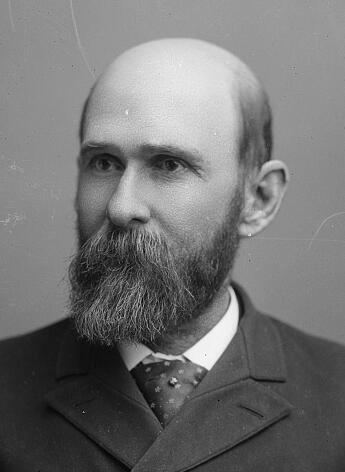
Here you will find contact information for Representative Archibald Hunter Arrington Williams, including email address, phone number, and mailing address.
| Name | Archibald Hunter Arrington Williams |
| Position | Representative |
| State | North Carolina |
| District | 5 |
| Party | Democratic |
| Status | Former Representative |
| Term Start | December 7, 1891 |
| Term End | March 3, 1893 |
| Terms Served | 1 |
| Born | October 22, 1842 |
| Gender | Male |
| Bioguide ID | W000489 |
About Representative Archibald Hunter Arrington Williams
Archibald Hunter Arrington Williams (October 22, 1842 – September 5, 1895) was a Democratic U.S. Representative from North Carolina who served one term in the United States Congress from 1891 to 1893. His congressional service took place during a significant period in American history, as the nation grappled with the political, economic, and social adjustments of the post–Civil War and Reconstruction eras, and he participated in the legislative process as a member of the House of Representatives representing the interests of his North Carolina constituents.
Williams was born near Louisburg, Franklin County, North Carolina, on October 22, 1842. He was raised in the rural Piedmont region and attended local schools in his youth. Seeking further education, he enrolled at Emory and Henry College in Emory, Virginia, a Methodist-affiliated institution that drew many students from the southern states in the antebellum period. His formal education was interrupted by the outbreak of the American Civil War, which reshaped the course of his early adulthood.
With the onset of the Civil War, Williams enlisted in the Confederate Army and served in the Army of Northern Virginia, the principal Confederate force in the Eastern Theater. His service placed him under the broader command structure that included General Robert E. Lee and engaged him in the major campaigns that affected Virginia and surrounding states. Like many young men of his generation in North Carolina, his wartime experience forged connections and perspectives that would later inform his public life during the difficult years of regional recovery and reconciliation.
After the Confederate surrender in 1865, Williams returned to North Carolina and settled in Granville County, a region undergoing economic transition in the postwar South. He became involved in railroad development, an industry central to the rebuilding and modernization of the state’s economy. Williams took a leading role in the creation and promotion of the Oxford and Henderson Railroad, a line intended to improve transportation and commerce between local communities. He served as president of the Oxford and Henderson Railroad, reflecting both his entrepreneurial interests and his commitment to regional infrastructure and economic growth.
Williams’s prominence in local affairs and his Democratic Party affiliation led him into elective office at the state level. In 1883, he was elected to the North Carolina House of Representatives, where he served a single term. During this period, the state legislature was engaged in issues of post-Reconstruction governance, public finance, and internal improvements, and his legislative experience helped establish his credentials as a public servant and party leader within his district.
In 1890, Williams was elected as a Democrat to the 52nd United States Congress, representing North Carolina in the U.S. House of Representatives from March 4, 1891, to March 3, 1893. His tenure in Congress coincided with national debates over tariffs, monetary policy, and agricultural distress, issues of particular concern to his largely rural constituency. As a member of the House, Archibald Hunter Arrington Williams contributed to the legislative process during his single term in office, participating in the democratic process and advocating for the interests of North Carolinians during a time of economic and political realignment in the late nineteenth century.
Williams sought reelection in 1892 but was defeated by Republican Thomas Settle III, reflecting the competitive and shifting partisan landscape in North Carolina and the South at the time. After leaving Congress in March 1893, he returned to private life. Although specific details of his later professional activities are less fully documented, his earlier work in railroads and his established position in Granville County suggest that he remained connected to business and local affairs until his death.
Archibald Hunter Arrington Williams died in Chase City, Mecklenburg County, Virginia, on September 5, 1895. He was interred in Oxford, North Carolina, a community closely associated with his business, political, and personal life. His career, spanning Confederate military service, railroad development, state legislative office, and a term in the United States Congress, reflected the trajectory of many Southern leaders who navigated the profound transformations of the Civil War and its aftermath.